
치명적인 칼날 파손: 금속학적 근본 원인, 파괴 역학, 그리고 예방을 위한 공급업체 관리

Quick Answer: Catastrophic blade shattering is almost never one cause—it’s the convergence of metallurgical defects (retained austenite, carbide banding), thermal-process errors (quench cracks, insufficient temper), and geometric stress risers, triggered by a contamination event. Fractography (macro mapping → SEM/EDS → metallography → XRD) identifies which lever failed; supplier controls like AMS 2750 pyrometry and lot-level […]
원형 슬리팅 칼날의 점착제 축적: 열접촉 피드백, 코팅 선정 및 계층형 진단 프로토콜
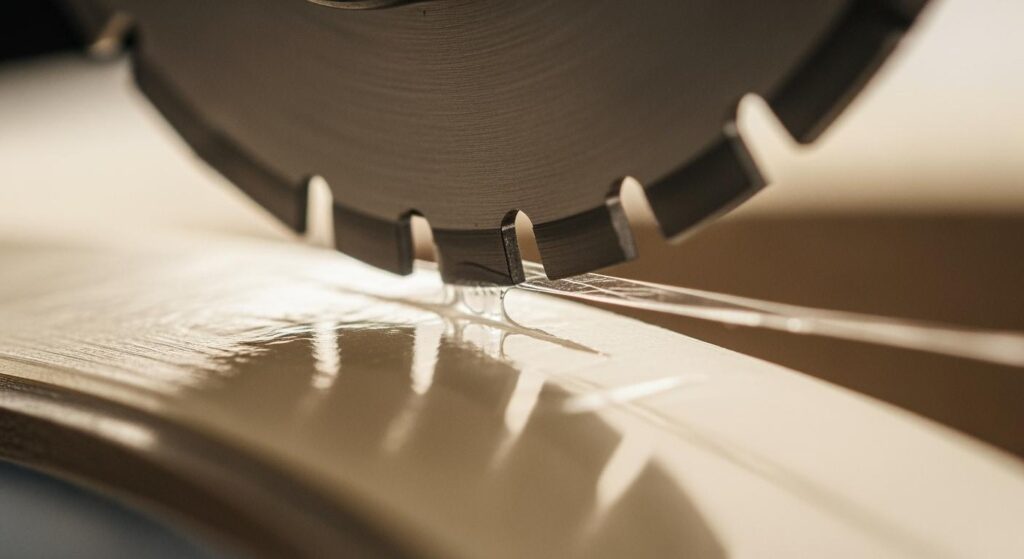
When adhesive starts building up on circular slitting blades, the first sign is rarely dramatic. Slit edges become slightly tacky. Roll geometry drifts. Edge quality degrades before the shift supervisor can pinpoint why. By the time a visible polymer deposit — a built-up edge (BUE) — has formed on the knife face, the blade has […]
슬롯 바닥면의 그리드 칼날 파손 방지: R≥0.2 mm 설계를 위한 슬롯 R 반경, EDM 가공면 건전성 및 2회 뜨임 열처리 제어
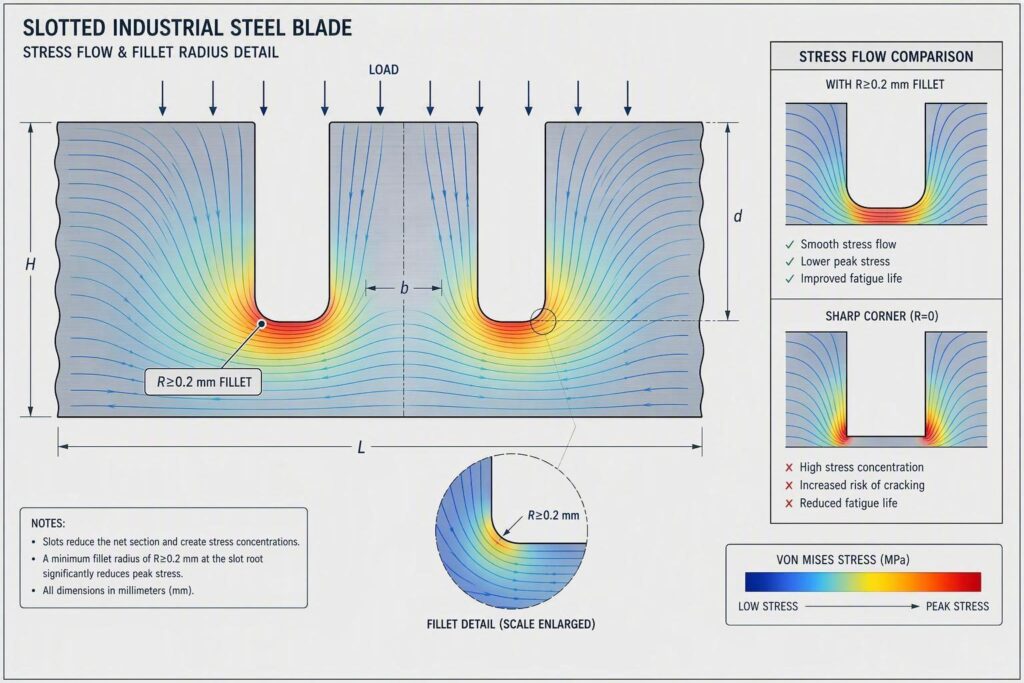
Quick Answer: Grid blade snapping at slot bottoms is caused by the coexistence of three factors: high elastic stress concentration (Kt 7–12 for sharp-cornered slots), surface defects that act as crack initiators (EDM recast layers, grinding burns), and insufficient toughness in the surrounding material. The primary engineering fix is to specify a slot fillet radius […]
의료용 폴리머 가공용 칼날 선정: 420 vs 440C 스테인리스, 표면 조도 및 수냉 루프 제어
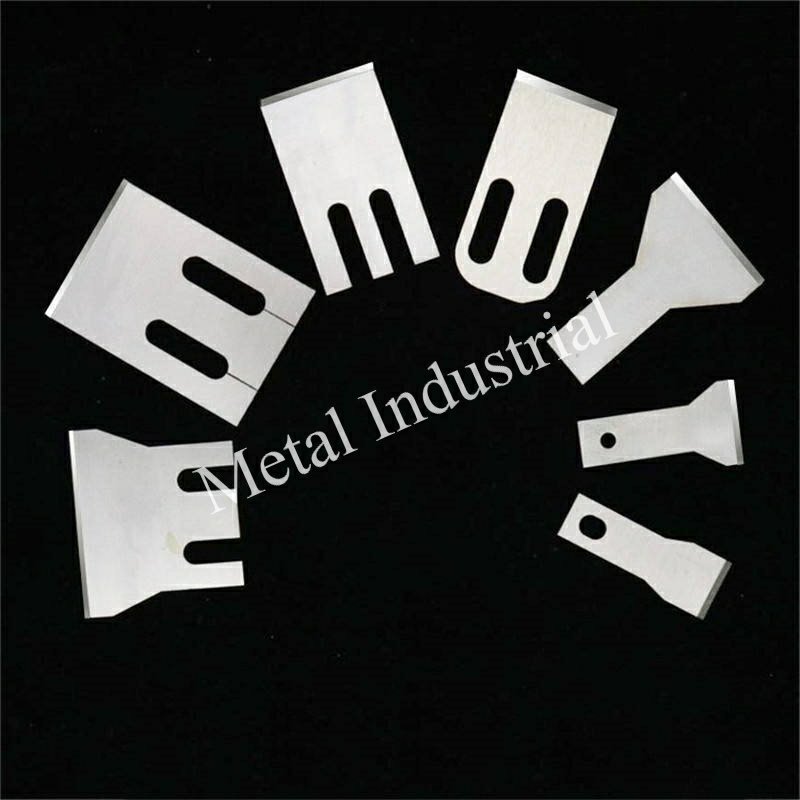
Quick answer: In medical-grade polymer pelletizing, 420 and 440C stainless are not interchangeable: 420 offers higher toughness, better polishability, and more corrosion tolerance in sanitization-intensive or variable-chemistry water loops; 440C delivers superior edge retention for abrasive polymers in stable, controlled-chemistry loops. Both grades require Ra ≤ 0.4 µm mirror finish and verified passivation per ASTM […]
전단 칼날(Shear Blade) 치핑 근본 원인 분석: 파단면 분석(Fractography), 결정 트리 및 SOP 수정
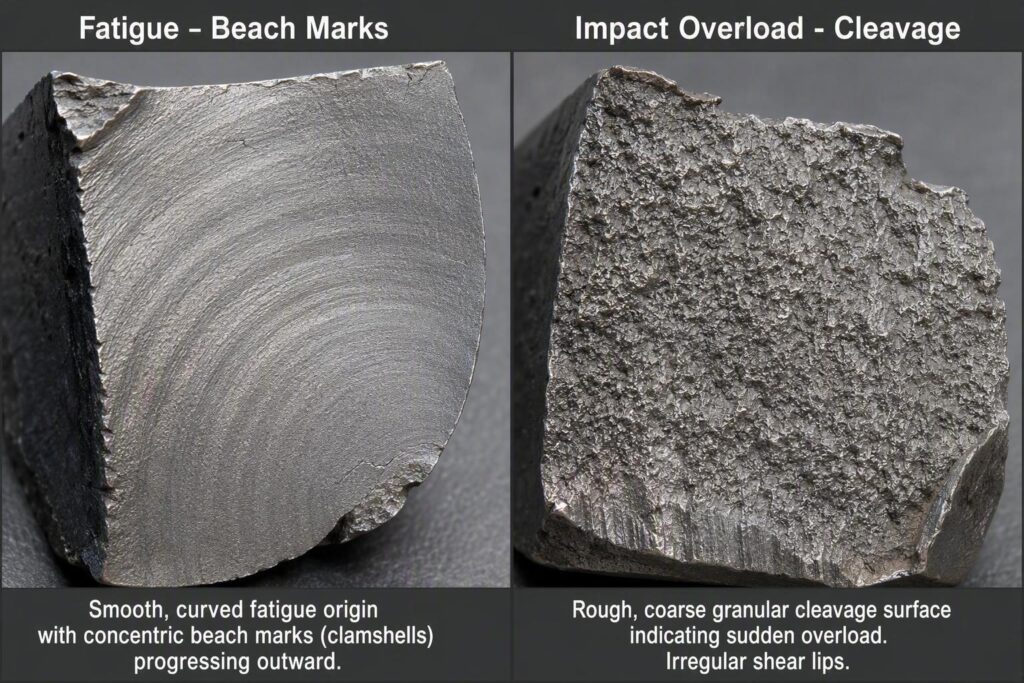
Quick Answer: Shear blade edge chipping root cause falls into two modes: fatigue (from cyclic stress — clearance errors, parallelism faults, or grinding burns) and impact (from sudden overload — foreign objects, excessive hardness, or geometry spikes). Read the fracture surface first: concentric arc-shaped beach marks mean fatigue; coarse granular cleavage with no arc pattern means […]
원형 나이프 오버랩 설정: 전단 메커니즘, 소재별 적정 공정 범위 및 아버 제어

In continuous metal coil processing, achieving a clean, square, and burr-free edge is the primary benchmark of a well-calibrated slitting line. Behind every high-yield slitting run are two critical geometric parameters governing shear-cut quality: horizontal side clearance and vertical rotary knife overlap. While horizontal clearance dictates the stress concentration across the strip width, vertical knife […]
폐타이어 및 ELV 파쇄기 나이프: 톤당 처리 비용(Cost Per Ton) 절감을 위한 경도 대 인성의 최적 밸런스
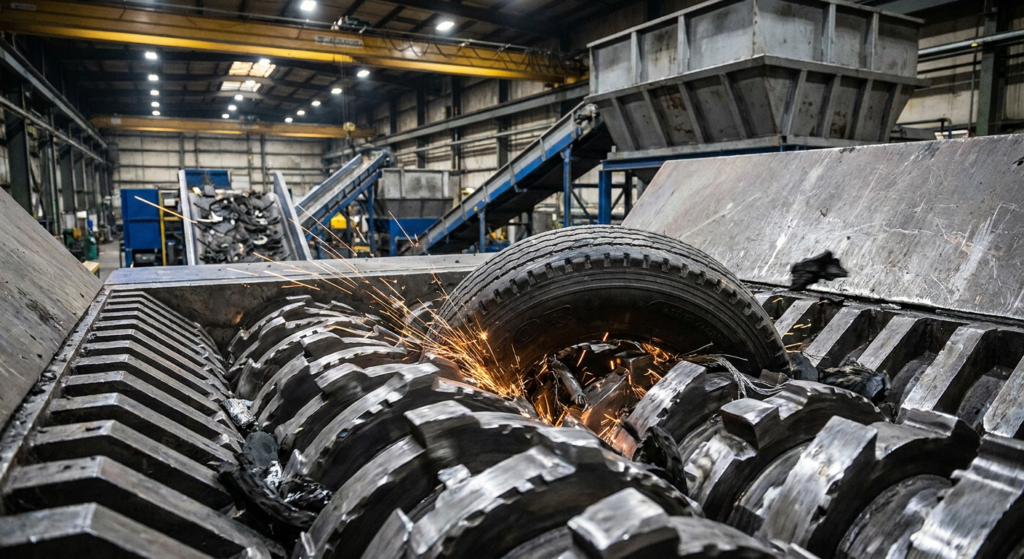
Quick Answer: Balance hardness (wear resistance) against Charpy impact toughness rather than maximizing HRC alone—DC53 at 58–60 HRC delivers roughly double D2’s impact toughness for contaminated tire/ELV streams, while a documented real-world case shows that fracture at mounting-hole geometry, not material hardness, is often the true root cause. Scope: This guide focuses primarily on primary and pre-shredding […]
슬리팅 분진(Slitting Dust) 발생의 근본 원인 분석: 나이프 측면 Ra, 카바이드 미세조직 및 세팅 공차
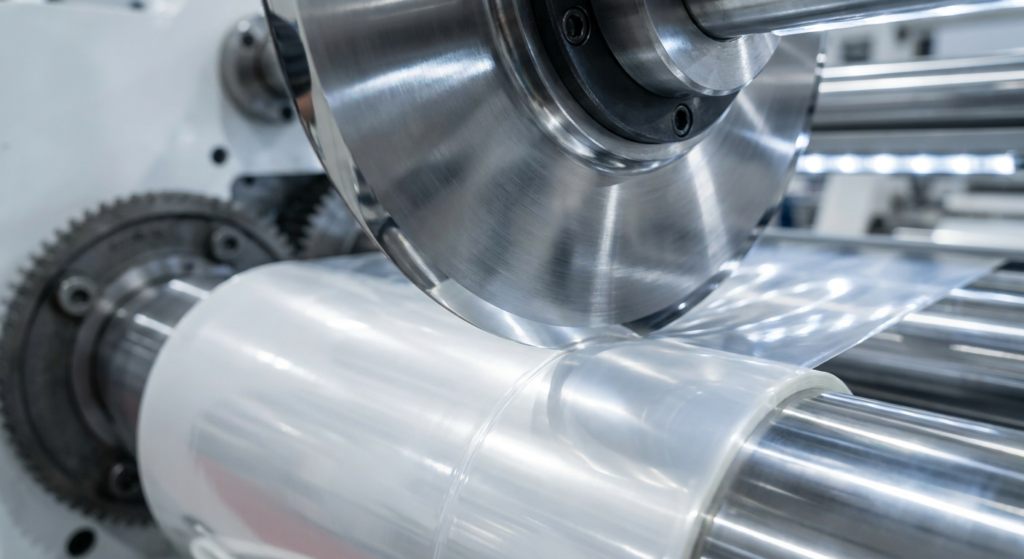
These four principles form the engineering framework Maxtor Metal’s application team applies when qualifying circular slitting knives for zero-dust converting programs in flexible packaging, nonwoven, and specialty paper lines. In high-speed flexible packaging, technical textile, non-woven, and specialty paper converting, particulate contamination is a major cause of unscheduled line shutdowns. What plant operators frequently diagnose […]
산업용 스트립 나이프 재연마: 재연마 임계값, 폐기 기준 및 수명 주기 비용 모델
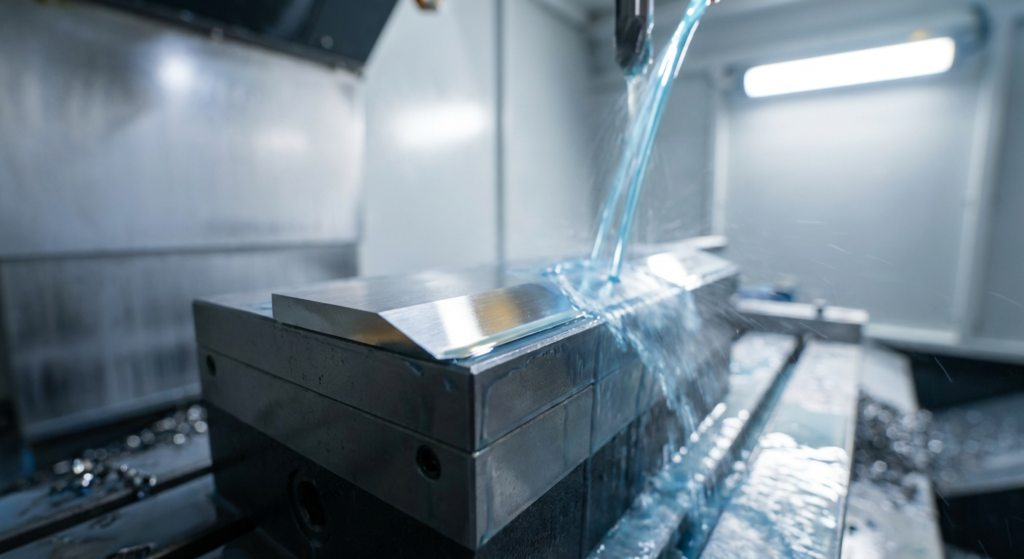
Quick Answer: Regrinding industrial strip blades is economical when: chipping depth is under 0.5 mm, remaining thickness is above 60–70% of nominal, and the estimated regrind cost is below 50% of a new replacement blade. The minimum safe stock removal is 0.010–0.015 in (0.254–0.381 mm) to clear the subsurface micro-fractured fatigue layer. Blades with radial cracks, […]
M390 대 CPM S90V 분말야금 페렛타이저 나이프: 고유리섬유 마모 환경에서의 강종 선정
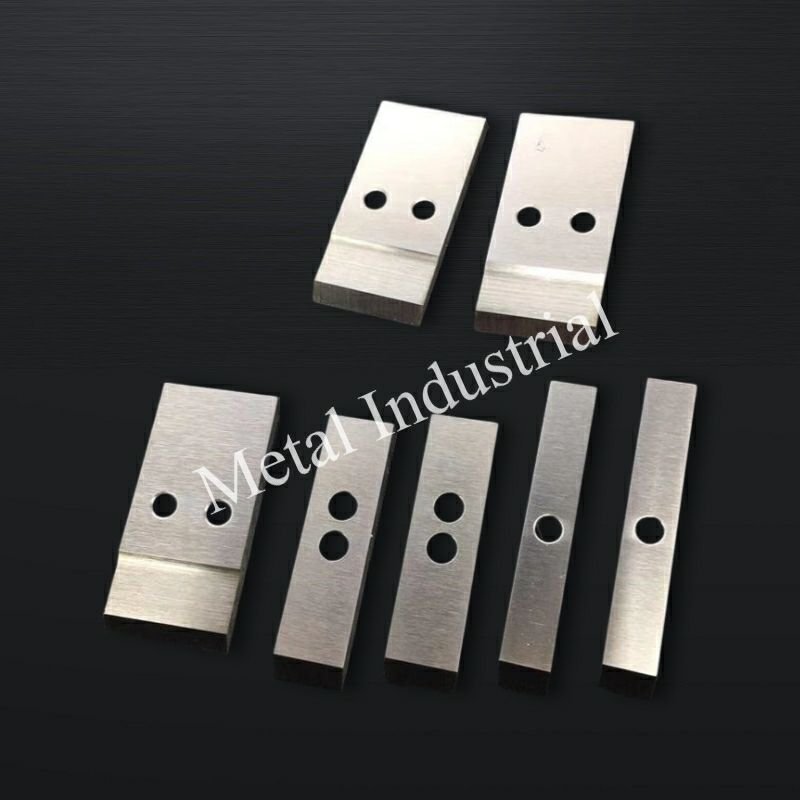
Quick answer: For pelletizing blades under high glass-fiber wear, powder metallurgy stainless steels outperform conventional tool steels because their fine, uniform carbide distribution resists micro-ploughing without the toughness trade-offs of high-alloy ingot steels. Between M390 and CPM S90V: choose CPM S90V when abrasion load is the dominant failure mode (>30% GF, neutral water); choose M390 when […]

 English
  Spanish
  Italian
  French
  Portuguese
  Russian
  German
  Arabic
  Hindi
Hindi  Vietnamese
  Indonesian
  Japanese
  Korean