
Einstellungen der Kreismesser-Überdeckung: Schermechanik, Werkstofffenster & Messerwellen-Steuerung

In continuous metal coil processing, achieving a clean, square, and burr-free edge is the primary benchmark of a well-calibrated slitting line. Behind every high-yield slitting run are two critical geometric parameters governing shear-cut quality: horizontal side clearance and vertical rotary knife overlap. While horizontal clearance dictates the stress concentration across the strip width, vertical knife […]
Altreifen- & ELV-Schreddermesser: Härte vs. Zähigkeit im Gleichgewicht zur Senkung der Kosten pro Tonne
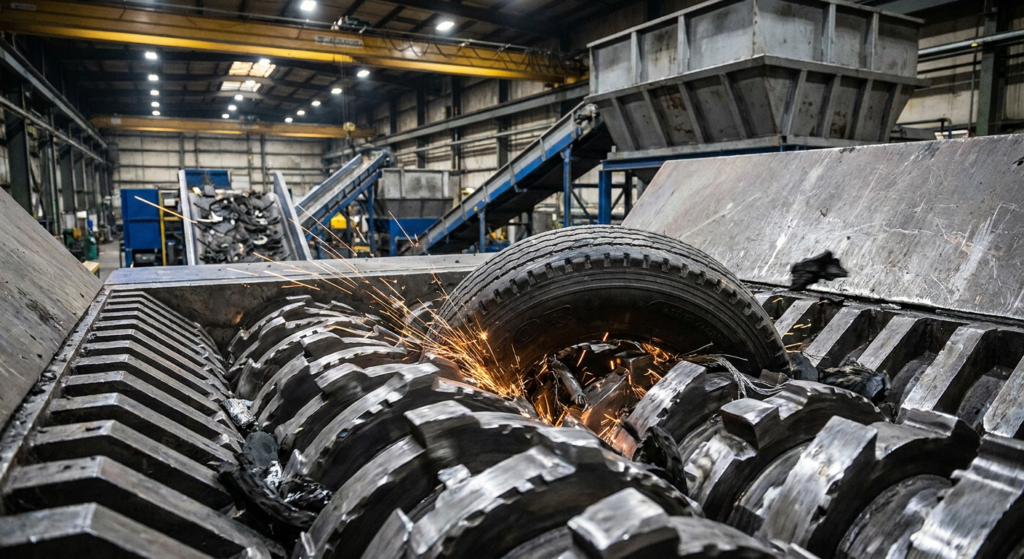
Quick Answer: Balance hardness (wear resistance) against Charpy impact toughness rather than maximizing HRC alone—DC53 at 58–60 HRC delivers roughly double D2’s impact toughness for contaminated tire/ELV streams, while a documented real-world case shows that fracture at mounting-hole geometry, not material hardness, is often the true root cause. Scope: This guide focuses primarily on primary and pre-shredding […]
Ursachenanalyse der Schnittstaubbildung: Messerflanken-Ra, Karbidmikrostruktur und Toleranzen.
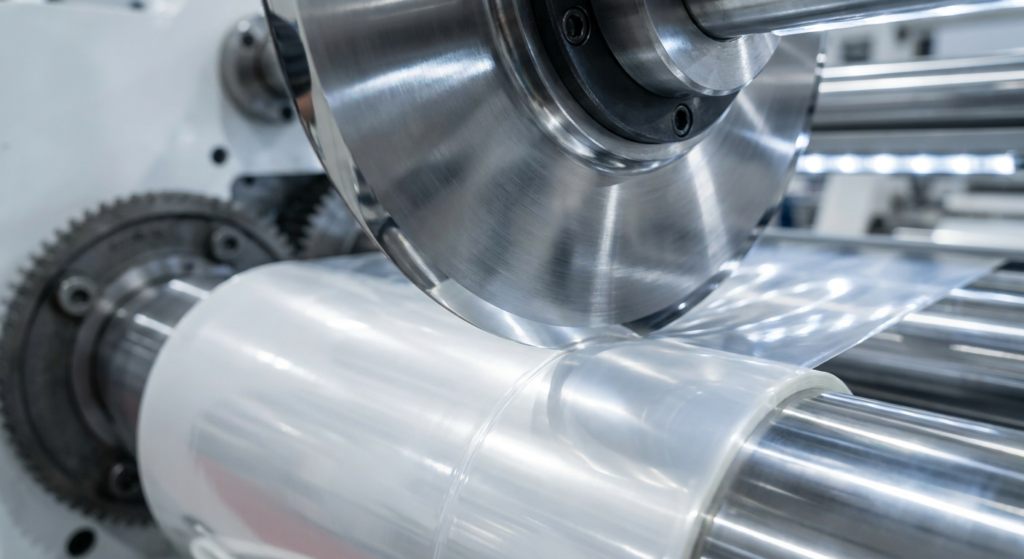
These four principles form the engineering framework Maxtor Metal’s application team applies when qualifying circular slitting knives for zero-dust converting programs in flexible packaging, nonwoven, and specialty paper lines. In high-speed flexible packaging, technical textile, non-woven, and specialty paper converting, particulate contamination is a major cause of unscheduled line shutdowns. What plant operators frequently diagnose […]
Nachschleifen von Industrie-Streifenmessern: Schärfschwellen, Verschrottungskriterien und Lebensdauer-Kostenmodell
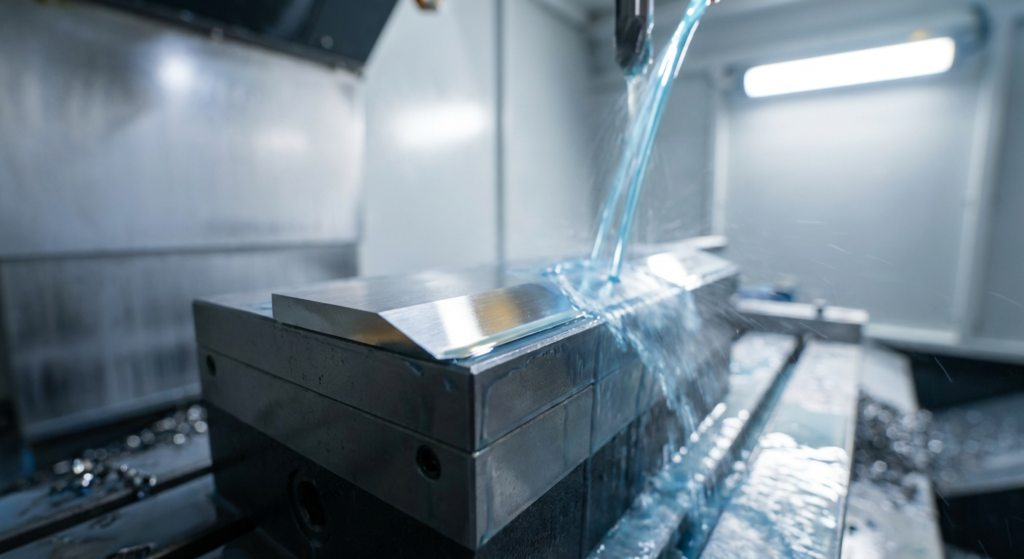
Quick Answer: Regrinding industrial strip blades is economical when: chipping depth is under 0.5 mm, remaining thickness is above 60–70% of nominal, and the estimated regrind cost is below 50% of a new replacement blade. The minimum safe stock removal is 0.010–0.015 in (0.254–0.381 mm) to clear the subsurface micro-fractured fatigue layer. Blades with radial cracks, […]
Pulvermetallurgische Granuliermesser aus M390 vs. CPM S90V: Sortenauswahl bei hohem Glasfaserverschleiß
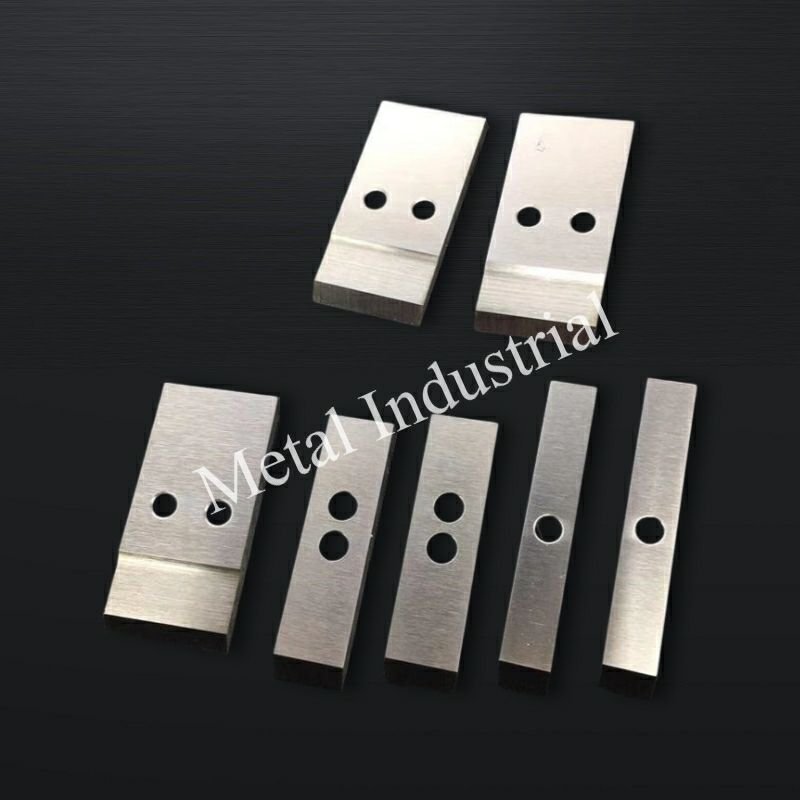
Quick answer: For pelletizing blades under high glass-fiber wear, powder metallurgy stainless steels outperform conventional tool steels because their fine, uniform carbide distribution resists micro-ploughing without the toughness trade-offs of high-alloy ingot steels. Between M390 and CPM S90V: choose CPM S90V when abrasion load is the dominant failure mode (>30% GF, neutral water); choose M390 when […]
D2 vs. SKD11 Werkzeugstahl für Schlagschermesser: Karbidmikrostruktur, Schadensbildanalyse und Leitfaden zur Sortenauswahl
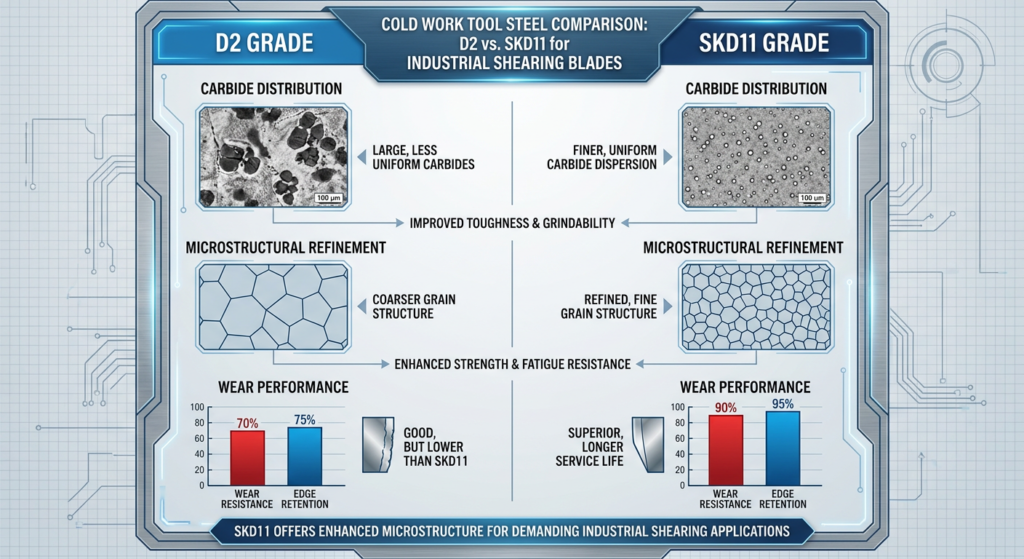
Quick Answer: D2 and SKD11 are compositionally near-identical high-carbon, high-chromium cold-work tool steels, but D2’s higher vanadium content (0.50–1.10%) delivers stronger abrasive wear resistance for clean, high-volume sub-6mm cutting, while SKD11’s finer carbide structure provides better impact toughness for stainless steel, variable feed, or chipping-prone operations. The decision turns on your dominant failure mode—wear or chipping—not […]
Gratreduzierung beim Längsteilen: Ursachenmatrix, Einstellfenster & Prüfprotokoll

Slitting burr reduction is one of those “small edge” problems that becomes a big cost problem fast: burr drives customer complaints, creates downstream forming issues, and quietly shortens knife life. This handbook is compiled by Jerry Chu, Technical Support Specialist at Maxtor Metal, drawing on 10+ years of field troubleshooting experience across coil slitting lines processing carbon […]
Elimination von Langstreifen-Ausschuss für mehr EBS/RDF-Aufbereitungseffizienz: Messergeometrie, Sieb-OAR und Schneidspaltkontrolle
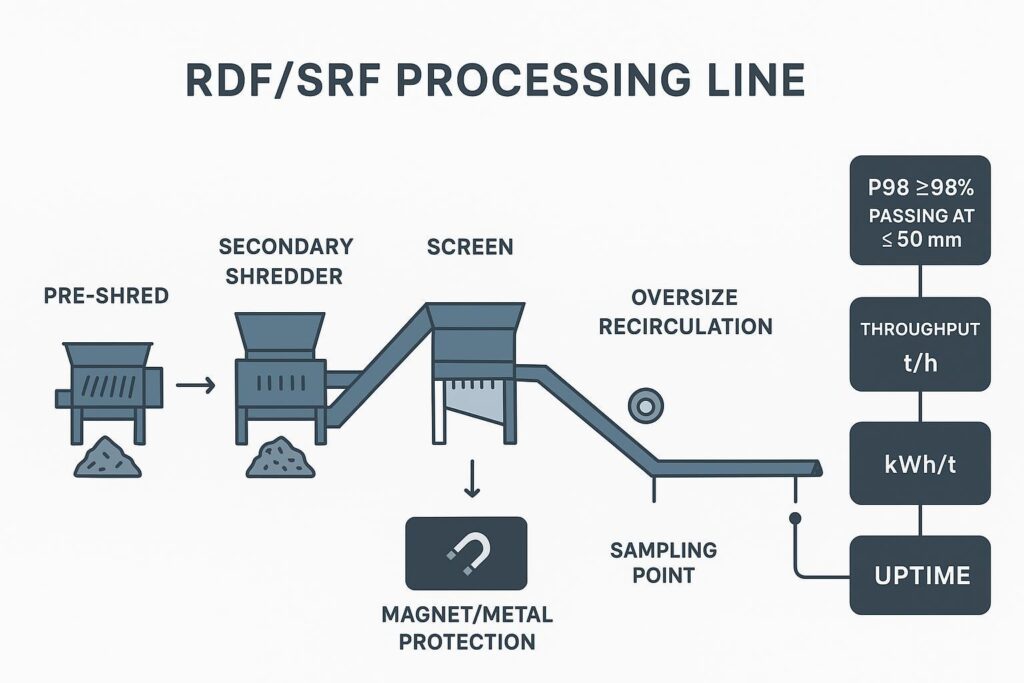
Long-strip “rejects” are a hidden tax in RDF/SRF production. They don’t just fail a sieve-based spec—they drive recirculation load, increase wrap risk, and quietly push kWh/t up while pulling throughput down. This article lays out the engineering moves to engineer out long strips and consistently hit ≤50 mm at ≥98% passing (P98) on screen-limited sizing […]
Schlängelschnitte beim Folien-Schneiden stoppen: System-Checkliste für Messer, Bahnspannung, Ausrichtung & Pneumatik
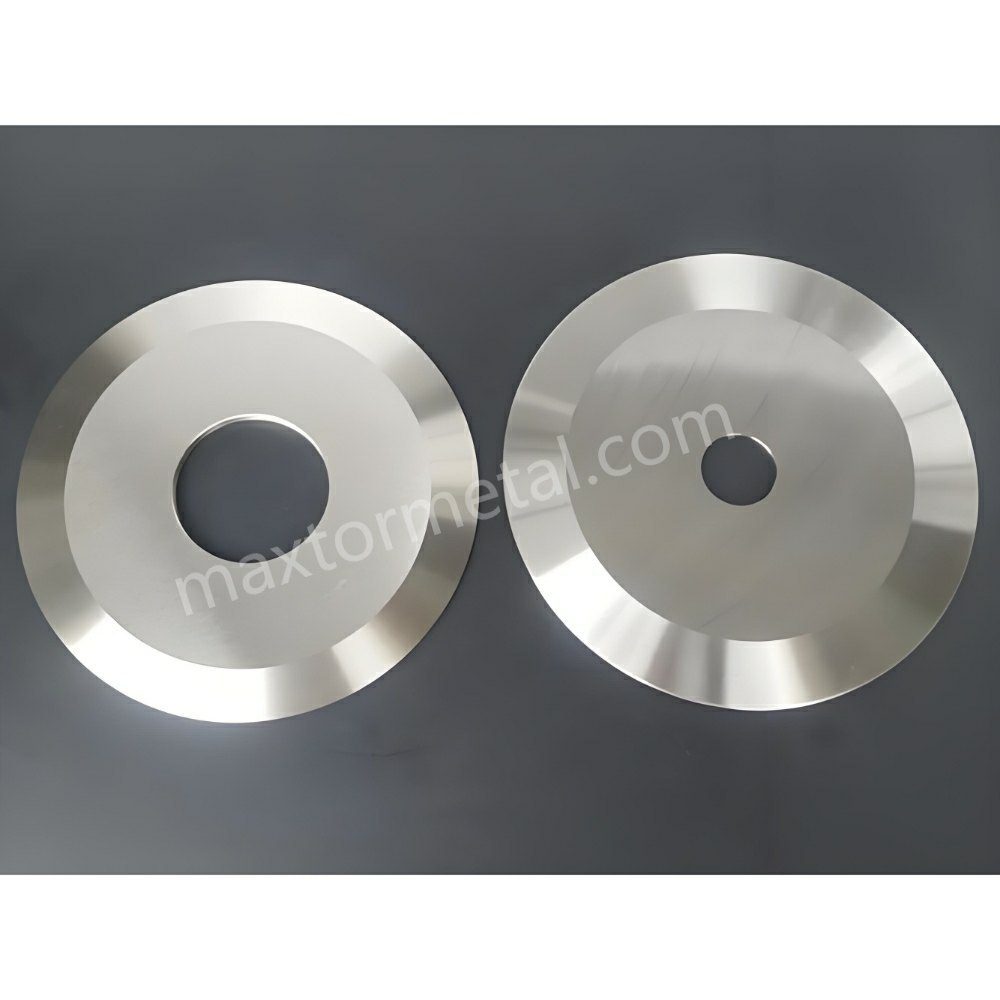
Schlangenlinien-Schnitte (auch als Schnittlinien-Wandern oder Drift bezeichnet) treten auf, wenn eine Schnittkante keine gerade, reproduzierbare Bahn einhält: Die Bahnen “wandern”, oszillieren oder verschieben sich allmählich, sodass die Lagen der Wickelrolle nicht mehr zentriert sind. Betrachten Sie dies als ein Stabilitätsproblem im gesamten Schneid- und Wickelsystem – und nicht als einen Defekt, der auf einem einzelnen Parameter beruht. Diese Checkliste spiegelt die Art und Weise wider, wie […]
Werkzeugstahl-Werkszeugnis (MTC) für Bandstahlmesser richtig lesen: Eine praktische QS-Checkliste für Chemie, Härte und Rückverfolgbarkeit
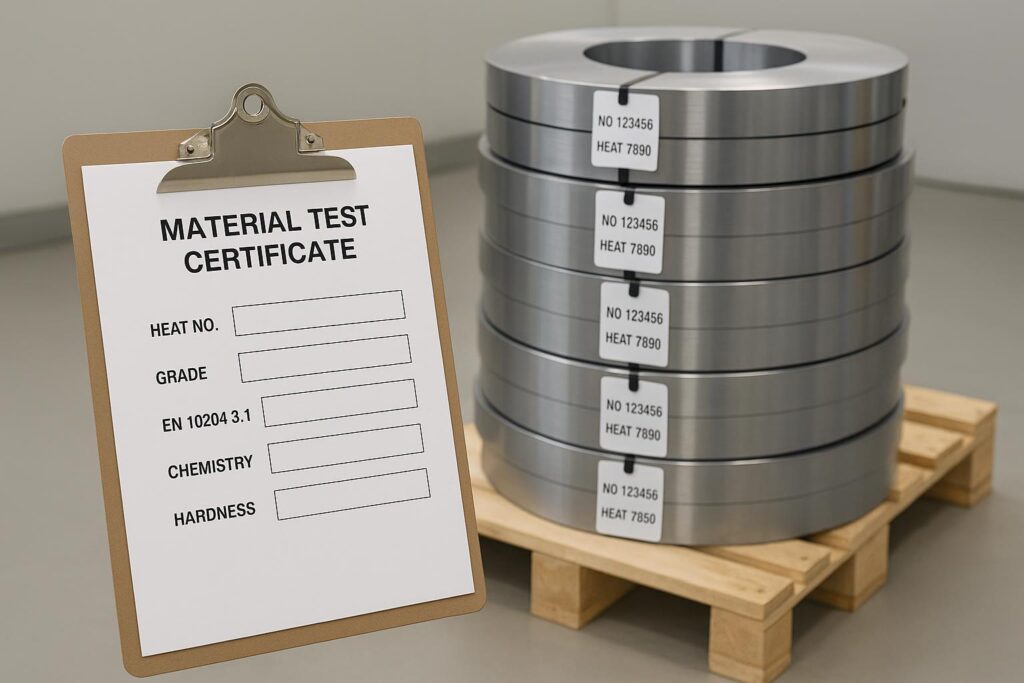
Quick Answer: To read a tool steel MTC for strip blades, start at the header — confirm EN 10204 3.1 certificate type, supplier identity, steel grade, and heat number. Then cross-check the chemistry table against your PO/spec (using ASTM A681 or ISO 4957 as the reference standard). Verify hardness uniformity with a 9-point map (head/mid/tail […]

 English
  Spanish
  Italian
  French
  Portuguese
  Russian
  German
  Arabic
  Hindi
Hindi  Vietnamese
  Indonesian
  Japanese
  Korean