
Vỡ lưỡi dao thảm khốc: Nguyên nhân cốt lõi luyện kim, cơ học phá hủy và kiểm soát nhà cung cấp để phòng ngừa

Quick Answer: Catastrophic blade shattering is almost never one cause—it’s the convergence of metallurgical defects (retained austenite, carbide banding), thermal-process errors (quench cracks, insufficient temper), and geometric stress risers, triggered by a contamination event. Fractography (macro mapping → SEM/EDS → metallography → XRD) identifies which lever failed; supplier controls like AMS 2750 pyrometry and lot-level […]
Keo bám dính trên dao cắt băng định hình tròn: Phản hồi tiếp xúc nhiệt, lựa chọn lớp phủ & Giao thức chẩn đoán phân tầng.
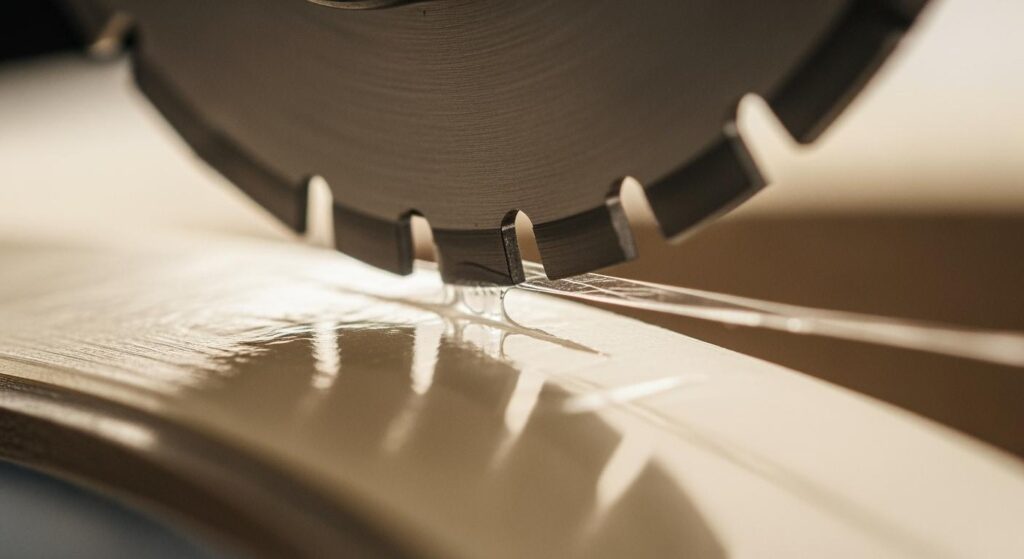
When adhesive starts building up on circular slitting blades, the first sign is rarely dramatic. Slit edges become slightly tacky. Roll geometry drifts. Edge quality degrades before the shift supervisor can pinpoint why. By the time a visible polymer deposit — a built-up edge (BUE) — has formed on the knife face, the blade has […]
Khắc phục gãy dao lưới tại đáy rãnh: Bán kính bo R, độ nguyên vẹn EDM và kiểm soát ram hai lần cho thiết kế R≥0,2 mm
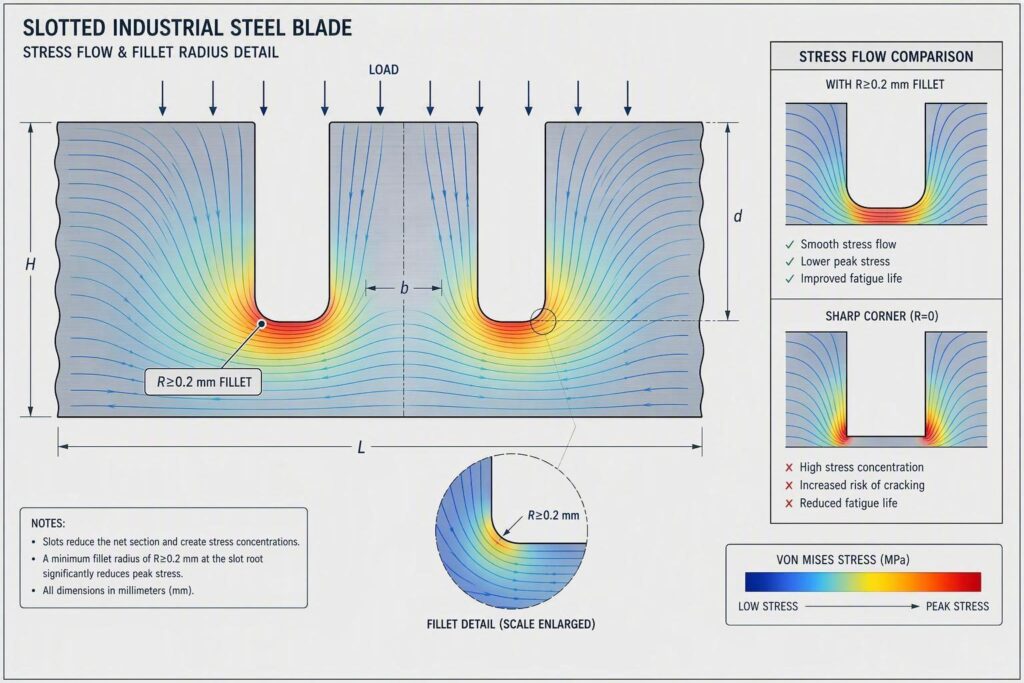
Giải đáp nhanh: Hiện tượng gãy lưỡi dao dạng lưới tại đáy rãnh là do sự đồng thời tồn tại của ba yếu tố: tập trung ứng suất đàn hồi cao (Kt 7–12 đối với các rãnh góc sắc), khuyết tật bề mặt đóng vai trò là điểm khơi mào vết nứt (lớp tái nóng chảy EDM, vết cháy mài) và độ dẻo dai không đủ của vật liệu xung quanh. Giải pháp kỹ thuật chính là chỉ định bán kính bo góc rãnh […]
Lựa chọn Dao cắt hạt nhựa cho Polymer ngành Y tế: Thép không gỉ 420 vs 440C, Độ bóng bề mặt và Kiểm soát vòng nước
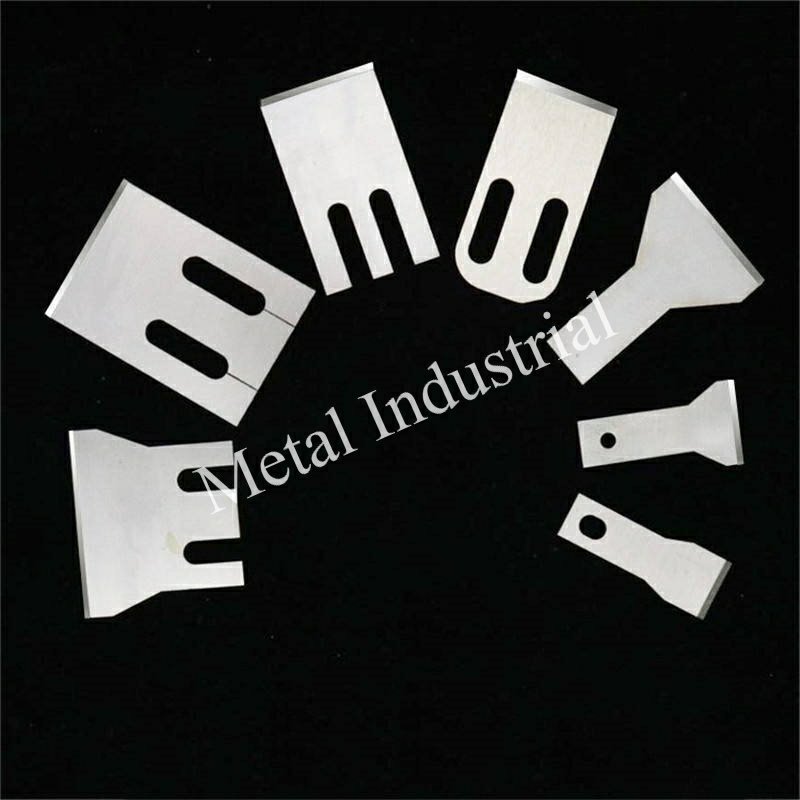
Giải đáp nhanh: Trong quy trình tạo hạt polyme y tế, thép không gỉ 420 và 440C không thể thay thế cho nhau: 420 mang lại độ dẻo dai cao hơn, khả năng đánh bóng tốt hơn và khả năng chống ăn mòn tốt hơn trong các vòng tuần hoàn nước có tính khử trùng cao hoặc hóa tính thay đổi; 440C mang lại khả năng giữ cạnh cắt vượt trội cho các polyme mài mòn trong các vòng tuần hoàn ổn định, được kiểm soát hóa tính. Cả hai mác thép đều yêu cầu độ bóng gương Ra ≤ 0.4 µm và quy trình thụ động hóa được kiểm chứng theo tiêu chuẩn ASTM […]
Phân tích nguyên nhân mẻ lưỡi dao cắt xén: Phân tích bề mặt gãy (Fractography), Cây quyết định và Hiệu chỉnh quy trình SOP
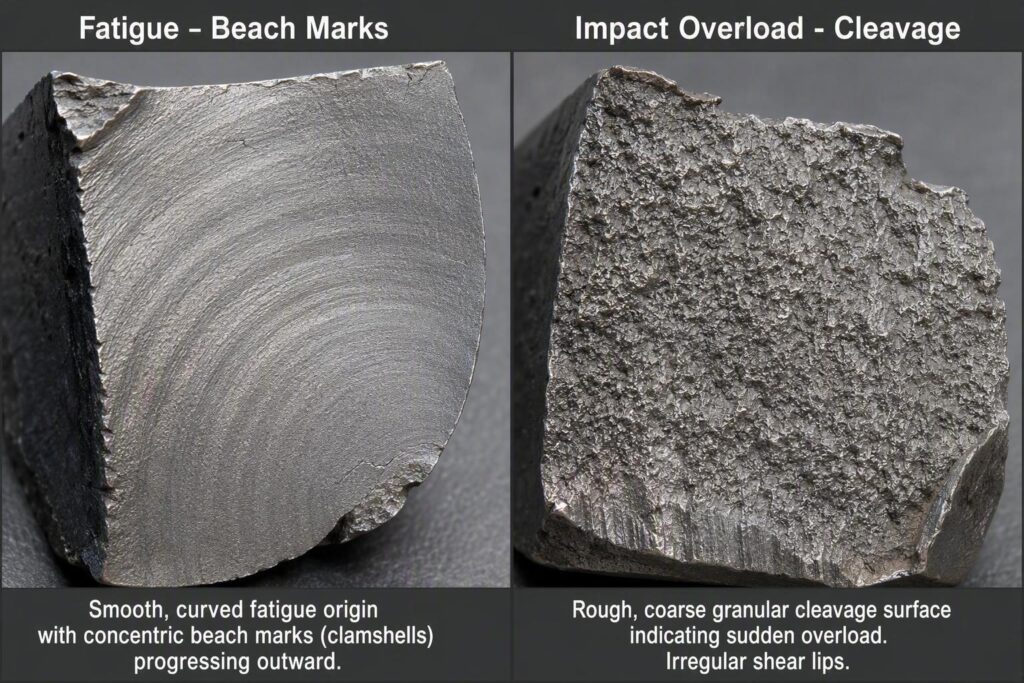
Quick Answer: Shear blade edge chipping root cause falls into two modes: fatigue (from cyclic stress — clearance errors, parallelism faults, or grinding burns) and impact (from sudden overload — foreign objects, excessive hardness, or geometry spikes). Read the fracture surface first: concentric arc-shaped beach marks mean fatigue; coarse granular cleavage with no arc pattern means […]
Cài đặt độ chồng dao xẻ đĩa: Cơ học cắt xén, Khoảng thông số vật liệu & Kiểm soát trục gá

In continuous metal coil processing, achieving a clean, square, and burr-free edge is the primary benchmark of a well-calibrated slitting line. Behind every high-yield slitting run are two critical geometric parameters governing shear-cut quality: horizontal side clearance and vertical rotary knife overlap. While horizontal clearance dictates the stress concentration across the strip width, vertical knife […]
Dao Băm Lốp Xe & Xe Phế Liệu ELV: Cân Bằng Độ Cứng & Độ Dai Để Giảm Chi Phí Trên Mỗi Tấn
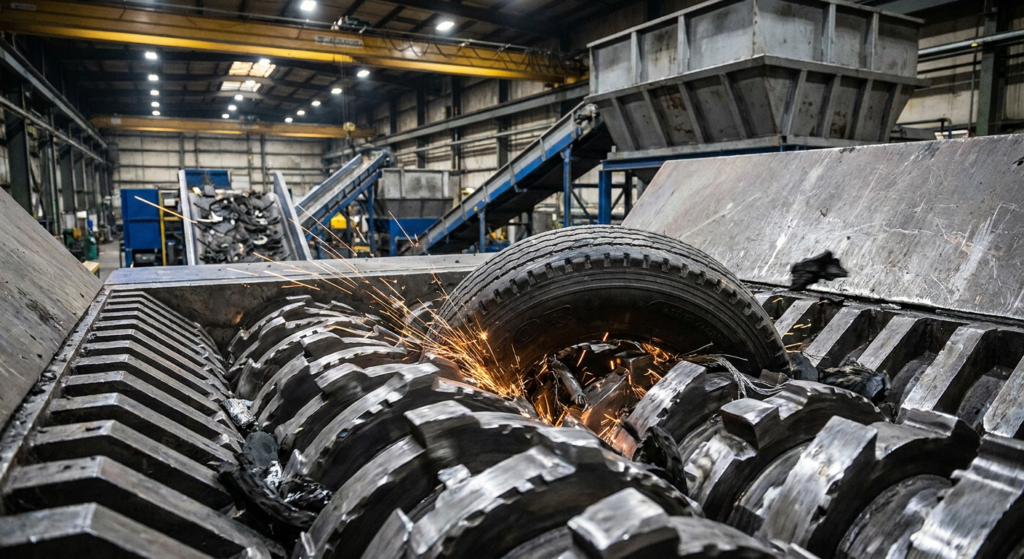
Quick Answer: Balance hardness (wear resistance) against Charpy impact toughness rather than maximizing HRC alone—DC53 at 58–60 HRC delivers roughly double D2’s impact toughness for contaminated tire/ELV streams, while a documented real-world case shows that fracture at mounting-hole geometry, not material hardness, is often the true root cause. Scope: This guide focuses primarily on primary and pre-shredding […]
Phân tích nguyên nhân gốc rễ gây bụi cắt xẻ: Độ nhám Ra mặt bên, vi cấu trúc cacbua và dung sai lắp đặt.

Bốn nguyên tắc này cấu thành nên khung kỹ thuật được đội ngũ ứng dụng của Maxtor Metal áp dụng khi đánh giá tiêu chuẩn dao xẻ tròn cho các chương trình gia công cắt cuộn không bụi trong các dây chuyền sản xuất bao bì mềm, vải không dệt và giấy đặc chủng. Trong quy trình gia công cắt cuộn bao bì mềm tốc độ cao, dệt kỹ thuật, vải không dệt và giấy đặc chủng, sự nhiễm bẩn do hạt bụi là nguyên nhân chính dẫn đến việc dừng dây chuyền ngoài kế hoạch. Những gì người vận hành nhà máy thường chẩn đoán […]
Mài lại dao cắt dạng dải công nghiệp: Ngưỡng mài sắc, Tiêu chuẩn loại bỏ phế liệu và Mô hình chi phí vòng đời
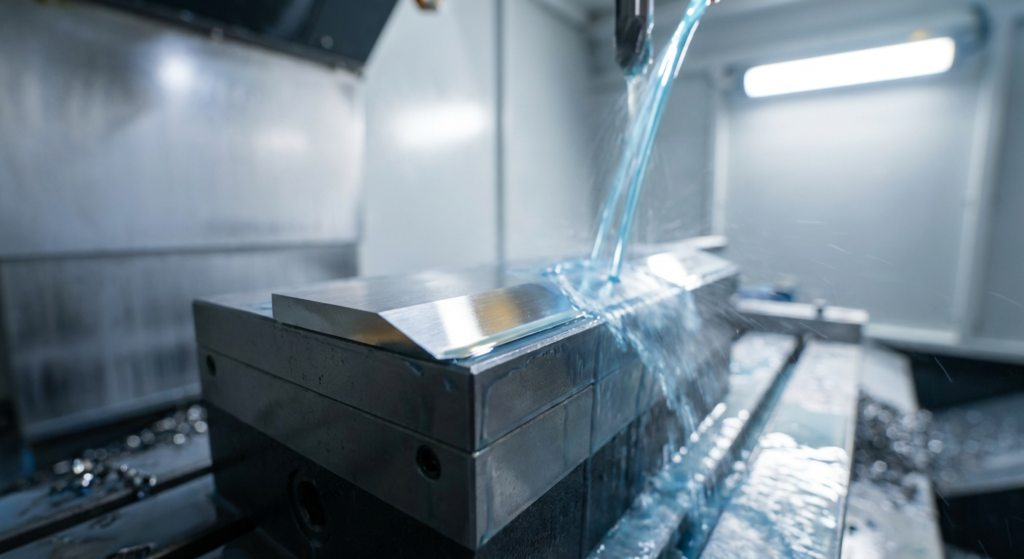
Quick Answer: Regrinding industrial strip blades is economical when: chipping depth is under 0.5 mm, remaining thickness is above 60–70% of nominal, and the estimated regrind cost is below 50% of a new replacement blade. The minimum safe stock removal is 0.010–0.015 in (0.254–0.381 mm) to clear the subsurface micro-fractured fatigue layer. Blades with radial cracks, […]
Dao cắt hạt nhựa bột kim loại M390 vs CPM S90V: Lựa chọn mác thép trong điều kiện mài mòn cao bởi sợi thủy tinh
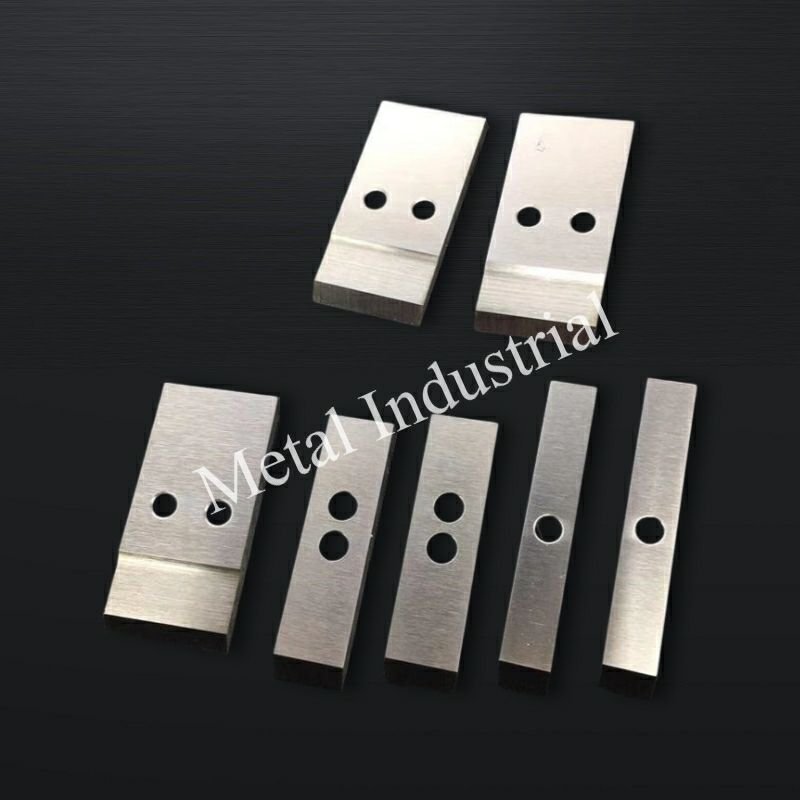
Quick answer: For pelletizing blades under high glass-fiber wear, powder metallurgy stainless steels outperform conventional tool steels because their fine, uniform carbide distribution resists micro-ploughing without the toughness trade-offs of high-alloy ingot steels. Between M390 and CPM S90V: choose CPM S90V when abrasion load is the dominant failure mode (>30% GF, neutral water); choose M390 when […]

 English
  Spanish
  Italian
  French
  Portuguese
  Russian
  German
  Arabic
  Hindi
Hindi  Vietnamese
  Indonesian
  Japanese
  Korean