Engineered for high-speed continuous slicing and complex grid-blade manufacturing, this strip steel balances extreme edge retention with the structural integrity required for industrial slotting.
パラメータ
Specification (High Carbon Steel)
Specification (Stainless Steel)
Material Grade
SK5, C100S, C75
420 (1.4021), 440C
硬度範囲
HRC 56 – 62
HRC 46 – 56
厚さ範囲
0.50mm – 2.0mm
0.50mm – 2.0mm
Width Range
7mm – 100mm
7mm – 100mm
Thickness Tolerance (with Cpk ≥1.33 across 500m continuous coil)
± 0.01 mm to ± 0.02 mm
± 0.01 mm to ± 0.02mm
表面仕上げ
Blade: Ra < 0.8µm; Body: Ra < 1.6µm
Blade: Ra < 0.8µm; Body: Ra < 1.6µm
Dimensional Std.
ISO 2768-mK
ISO 2768-mK
Supply Format
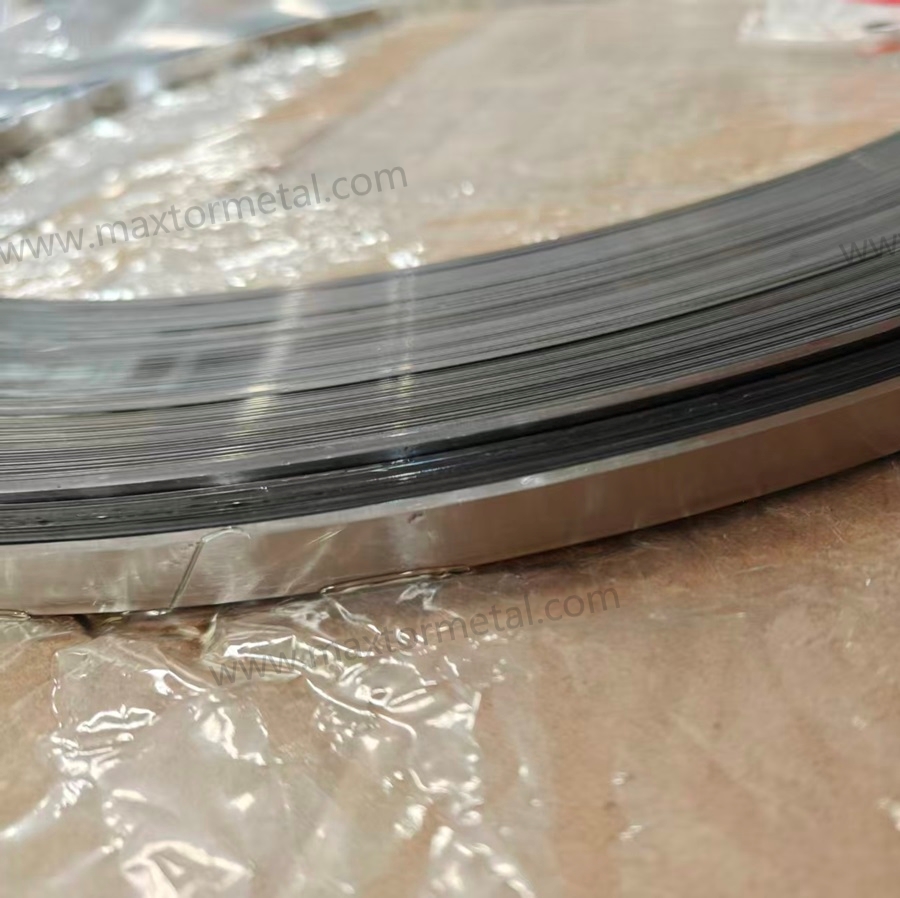
Coils: 100m, 200m, 300m, 500m
Coils: 100m, 200m, 300m, 500m
2. Blade Strip Steel Engineering Overview: The Mechanics of the Edge
In the specialized field of 鋼帯刃 / ベベル加工済み鋼帯コイル, performance is a function of エッジジオメトリ そして Material Toughness. Unlike standard flat steel, blade strip must undergo a rigorous cold-rolling and heat-treatment cycle to ensure that when the steel is “slotted” to create dicing grids, it does not succumb to stress fractures.
2.1 Fracture Toughness in Grid Applications
The manufacturing of grid blades (dicers) involves cutting slots into the strip. This creates significant Stress Concentration Factors (Kt). Our engineering approach focuses on controlling the carbide morphology in SK5 and 440C grades. By ensuring a fine, globular carbide distribution, we mitigate the risk of “blade snapping” (brittle fracture) at the slot corners while maintaining a hardness of up to HRC 62.
2.2 Tribological Considerations
During high-speed slitting of PE/BOPP films or fibrous meat products, the blade surface experiences intense localized friction. The specified surface finish of Ra < 0.8µm at the edge is not merely aesthetic; it reduces the Coefficient of Friction (μ), preventing material adhesion (pick-up) and thermal softening of the cutting tip.
Engineering Focus: Corrosion resistance. 420 and 440C grades are utilized to withstand the acidic/aqueous environments of vegetable processing while providing enough toughness to handle high-frequency dicing.
3.2 Meat & Protein Slicing
Target: Processed meat products.
Equipment: Continuous belt slicers.
Engineering Focus: Lateral stiffness. The 0.50mm-2.0mm thickness range provides the necessary beam strength to prevent blade deflection during high-speed protein shearing.
3.3 VFFS (Vertical Form Fill Seal) Packaging
Target: BOPP, PE, and laminate films.
Equipment: Automatic flow wrappers.
Engineering Focus: Ultra-sharp “pierce and cut” capability. SK5/C100S carbon steel is preferred here for its ability to hold a razor-fine edge compared to standard stainless.
3.4 Foam & Synthetic Rubber Fabrication
Target: Acoustic foam, gaskets.
Equipment: Customized grid-making slitting lines.
Engineering Focus: Consistency across long coil lengths (up to 500m) to minimize machine downtime during coil changes. For a quantitative framework on how coil length directly affects OEE Availability — including changeover downtime formulas, splice scrap calculations, and a blade strip pilot case — see OEE Profit Gains From Reducing Coil Change Frequency.
3.5 Textile & Non-woven Slitting
Target: Industrial fabrics, medical textiles.
Equipment: High-speed slitting lines.
Engineering Focus: Edge retention. The higher HRC 56-62 in carbon grades ensures the blade can cut abrasive synthetic fibers without frequent regrinding.
3.6 Fruit Processing (Slicing/Coring)
Target: Apples, pineapples.
Equipment: Industrial fruit processing lines.
Engineering Focus: Food-grade certification compliance using 440C stainless steel for a balance of extreme hardness and hygiene.
4. Blade Strip Steel Common Failure Problems & Engineering Solutions
Problem: Brittle Fracture at Slot Base.
根本的な原因: Excessive internal stress from hardening or sharp 90° slot geometry.
解決策 Optimize tempering cycles to increase ductility. Recommendation: Use a 300°C+ tempering stage to transform brittle martensite into a tougher structure.
Problem: Frequent Downtime for Blade Replacement.
根本的な原因: Edge wear due to low carbide volume in standard steel.
解決策 Upgrade to SK5 または 440C for higher primary carbide density, extending run-times by 200%.
Problem: Material Waste (Off-cuts).
根本的な原因: Using fixed-length blades for varied production runs.
解決策 Supply in 500m continuous coils, allowing the customer to cut only the exact length needed for specific grid configurations.
Problem: Longitudinal Blade Bowing.
根本的な原因: Uneven residual stress from the cold-rolling process.
解決策 Implementation of tension-leveling and sub-zero treatment to ensure linear straightness.
Problem: Rapid Blunting in Food Dicing.
根本的な原因: Micro-corrosion at the edge tip (chemical wear).
解決策 Switch from 420 to 440C, which offers higher Chrome content and carbon for better edge stability in aqueous environments.
Problem: “Tearing” of Packaging Film.
根本的な原因: Edge roughness (Ra) exceeding 1.2µm.
解決策 Precision grinding to achieve Ra < 0.8µm at the bevel, ensuring a clean shear.
Problem: Thermal Deformation.
根本的な原因: Friction heat during high-speed textile slitting.
解決策 Reduce bevel angle to minimize contact area; use C100S for better thermal conductivity.
Problem: Inconsistent Dicing Dimensions.
根本的な原因: Thickness variation across the strip.
解決策 Tightening tolerances to ±0.01mm through rigorous AGC (Automatic Gauge Control) during rolling.
Problem: Surface Rusting in Carbon Steel.
根本的な原因: Poor humidity control in storage.
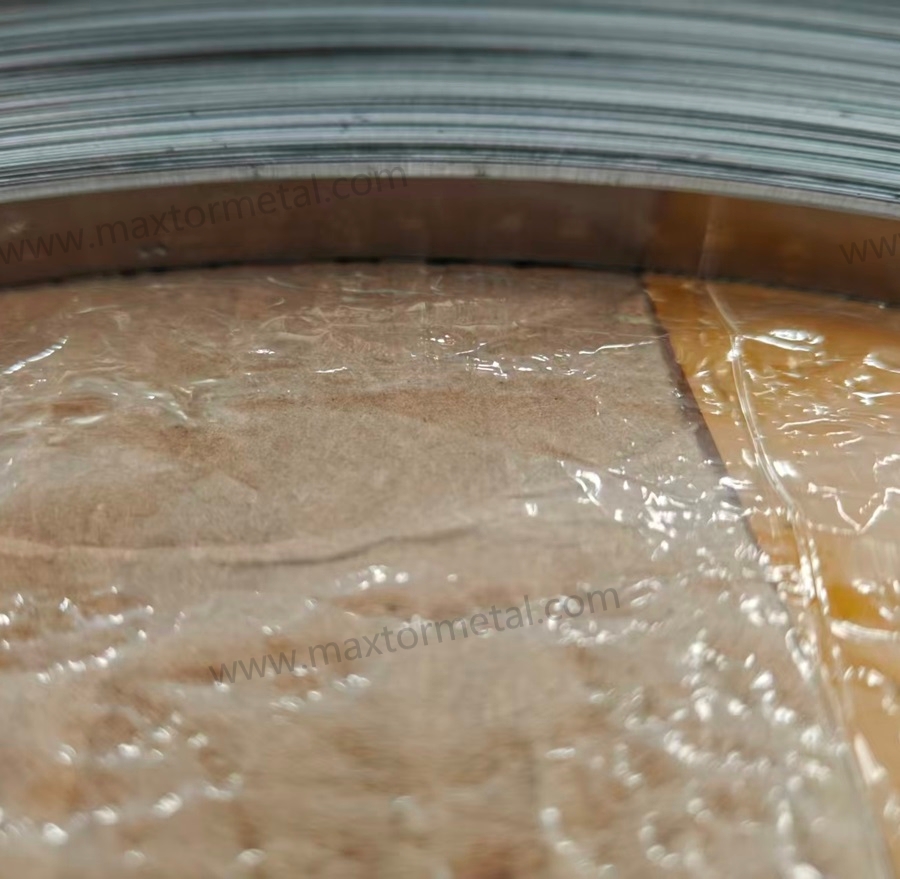
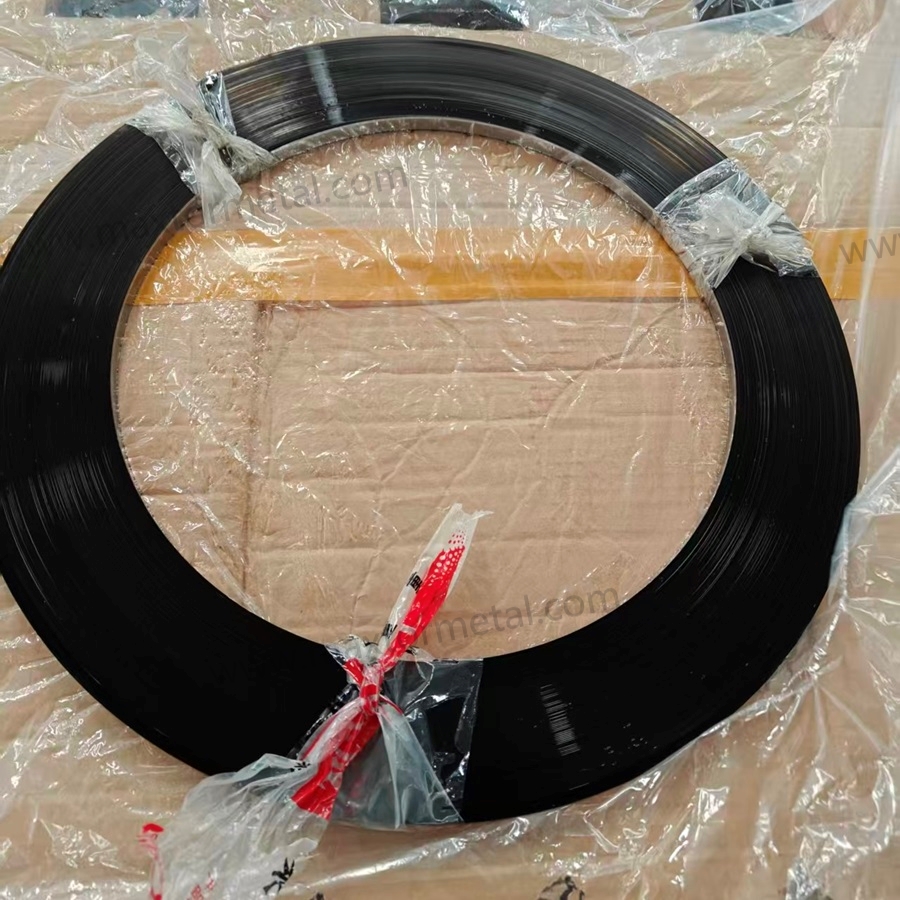
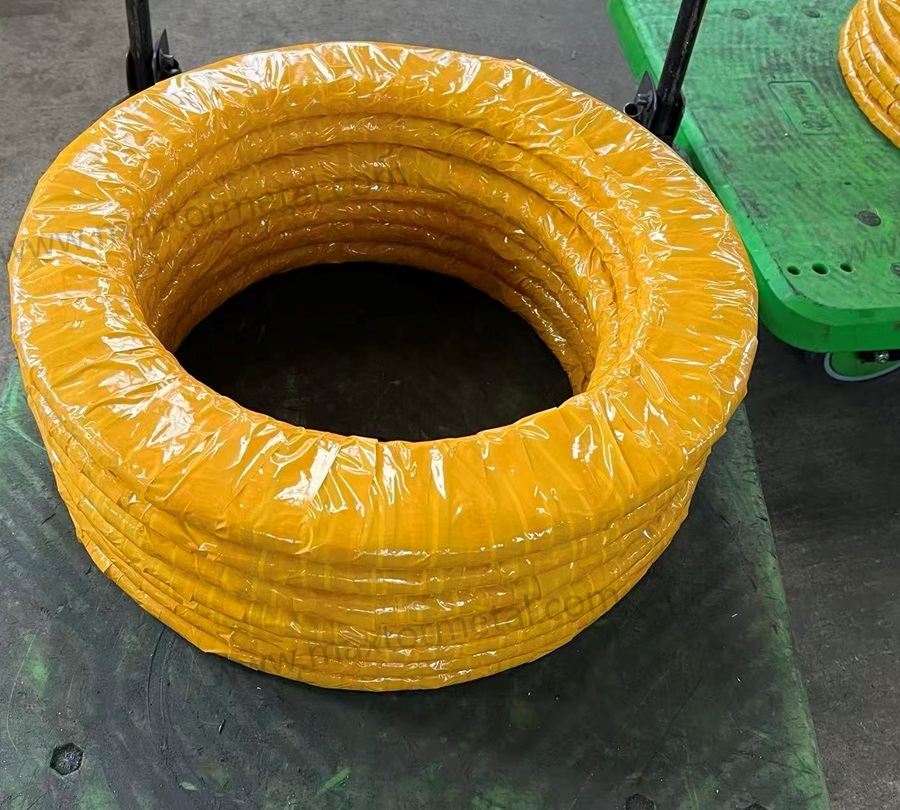
解決策 Application of VCI (Volatile Corrosion Inhibitor) oil and vacuum-sealed packaging for 100m-500m coils.
Problem: Difficulty in Slotting/Machining.
根本的な原因: Steel is too hard for the customer’s secondary processing.
解決策 Provide steel in a “Spheroidized Annealed” state for machining, followed by localized hardening, OR provide pre-tempered steel at HRC 46-50.
5. Blade Strip Steel Material Engineering Guide
学年
カーボン(%)
Chrome (%)
Mechanical Profile
典型的なアプリケーション
SK5
0.80 – 0.90
–
Ultra-high hardness (HRC 60+).
Industrial slitting & non-food dicing.
C100S
0.95 – 1.05
–
High elastic limit, excellent for thin blades.
Precision film slitting.
420 SS
0.20 – 0.40
12.0 – 14.0
Moderate wear resistance, high corrosion resistance.
General food dicing.
440C SS
0.95 – 1.20
16.0 – 18.0
Highest hardness for stainless (HRC 56).
Abrasive food and medical dicing.
C75
0.70 – 0.80
–
Superior toughness/flexibility balance.
Spring-tempered industrial blades.
技術ノート: For Urschel-style dicer band applications, 440C at HRC 56–58 requires more than a hardness specification — it demands a validated heat-treatment window and surface integrity protocol. See the 440C Dicer Blade Qualification Guide for a full QA and ROI framework.
The hardness of our strip steel is carefully tuned to the application:
Carbon Steel (HRC 56-62): Maximizes the “martensite” fraction for absolute hardness. Essential for dry slitting where abrasion is the primary wear factor.
Stainless Steel (HRC 46-56): Optimized for Edge/Toughness Balance. Lower hardness in stainless often yields better results in grid-making to prevent the thin “walls” between slots from cracking during assembly.
7. Blade Strip Steel Geometry & Edge Engineering
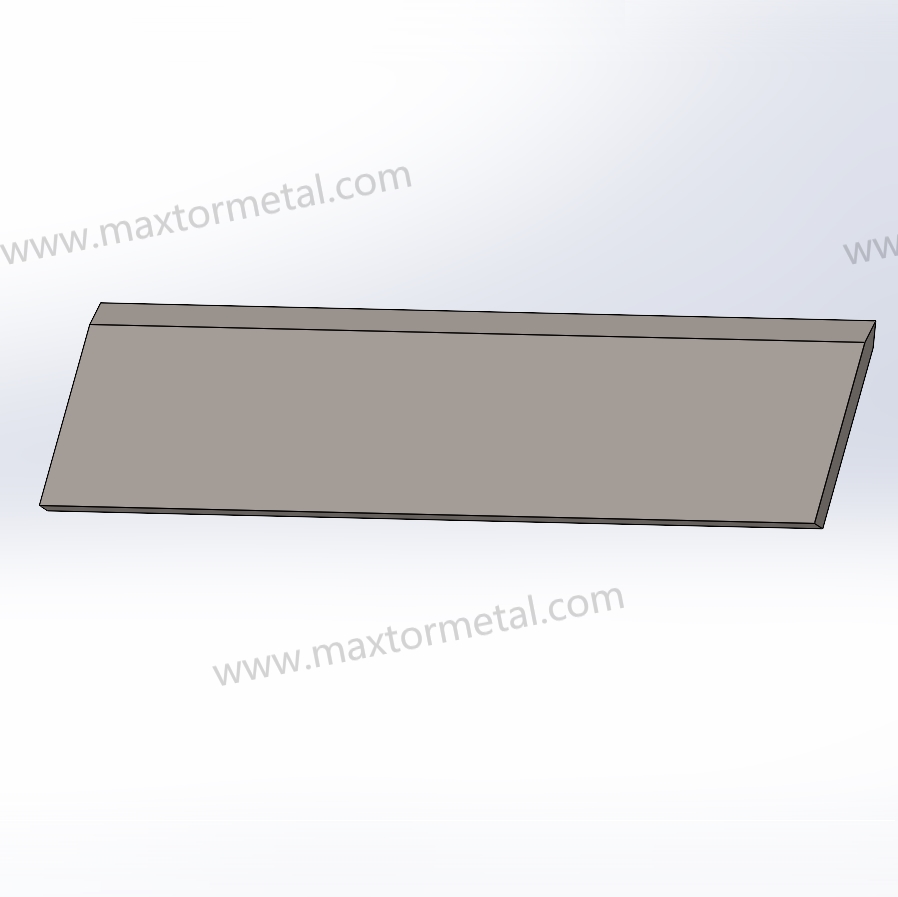
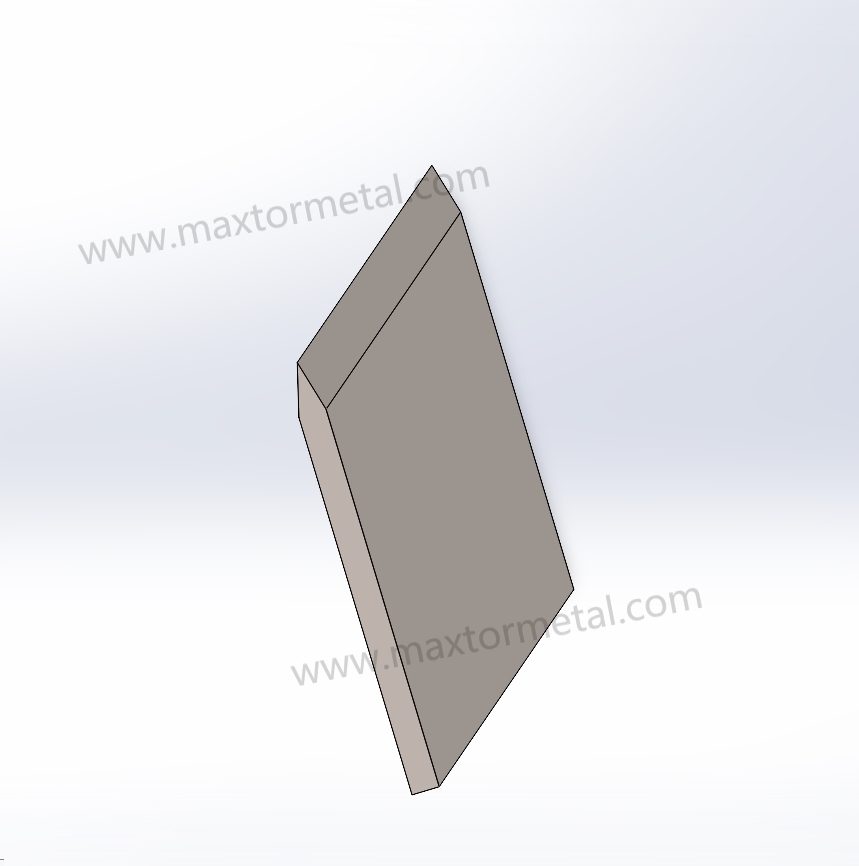
Surface Finish (Blade Ra < 0.8µm): Achieved through multi-stage longitudinal grinding. This smoothness ensures that the cutting force is distributed evenly, preventing micro-fractures.
Dimensional Accuracy: Compliance with ISO 2768-mK ensures that every millimeter of the 500m coil is within industrial “Medium” to “Fine” tolerance standards.
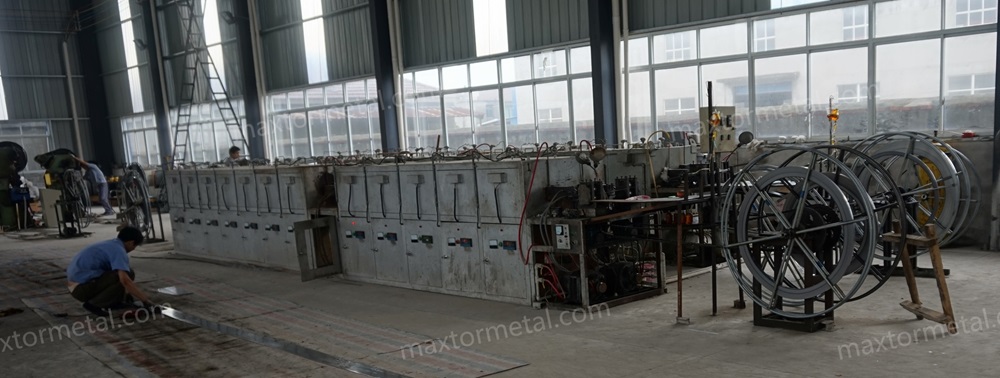
8. Blade Strip Steel Manufacturing Process & Quality Inspection
Precision Cold Rolling: Achieving thickness within ±0.01 mm.
Continuous Bright Annealing: Removing work-hardening stresses for uniform grain structure.
Edge Grinding: CNC controlled beveling to meet Ra < 0.8µm.
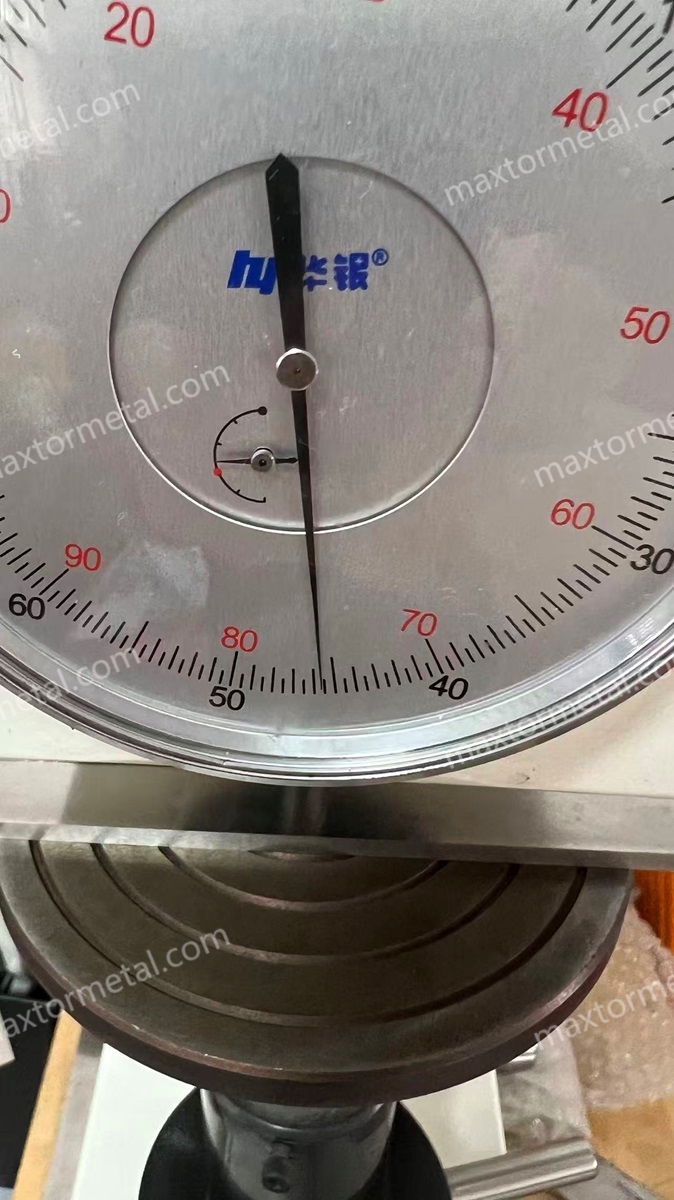
Hardness Testing: Rockwell C testing every 50 meters of the coil.
Surface Inspection: Automatic optical inspection (AOI) for scratches or pits.
For guidance on how to read and validate the Material Test Certificate (MTC) that accompanies each coil — including EN 10204 3.1 certificate verification, chemistry cross-check, and 9-point hardness mapping — see theTool Steel MTC Reading & QA Checklist for Strip Blades.
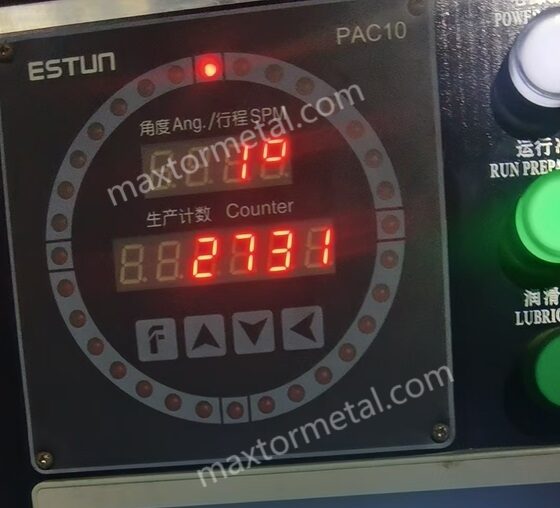
Blade Strip Steel counterBlade Strip Steel hardness test
9. Case Study: Performance Benchmarks
Case 1: Urschel-type Grid Dicer Optimization
Client: Frozen Vegetable Processor.
Initial Condition: Standard 420 blades failing every 8 hours due to corner cracking.
エンジニアリングソリューション: 移行しました 440C Strip Steel with a revised tempering profile (HRC 54).
Outcome: Blade life extended to 24 hours; 200% improvement in uptime. For a detailed QA validation protocol and ROI analysis behind this material transition — including heat-treatment window definition, retained austenite control, and field trial KPI design — see Validating 440C Dicer Blades at HRC 56–58: Heat-Treatment, QA & ROI. Engineering teams who have completed the 440C qualification process above often find that the next OEE lever is coil length. See OEE Profit Gains From Reducing Coil Change Frequency for the changeover math and a blade strip producer pilot case.
Case 2: High-Speed PE Film Slitting
Client: Flexible Packaging Manufacturer.
Initial Condition: Frequent “snagging” and film tearing using standard slitter blades.
エンジニアリングソリューション: Implemented C100S Carbon Steel with Ra 0.4µm edge finish.
Outcome: Increase in slitting speed by 25% with zero reported film tears.
10. よくある質問(FAQコーナー)
Q: Why use SK5 instead of Stainless?
A: SK5 allows for higher peak hardness (HRC 62), making it superior for non-corrosive slitting of abrasive materials like textiles.
Q: What is the maximum thickness available?
A: The maximum thickness is 2.0mm. Beyond this, the increased cross-section significantly raises the slotting resistance during grid manufacturing, making thinner profiles (0.5–1.2mm) more practical for most dicing applications.
Q: Do you provide blades with slots already cut?
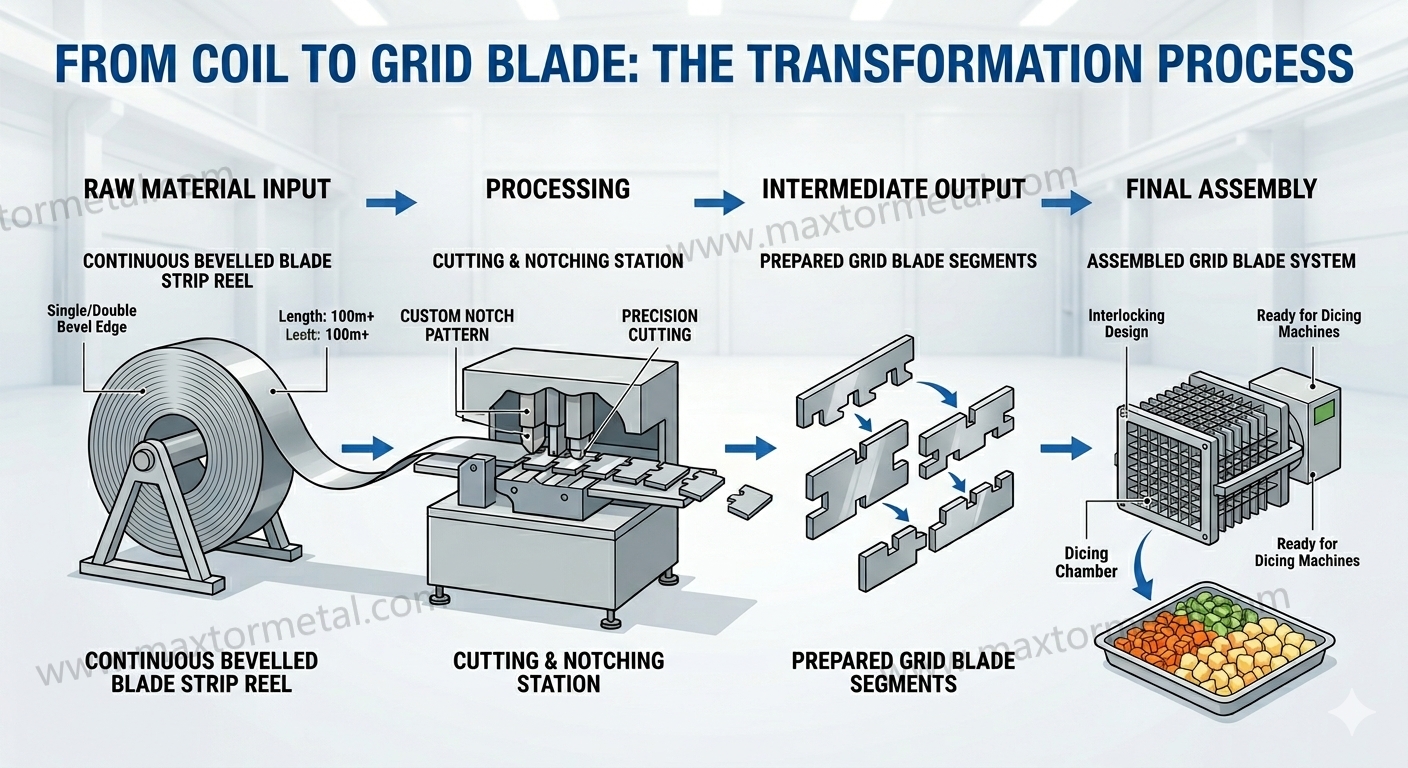
A: No, we provide the base material (strip steel) in coils for your manufacturing process.
Q: How does thickness tolerance affect my grid assembly?
A: In a dicing grid, errors accumulate. A ±0.01 mm tolerance ensures that the grid slots align perfectly across the entire width of the machine.
Q: Is 440C harder than 420?
A: Yes. 440C has higher carbon, allowing it to reach HRC 56-58, whereas 420 typically ranges from HRC 48-52.
Q: Can you provide a 500m coil without any welds?
A: Yes, we specialize in high-integrity, single-piece long coils to prevent machine jams.
Q: What surface finish should I choose for meat dicing?
A: We recommend the Ra < 0.8µm edge finish to prevent protein adhesion.
Q: What causes “edge rolling” (dulling)?
A: Usually, the hardness is too low for the material being cut. Increasing HRC or switching to a higher carbon grade (C100S) is the solution.
Q: Does your steel meet ISO 2768-mK standards?
A: Yes, all our precision strip steel is manufactured to these tolerances. Each coil ships with an EN 10204 3.1 Material Test Certificate covering chemistry, hardness, and heat number traceability. For a step-by-step guide on how to read and verify these documents — including how to cross-check chemistry against ASTM A681/ISO 4957 and map hardness uniformity — see the Tool Steel MTC Reading & QA Checklist for Strip Blades.
Q: Why is Ra < 1.6µm used for the body?
A: This allows for sufficient grip in machine holders while maintaining a smooth enough profile to prevent debris buildup.
Q: How should I store high-carbon coils?
A: Keep them in their original VCI packaging in a dry, temperature-controlled warehouse.
Q: Can this steel be used for medical-grade dicers?
A: Yes, 440C is frequently used in medical/surgical cutting tools due to its purity and hardness.
Q: What is the benefit of the 300m and 500m coil lengths?
A: It reduces the frequency of coil changes, significantly increasing the OEE (Overall Equipment Effectiveness) of automated lines.
Q: Can you provide custom widths like 15.5mm?
A: Yes, we provide custom slitting within the 7mm to 100mm range.
Q: How do I select between C75 and SK5?
A: Choose C75 if your blade needs to flex significantly without breaking; choose SK5 if edge retention is the absolute priority.
Whether you are an importer, distributor, wholesaler or end-user, we welcome you to join us with a minimum MOQ, no hassle for inquiry and more freedom for purchasing.


 English
  Spanish
 Italian
 French
 Portuguese
 Russian
 German
 Arabic
 Hindi
Hindi
 Vietnamese
 Indonesian
 Japanese
 Korean


