

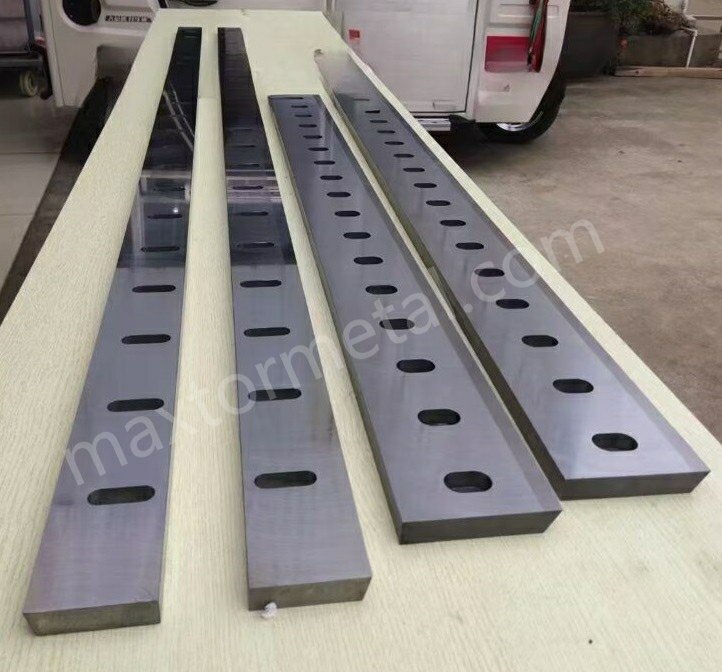
Resposta rápida: As facas de tesoura com inserto de carboneto de tungstênio geralmente oferecem uma vida útil de corte 2 a 3,5 vezes superior à das facas D2 em linhas AHSS. O ROI é impulsionado principalmente pelo menor número de trocas de ferramentas e pela redução de refugo por instabilidade da borda, e não apenas pelo preço da faca. O controle de folga e a restauração consistente da geometria de afiação são as duas variáveis que mais determinam se esse multiplicador de vida útil se mantém na produção.
As linhas de AHSS/UHSS de ultra-alto rendimento geralmente não falham porque a tesoura «não consegue cortar». Elas falham porque pequenas instabilidades — lascamento da borda, variação da rebarba, variação de folga sob carga ou geometria de afiação inconsistente — se transformam silenciosamente em tempo de inatividade, refugo e perda de OEE.
Ce guide s'adresse aux responsables de production et de maintenance, ingénieurs procédés et acheteurs techniques qui exploitent (ou mettent à niveau) des lignes de coupe à longueur (CTL) et des cisailles guillotines adaptées aux aciers AHSS. Si vous évaluez des couteaux à insert carbure, l'objectif n'est pas de viser un simple « gain de longévité » d'affichage, mais de bâtir un modèle de ROI récalculable et fiable incluant le mix de nuances, les temps de changement d'outil et la rotation de rectification.
Para obter informações sobre configurações típicas de lâminas de corte e formatos de pedido, você pode começar com o lâminas de cisalhamento Maxtor Metal página—em seguida, use o modelo e os pontos de verificação abaixo para validar o ajuste e a viabilidade econômica da sua linha específica.
- A quem se destina este guia e o contexto AHSS/UHSS
- Que alterações de altíssima produtividade afetam a seleção e a manutenção das lâminas?
- Como as lâminas de corte com revestimento de carboneto de tungstênio impactam a vida útil, o controle de rebarbas e o custo total de propriedade.
Pour les aciers AHSS, la fenêtre de coupe se rétrécit car la résistance est élevée, la chaleur et l'adhérence deviennent plus contraintes, et le cumul des tolérances (flexion de la machine + serrage + parallélisme) prend plus d'importance. Les directives AHSS de WorldAutoSteel indiquent que le jeu de coupe (clearance) augmente généralement avec la résistance — passant d'environ 6 % de l'épaisseur pour les aciers doux à environ 16 % ou plus lorsque la résistance à la traction dépasse ~1 400 MPa — et soulignent également que la hauteur des bavures peut être un indicateur d'usure moins fiable pour l'AHSS que pour l'acier doux (le contrôle de la qualité d'arête devient donc plus crucial).
O que muda em um rendimento ultra-alto é simples: você não precisa apenas de facas «mais duras». É necessário um sistema que mantenha a borda estável entre as intervenções planejadas — intervalos de afiação previsíveis, preparação de borda controlada e um ciclo de controle de qualidade que evite a variação da geometria entre lotes.
As lâminas de cisalhamento com revestimento de carboneto de tungstênio são frequentemente avaliadas por três razões práticas:
- Estabilidade de vida útil ao desgaste na vanguarda da tecnologia (especialmente quando os níveis e as condições da superfície variam)
- Controle de rebarbas ao longo do tempo (menos desvio à medida que a borda perde o seu brilho)
- Redução do custo total de propriedade (TCO) quando se leva em conta as trocas de formato, os materiais reciclados e a sucata.
Nota de Engenharia: As lâminas de corte com insertos de carboneto de tungstênio são ferramentas de corte de precisão nas quais uma aresta de carboneto de tungstênio brasada é integrada a um corpo de aço-liga D2 ou H13, combinando a tenacidade do aço ferramenta com a resistência ao desgaste do carboneto na face de corte. Para linhas de corte de aços AHSS e UHSS, essa construção prolonga a estabilidade da aresta entre as reafiações e reduz a deriva de rebarbas sob condições variáveis de grão e superfície — desde que o controle de folga, o alinhamento e a restauração da geometria após a reafiação sejam mantidos. [→ Consulte a visão geral técnica da lâmina de cisalhamento Maxtor Metal.]
Benchmarks de desempenho de facas de tesoura com inserto de carboneto de tungstênio
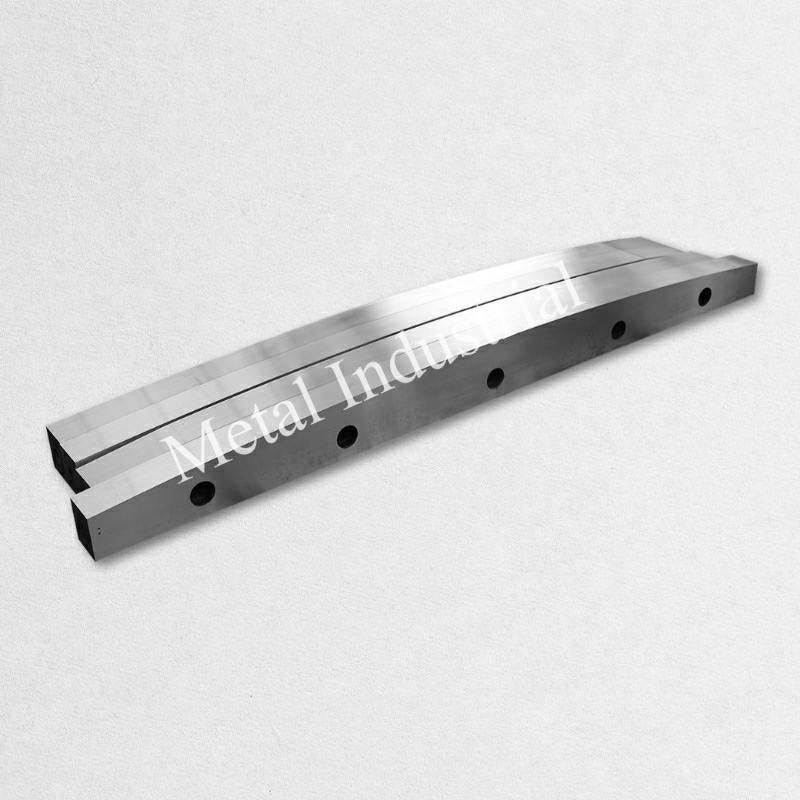
Multiplicadores de vida útil versus aços D2/alto teor de vanádio
As lâminas com incrustações de carboneto geralmente compensam o investimento quando o seu modo de falha atual é ruptura da borda (microlascamento, desgaste acelerado na borda, instabilidade da rebarba) em vez de uma colisão mecânica isolada.
Em vez de se basear numa afirmação universal de "vida útil X vezes maior", utilize como referência dois indicadores mensuráveis pelas plantas:
- Metros (ou toneladas) por aresta afiada até que seu gatilho de qualidade seja atingido.
- Estabilidade do tempo de disparo mistura de diferentes granulometrias (a mesma lâmina não deve se comportar como duas ferramentas diferentes ao alternar entre HSLA e AHSS)
Uma maneira útil de comparar com aços ferramenta D2 ou com alto teor de vanádio é realizar um teste piloto controlado com seus 2 a 3 melhores aços e uma condição de "pior cenário" (material revestido, maior quantidade de óxido na superfície ou seu processo subsequente mais sensível a rebarbas). O modelo de ROI (retorno sobre o investimento) apresentado mais adiante neste guia permitirá que você converta qualquer taxa de vida útil observada em custo por metro/tonelada.
Profundidade de incrustação, acabamento da borda e alvos de microafiação
Em linhas de aço AHSS, a borda desempenha duas funções simultaneamente: precisa resistir ao desgaste abrasivo/adesivo e, ao mesmo tempo, manter-se suficientemente resistente para evitar lascas quebradiças.
Três parâmetros tendem a dominar os resultados:
- Profundidade da incrustaçãoEm geral, um entalhe mais profundo permite um maior número de retificações antes que o limite de entalhe seja atingido.
- Acabamento de bordaO acabamento superficial na face de corte influencia o atrito, a geração de calor e a adesão.
- Micro-afiarUma microafiação controlada reduz a "fragilidade do fio da faca" e pode melhorar a estabilidade da lâmina, especialmente quando a folga não é perfeitamente uniforme ao longo de todo o comprimento.
Os melhores valores-alvo dependem da espessura, da resistência e se a sua linha de produção é limitada pela formação de rebarbas ou pela geometria. O essencial é definir critérios de aceitação (consulte a seção de Controle de Qualidade) para que as retificações não alterem silenciosamente o comportamento da micro-afiação e, consequentemente, o comportamento das rebarbas.
Como referência geral, larguras de entalhe na faixa de 3 a 6 mm são comuns para lâminas de guilhotina e de cisalhamento CTL; a profundidade do entalhe é determinada pela tolerância de espessura da lâmina e pelo número total de ciclos de reafiação necessários.
Na Maxtor Metal, as lâminas de corte com insertos de metal duro são fabricadas com geometria de inserto documentada e registros de acabamento superficial pós-retificação, garantindo que as especificações de microafiação e face de corte estabelecidas na fábrica sejam rastreáveis durante todo o ciclo de reafiação.
Acionadores de intervalo de retificação e contagens típicas
Em aços de baixo carbono, a altura da rebarba geralmente aumenta com o desgaste e pode ser um gatilho direto. Em aços AHSS, as diretrizes da WorldAutoSteel para AHSS observam que a altura da rebarba pode permanecer relativamente constante mesmo com o desgaste das ferramentas, razão pela qual um gatilho mais amplo é mais seguro.
Usar dois gatilhos: um para qualidade da borda e um para risco.
- Gatilhos de qualidade de borda (escolha o que seu processo subsequente penaliza mais):
- desvio de rugosidade da zona de fratura
- transição irregular de brunimento/fratura
- Microlascas visíveis ou marcas lineares que se correlacionam com o desvio da rebarba.
- Fatores desencadeadores de risco:
- Aumento do tempo de troca devido à dificuldade de alinhamento.
- Aumentar a frequência de ajustes para manter a tolerância.
- O aumento de eventos de sucata ocorreu após mudanças de classificação.
Esses conjuntos de gatilhos mapeiam diretamente para consultas de pesquisa comuns, como intervalo de reafiação da lâmina de corte e ajudar você a padronizar quando os operadores devem intervir.
O número total de ciclos de reafiação varia de acordo com a profundidade da incrustação, a tolerância de espessura da lâmina e a precisão com que a geometria é restaurada a cada ciclo. Na prática: você deve ser capaz de prever uma faixa de contagem de ciclos esperada. antes Você se compromete, porque o modelo de ROI depende disso.
Ajuste e controle de falhas
A configuração é onde se define a maior parte do retorno sobre o investimento (ROI). Uma lâmina de alta qualidade em um sistema de deriva se torna um consumível caro.
Se a sua principal reclamação for Controle de rebarbas no cisalhamento de AHSS Ao deslizar sobre uma pista, as duas alavancas que geralmente mais importam são (1) manter a uniformidade da folga de ponta a ponta e (2) manter a preparação da borda consistente após cada retificação. Observe a aparência da zona da borda em uma cadência fixa (por contagem de voltas ou mudança de marcha) e correlacione-a com a frequência de ajuste e os eventos de retificação.
Metas de folga para AHSS finos e aço inoxidável.
Para aços AHSS e inoxidáveis finos, pense em folga em porcentagem da espessura, Em seguida, verifique se a consistência se mantém de ponta a ponta sob compressão real.
WorldAutoSteel's Diretrizes AHSS Discuta que a folga geralmente aumenta com a resistência (de ~6% para ~16%+ em regimes de maior resistência) e também alerte que folgas muito pequenas ou muito grandes criam modos de falha distintos.
Objetivos práticos para começar (e depois validar com cortes de teste e inspeção de bordas):
- folga da lâmina de corte AHSS: comece no 10–16% de espessura A gama de resistências é ajustada com base na aparência da borda e na sensibilidade a fissuras.
- Aço inoxidável (espessuras finas): muitas vezes precisa maior folga do que o aço macio Para evitar cisalhamento duplo e endurecimento excessivo por trabalho, valide observando a aparência da zona de borda e o comportamento das rebarbas.
Conclusão principalEm aços AHSS, não considere apenas a altura da rebarba como um sinal de que a folga está correta — monitore o comportamento e a estabilidade de toda a zona de corte ao longo do tempo.
Alinhamento, ângulo de inclinação e fixação uniforme.
Se você for implementar apenas uma mudança disciplinar para AHSS, que seja esta: Trate o paralelismo e a uniformidade de fixação como variáveis de qualidade, e não como variáveis de manutenção..
- Alinhamento: verifique o paralelismo em vários pontos ao longo do comprimento da lâmina, não apenas nas extremidades.
- Ângulo de ataque: escolha uma estratégia de ataque que seja consistente com a sua mistura de materiais; ângulos extremos podem reduzir a força, mas também podem alterar os padrões de deformação em materiais finos.
- Fixação: a fixação não uniforme cria picos de folga localizados; esses picos tendem a ser onde o lascamento começa e onde o desvio da rebarba se torna "misterioso".“
Estratégias de calor, adesão e preparação de bordas
Aços AHSS e aço inoxidável amplificam dois problemas: aquecer e adesão.
- Calor: cargas elevadas somadas ao atrito podem amolecer zonas localizadas e acelerar o desgaste; o calor também amplifica o risco de microlascas quando a aresta está muito afiada.
- Aderência: o aço inoxidável, em particular, pode aderir e espalhar-se, o que altera a folga efetiva e pode causar marcas nas bordas.
Estratégias de preparação de borda que tendem a estabilizar o comportamento:
- Use uma lâmina de microafiar controlada em vez de uma lâmina de barbear frágil.
- Manter as faces de corte com acabamento consistente após cada reafiação.
- Se a adesão for o problema principal, concentre-se na condição da superfície e na disciplina de limpeza (as camadas de adesão se tornam uma mudança geométrica).
Protocolos de afiação e controle de qualidade (QC)
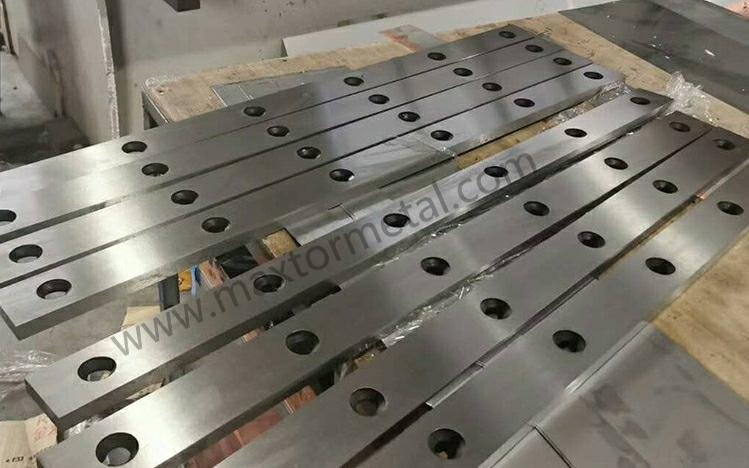
Limites de incrustação, etapas de retificação e total de ciclos permitidos.
A inserção de carboneto muda a questão da reafiação de “quantas vezes podemos afiar?” para “quantas vezes podemos afiar antes de comprometermos o sistema de encaixe?”
Seu protocolo deve definir:
- profundidade mínima restante da incrustação (ponto de parada)
- perda máxima de espessura permitida por retificação
- Como preservar o fio afiado (microafiação) entre os ciclos de afiação?
- Uma regra para determinar quando uma lâmina é "reafiável" em vez de "sucata" (rachaduras, problemas de integridade da brasagem, perda de geometria).
Para o método de cálculo de calços usado para compensar a perda de espessura após cada ciclo de retificação, consulte guia de compensação da redução da espessura de retificação e de empilhamento de calços.
Restauração da geometria, acabamento superficial (Ra) e critérios de aceitação.
O retorno sobre o investimento (ROI) do recondicionamento só funciona se a restauração da geometria for feita de forma disciplinada.
Categorias de critérios de aceitação recomendadas:
- Geometria
- retidão ao longo da aresta de corte
- paralelismo ao longo do comprimento
- Geometria de chanfro consistente (sem desvio de "canto suave")
- Acabamento da superfície
- O acabamento da face de corte deve ser controlado e repetível (monitorar Ra ou uma medida equivalente de acabamento superficial).
- Condição de borda
- Não é permitida a inserção de microchips além do limite definido.
- Microafiação consistente (não permita que a afiação fique "mais afiada a cada vez")
O protocolo de aceitação pós-retificação da Maxtor Metal abrange todas as três categorias acima — geometria, acabamento superficial e condição da aresta — com registros de inspeção rastreáveis devolvidos com cada lote retificado.
Para documentação de requisitos de borda em desenhos, a norma para indicar requisitos de borda indefinidos em documentação técnica de produtos é a ISO 13715:2017. Mesmo que você não utilize a simbologia diretamente, alinhar sua linguagem interna de aceitação a uma norma reconhecida reduz a ambiguidade entre turnos, fornecedores e prestadores de serviços de remoldagem.
A Maxtor Metal oferece suporte à fabricação de lâminas com incrustações de carboneto, com verificações de controle de qualidade durante o processo, e pode fornecer serviço de reafiação com registros de inspeção rastreáveis, o que ajuda a manter a geometria e a consistência do lote sob controle.
Documentação, MTCs e verificações de consistência de lote.
Para linhas AHSS, o risco de aquisição muitas vezes se esconde na variação: o mesmo O número da peça comporta-se de maneira diferente em lotes diferentes.
Um pacote de documentação prática para cada lote deve incluir:
- MTC / rastreabilidade de materiais para o corpo base e material de incrustação, quando aplicável.
- Comprovação de dureza/tratamento térmico, quando aplicável.
- Relatórios de inspeção para dimensões-chave (espessura, retilineidade, paralelismo)
- Registro histórico de retificação (contagem de ciclos, estoque removido, inspeção pós-retificação)
Isso não precisa ser burocrático. O objetivo é identificar rapidamente a causa raiz quando você observar desvios ou lascas na rebarba: você pode separar problemas de configuração de variações entre lotes.
Modelo de TCO e ROI
Entradas, fórmulas e lógica de amortização
A estrutura de Custo Total de Propriedade (TCO) abaixo reflete como a Maxtor Metal estrutura as discussões sobre custos com linhas AHSS de alto rendimento: custo total por metro, não preço da lâmina.
Um modelo de ROI útil transforma a “vida útil da lâmina” em custo por metro (ou custo por tonelada) e acrescenta os custos que normalmente predominam em linhas de alto rendimento: tempo de inatividade e sucata.
Esta é a espinha dorsal de um sistema prático. custo total de propriedade para lâminas de corte comparação, porque força todas as suposições (vida útil, retificações, minutos de troca) na mesma unidade.
Defina essas entradas:
Lâmina C: custo de aquisição de um conjunto de lâminasN_arestas: arestas utilizáveis por conjunto (incluindo inversões/rotações, se aplicável)L_borda: metros (ou toneladas) por aresta entre retificações/substituiçõesN_regrinds: número total de peças retificadas que podem ser obtidas antes do descarte (limitado pelo limite de inlay + tolerância geométrica)C_regrindcusto por ciclo de retificaçãoMudança de TTempo de troca por evento (horas)C_tempo de inatividade: custo por hora de inatividade com carga máximaC_sucataCusto de sucata/retrabalho por tonelada (ou por metro)S_sucataTaxa de refugo atribuível à instabilidade da borda de corte (em fração)
Uma estrutura de amortização simples:
- Amortização da lâmina por metro
Modelo de calculadora de ROI (Retorno sobre o Investimento) para copiar e colar
Se você deseja um modelo fácil de importar para o Excel, comece com esta tabela e preencha com seus próprios dados. Mantenha as unidades consistentes (metros). ou toneladas) em cada linha.
| Entrada | Símbolo | Seu valor | Unidades / notas |
|---|---|---|---|
| custo de aquisição do conjunto de lâminas | Lâmina C | $ por conjunto | |
| Bordas utilizáveis por conjunto | N_arestas | Contagem (incluindo inversões/rotações) | |
| Vida por borda para ativar | L_borda | metros/borda ou toneladas/borda | |
| Total de material reciclado antes do descarte | N_regrinds | contagem (limitada por inlay + tolerâncias) | |
| Custo de retificação por ciclo | C_regrind | $ por retificação | |
| Tempo de transição por evento | Mudança de T | horas/evento | |
| Custo do tempo de inatividade | C_tempo de inatividade | $/hora (totalmente carregado) | |
| Custo de sucata | C_sucata | $/tonelada ou $/metro | |
| Taxa de refugo devido à instabilidade da borda de corte | S_sucata | fração (ex.: 0,009 = 0,9%) | |
| Saída | Fórmula | Resultado | Notas |
| — | — | — | — |
| Vida útil total por conjunto de lâminas | Total_m | N_arestas × L_aresta × (N_regrinds + 1) | Use metros ou toneladas de forma consistente. |
| Amortização da lâmina por unidade | Custo_da_lâmina_por_m | Lâmina C / Total m | $/metro ou $/tonelada |
| Custo de remanufatura por unidade | Custo_remoção_por_m | (C_remoagem × N_remoagem) / Total_m | $/metro ou $/tonelada |
| Custo de inatividade por unidade | Redução de custo por m | (T_change × C_downtime × (N_regrinds + 1)) / Total_m | Simplificado; adicione eventos extras se não estiverem planejados. |
| Custo de sucata por unidade | Custo_sucata_por_m | S_sucata × C_sucata | Converta as unidades, se necessário. |
| Custo total por unidade | Custo Total de Propriedade por M | Soma de todos os custos acima | Comparar linha de base com inserção de carboneto |
Este layout facilita a execução do mesmo modelo para cenários de referência e com incrustações de carboneto, e então calcular as diferenças (redução do custo total de propriedade, período de retorno do investimento e retorno sobre o investimento).
Custo_da_lâmina_por_m = C_lâmina / (N_arestas × L_aresta × (N_reafiações + 1))- Custo de retificação por metro
Custo_regrind_por_m = (C_regrind × N_regrinds) / (N_arestas × L_aresta × (N_regrinds + 1))
- Custo de inatividade por metro (trocas + retificações)
Custo_de_inatividade_por_m = (T_variação × C_tempo_de_inatividade × Eventos_total) / Total_metros
Em seguida, adicione sucata:
Custo_sucata_por_m = S_sucata × C_sucata(converter unidades de forma consistente)
A comparação do ROI é a diferença (delta):
ROI = (TCO_baseline - TCO_carbide) / Delta_investimento
Exemplo de custo por metro/tonelada com marcadores de posição
Abaixo está um exemplo resolvido. exemplo Utilizando valores de exemplo para mostrar o comportamento da matemática. Substitua os números pelos seus próprios dados de linha.
Assumir:
C_blade = $6,000por conjuntoN_arestas = 2L_borda = 200.000 mN_regrinds = 6C_regrind = $450
Total de metros por conjunto ao longo da vida útil:
Total_m = N_arestas × L_aresta × (N_refiladas + 1) = 2 × 200.000 × 7 = 2.800.000 m- Amortização da lâmina por metro:
$6.000 / 2.800.000 = $0,00214/m
- Custo de retificação por metro:
($450 × 6) / 2.800.000 = $0,00096/m
Se o seu custo principal for o tempo de inatividade, você verá o retorno sobre o investimento (ROI) variar bastante com o tempo de transição.
Exemplos de entradas para períodos de inatividade:
T_change = 0,5 horaspor eventoC_tempo_de_inatividade = $3.000/horaTotal de eventos = 7(inicial + 6 retificações)
Custo de inatividade por metro:
($3.000 × 0,5 × 7) / 2.800.000 = $0,00375/m
Este exemplo simples mostra por que o “preço unitário da lâmina” muitas vezes não é o fator decisivo —Os horários de transição e os eventos de estabilidade são.
Sensibilidade ao controle de folgas, mistura de granulometria e SLA reciclado
Normalmente, três níveis de sensibilidade predominam:
- Controle de folga (uniformidade de folga)
- Um controle inadequado da folga pode anular os ganhos de vida útil, causando lascas e forçando retíficas prematuras.
- Mistura de classificação (resistência + condição da superfície)
- Se sua programação de usinagem passar a envolver aços AHSS de maior resistência ou condições de superfície mais abrasivas, a estabilidade da aresta de corte torna-se mais importante.
- SLA de Remoção (tempo de resposta + consistência)
- Retificações lentas ou inconsistentes aumentam a necessidade de estoque de peças de reposição e a probabilidade de desvios geométricos.
Se você deseja uma única saída de sensibilidade "amigável ao setor financeiro", modele o Custo Total de Propriedade (TCO) em três cenários (conservador / esperado / otimista) variando apenas:
L_borda(vida)Mudança de T(tempo de transição)S_sucata(sucata atribuível à instabilidade da borda)
Uma forma clara de apresentar a sensibilidade — sem sobreajuste — é variar apenas as premissas que normalmente dominam o Custo Total de Propriedade (TCO) para linhas de produção de alto rendimento.
| Cenário | Vida útil por aresta L_aresta | Tempo de transição T_change | Instabilidade de borda sucata S_scrap | O que isso representa |
|---|---|---|---|---|
| Conservador | limite inferior da sua banda piloto | limite superior da sua mudança observada | limite superior de sucata relacionada à borda | Deriva de configuração, condição de superfície mais áspera, tempo de retificação mais lento. |
| Esperado | mediana da banda piloto | mudança mediana | atribuição mediana de sucata | Cadência operacional normal e mistura de graus |
| Otimista | limite superior da banda piloto | mudança de limite inferior (SOP de melhores práticas) | atribuição de sucata de limite inferior | Controle preciso de folgas + retificação consistente + material estável |
Ao apresentar o resultado, mostre intervalos (Não se trata de uma estimativa pontual) para o Custo Total de Propriedade (TCO) por metro/tonelada e minutos de inatividade evitados. Isso geralmente torna a justificativa comercial mais crível do que um único número de Retorno sobre o Investimento (ROI).
Guia prático de implementação
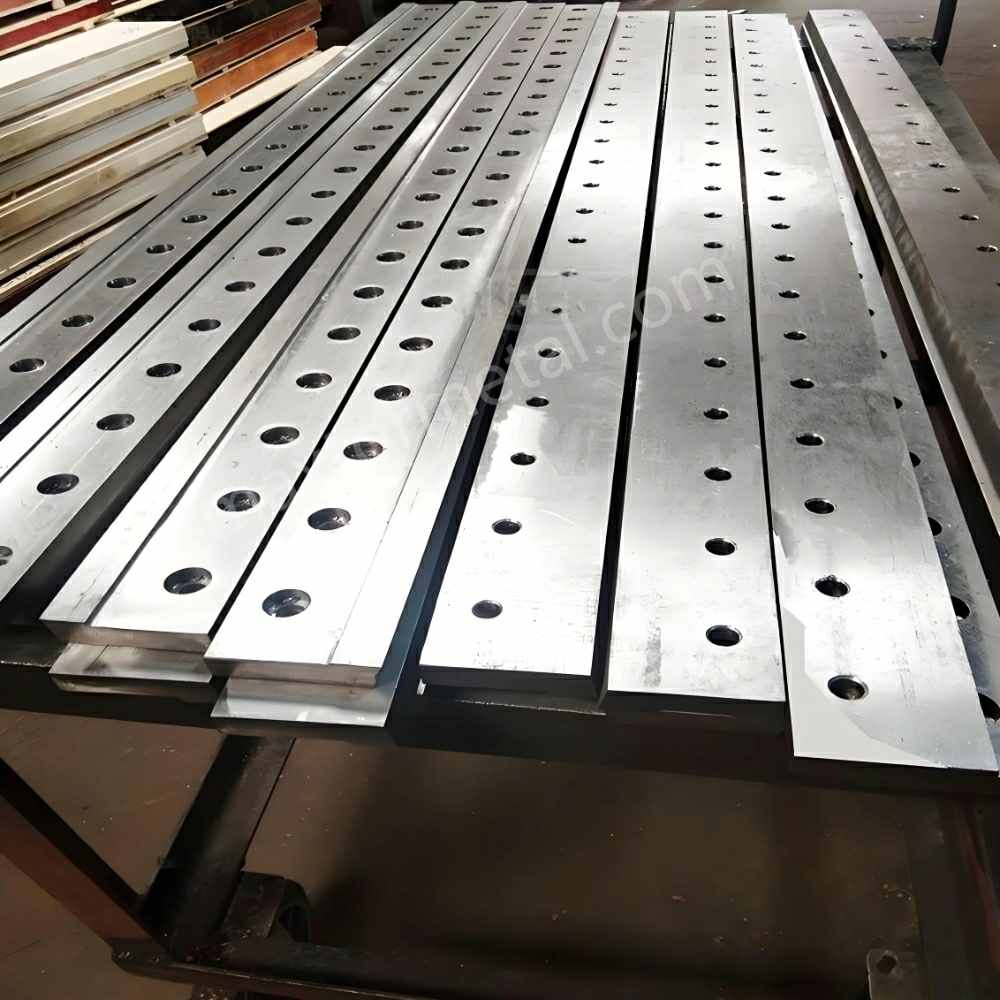
Procedimentos Operacionais Padrão (POPs) para logística de troca, inspeção e remanufatura.
Os três procedimentos operacionais padrão (SOPs) abaixo se aplicam a todos os contextos piloto e devem ser finalizados antes da implementação em produção completa.
Para obter um procedimento operacional padrão (POP) completo para tomada de decisão de rotação e reafiação baseado em medições, aplicável a lâminas de guilhotina — incluindo faixas de limite de rebarba, sequência de uso da lâmina e modelos de registro prontos para auditoria — consulte o Procedimento Operacional Padrão (POP) para o cronograma de rotação e critérios de reafiação de lâminas reversíveis de 4 arestas..
Resultados do teste piloto: Resumo de três casos anonimizados
A maneira mais rápida de defender uma decisão de ROI é realizar um pequeno projeto piloto controlado e relatar os resultados nas mesmas unidades que sua fábrica já monitora: bobinas entre retificações, estabilidade das rebarbas, intervenções de configuração, sucata/retrabalho e minutos de OEE.
Abaixo estão três pilotos anônimos que ilustram onde as lâminas com incrustações de carboneto tendem a se pagar primeiro. Use-os como estrutura, Não se trata de uma promessa — seus resultados dependerão da mistura de granulometria, do controle de folga, da repetibilidade da fixação e da consistência do material reciclado.
Caso piloto 1 — AHSS CTL no DP980
Contexto
- Material: DP980 (980–1000 MPa)
- Espessura: 1,2–2,0 mm
- Linha: Bobina-para-Comprimento (CTL)
- Condição da bobina: Decapada e oleada, com leve carepa de laminação+
- Lâmina: Lâmina com incrustações de carboneto: corpo em D2 + fio de WC ultrafino brasado, fornecida pela Maxtor Metal
Configuração básica versus configuração com inserto de carboneto
- Lâmina básica: aço ferramenta D2, dureza 60–61 HRC
- Lâmina com incrustações de carboneto: corpo em aço D2 (59–60 HRC) + fio de WC ultrafino brasado
- Largura do carboneto: 4 mm
- Dureza da aresta: ~89 HRA
Gatilhos e medição
- Gatilhos após aproximadamente 40 a 50 bobinas na linha de base:
- Altura da rebarba próxima de 0,10 mm
- aumento da frequência de ajuste da folga da lâmina
- verificações mais frequentes da primeira peça
- Sequência de medição:
- Por bobina: altura da rebarba medida à esquerda/centro/direita usando um microscópio de ferramenteiro de 50×.
- A cada 10 espirais: rebarba máxima, folga e raio da borda.
Resultados do projeto piloto
| KPI | Linha de base D2 | WC embutido |
|---|---|---|
| Vida da lâmina | 1.0× | 2.9× |
| Bobinas entre retificações | 48 | 138 |
| Rebarba média | 0,082 mm | 0,039 mm |
| eventos de configuração não planejados | 5/mês | 2/mês |
| Sucata | 1.8% | 0.9% |
| OEE | 84.1% | 87.6% |
| SLA moído | — | 5 dias úteis |
O que este piloto ensinou
- A abrasividade do DP980 fez da estabilidade ao desgaste das bordas o principal fator de influência.
- Manter as mesmas configurações de folga usadas para D2 inicialmente causou microlascamento localizado; uma pequena otimização da folga restaurou o comportamento estável.
Caso piloto 2 — Linha de guilhotina com carepa de laminação espessa
Contexto
- Material: Aço AHSS laminado a quente
- Espessura: 4–8 mm
- Linha: Guilhotina hidráulica
- Superfície: camada espessa de óxido de laminação
- Lâmina: Lâmina com incrustações de carboneto: corpo em H13 + fio de WC ultrafino brasado, fornecido pela Maxtor Metal
Configuração básica versus configuração com inserto de carboneto
- Lâmina básica: H13 modificada
- Lâmina com incrustações de carboneto: corpo em H13 + fio de carboneto de tungstênio brasado; têmpera dupla.
Gatilhos e medição
- O desgaste causado pela formação de incrustações aumentou a formação de rebarbas e exigiu ajustes frequentes na configuração.
- Medição:
- Por turno: verificar rebarbas, raio da aresta e temperatura da lâmina.
- Semanalmente: verificar retidão e planicidade.
Resultados do projeto piloto
| KPI | Antes | Depois |
|---|---|---|
| Vida da lâmina | 1.0× | 2.1× |
| Trocas mensais de lâminas | 4 | 2 |
| Tempo de configuração | 150 min/mês | 70 min/mês |
| Reformulação | 2.4% | 1.3% |
| lascas nas bordas | ocasional | significativamente reduzido |
| SLA moído | — | 7 dias corridos |
O que este piloto ensinou
- A carepa de laminação continuou sendo a principal fonte de desgaste. O carboneto melhorou a resistência ao desgaste, mas sem a remoção da carepa, o multiplicador de vida útil foi menor do que em condições de decapagem/lubrificação.
Caso Piloto 3 — CTL automotivo de alto volume
Contexto
- Material: CP780 + DP780
- Espessura: 1,6–2,5 mm
- Linha: CTL de alta velocidade
- Produção anual: >60.000 toneladas
- Lâmina: Lâmina com incrustações de carboneto: corpo em D2 + fio de WC ultrafino brasado, fornecida pela Maxtor Metal
Configuração básica versus configuração com inserto de carboneto
- Lâmina básica: aço D2 premium
- Especificação do carboneto: WC de grão fino, brasado a vácuo
- Rugosidade superficial alvo após retificação: Ra ≤ 0,2 μm
Gatilhos e medição
- A alta cadência exigia paradas semanais planejadas; rebarbas começaram a afetar a qualidade da solda nas etapas subsequentes.
- Medição:
- primeira peça: altura da rebarba
- A cada 20 bobinas: verificação microscópica, folga, raio da borda.
- A cada retificação: planicidade, paralelismo, espessura
Resultados do projeto piloto
| KPI | Antes | Depois |
|---|---|---|
| Vida da lâmina | 1.0× | 3.4× |
| Intervalo de retificação | 2 semanas | 7 semanas |
| Rebarba máxima | 0,11 mm | 0,05 mm |
| Tempo de inatividade planejado | 9 horas/mês | 4 horas/mês |
| reivindicações de vantagem do cliente | 3/trimestre | 0–1/trimestre |
| Custo Total de Propriedade estimado | linha de base | Redução de aproximadamente 18% (amortização da lâmina + reafiação + custos de troca; calculado usando o modelo de TCO acima) |
| SLA moído | — | 3 a 4 dias úteis |
O que este piloto ensinou
- Um cronograma fixo de rotação e reafiação, além de verificações de reinstalação (paralelismo e folga), impediu que variações na instalação mascarassem diferenças nas ferramentas. A redução do Custo Total de Propriedade (TCO) de aproximadamente 181 TP7T foi impulsionada principalmente pela extensão do intervalo de reafiação (de 2 semanas para 7 semanas) e pela redução do tempo de inatividade planejado (de 9 h/mês para 4 h/mês), com a amortização das pás contribuindo com uma parcela menor nesse nível de produção.
Um registro piloto simples que você pode copiar.
Resuma o projeto piloto em uma única página para que as equipes de finanças e produção falem a mesma língua:
- grau(s) + faixa de espessura + condição da superfície
- metros/toneladas/bobinas para acionar (gatilho de qualidade da borda + risco)
- minutos de troca por evento (mediana e pior 10%)
- Desmanche/retrabalho atribuível à instabilidade da borda de corte
- SLA de remoagem (dias) e resultados de aceitação pós-remoagem
- Anotações sobre ajustes de folga, repetibilidade de fixação e quaisquer alterações de configuração durante o projeto piloto.
Trate a lâmina como parte de um processo controlado, não como um item descartável:
- Procedimento Operacional Padrão para Troca de Ferramentas: padrão de torque, inspeção da braçadeira, pontos de verificação de paralelismo.
- Procedimento Operacional Padrão (POP) de Inspeção: definir os indicadores de qualidade da borda que forçam a ação (e não apenas "parece sem brilho").
- Procedimento Operacional Padrão (POP) para logística de material moído: etiquetagem, contagem cíclica e verificações de aceitação pós-moagem.
Captura de dados, painéis de controle e KPIs para OEE e qualidade.
Se você não medir, não poderá defender o ROI (retorno sobre o investimento).
Indicadores-chave de desempenho práticos:
- metros/toneladas por borda para acionar
- Distribuição da contagem de ciclos de retificação (você está atingindo consistentemente a sua faixa esperada?)
- tempo de transição (mediana + pior 10%)
- Eventos de refugo/retrabalho relacionados a problemas de rebarba/borda
- Minutos de perda de OEE atribuídos ao cisalhamento (não à “manutenção” genérica)
Os painéis de controle não precisam ser complexos. Um relatório semanal simples que relaciona os eventos de reafiação aos minutos de OEE e ao refugo é suficiente para validar se as lâminas com incrustações de carboneto estão compensando o investimento.
Avaliação de fornecedores e critérios SLA para pontas de carboneto e brasagem.
Para lâminas com incrustações de carboneto, a avaliação do fornecedor deve se concentrar em: repetibilidade tanto quanto materiais.
Critérios principais:
- Integridade e consistência do revestimento (controle de processo e evidências de inspeção)
- tolerâncias geométricas documentadas e métodos de inspeção
- capacidade de retificação e limites estabelecidos (qual é a regra de parada?)
- Clareza no SLA: tempo de resposta, opções de urgência e compromissos de consistência.
- Rastreabilidade: Certificados de Tipo de Material (CTMs) e registros de lote.
Before committing to carbide-inlaid blades, confirm that the failure driver is not a correctable material-selection issue at the tool steel level. If your current blade is conventional EAF-melted D2 with coarse carbide banding rather than ESR-refined stock, a grade or refining practice change may extend life before a full carbide upgrade is needed. The comparative framework — carbide microstructure, failure mode analysis, and hardness recommendations for D2 vs SKD11 — is covered in the D2 vs SKD11 tool steel selection guide for shearing blades.
If chipping is the trigger, reading the fracture surface distinguishes a fatigue event (clearance, parallelism, or grinding burn) from a true impact or hardness overload — the two require different fixes, and carbide will not resolve a fatigue-origin chip. The diagnostic workflow and corrective decision tree are covered in the Shear Blade Edge Chipping Root Cause Analysis: Fractography and Decision Tree.
FAQs:
P: Com qual folga devo começar para AHSS em uma tesoura guilhotina?
R : Commencez par un jeu exprimé en pourcentage de l'épaisseur, puis validez-le par des coupes d'essai et un contrôle de l'arête. Les directives AHSS de WorldAutoSteel indiquent que le jeu peut passer d'environ 6 % (acier doux) à plus de 16 % pour les nuances à très haute résistance ; de nombreuses applications AHSS se situent finalement entre 10 % et 16 %, selon la nuance et l'épaisseur.
P: Por que a altura da rebarba é um mau indicador de desgaste no cisalhamento de AHSS?
R: Porque o AHSS pode manter uma altura de rebarba relativamente constante mesmo quando a borda se desgasta. Na prática, é mais seguro tomar ações com base na aparência da zona de corte (uniformidade do brunimento/fratura), no microlascamento e na estabilidade da qualidade de corte durante as trocas de grau de aço.
P: As facas de tesoura com inserto de carboneto de tungstênio sempre reduzem a rebarba?
R: Nem sempre. Elas podem melhorar a estabilidade da rebarba ao longo do tempo mantendo a condição da borda por mais tempo, mas a rebarba ainda é fortemente controlada pela uniformidade da folga, alinhamento, fixação e restauração da geometria de afiação.
P: Quantas vezes as facas de tesoura com inserto de carboneto podem ser afiadas?
R: Depende da profundidade do inserto, da perda de espessura permitida por ciclo e da precisão com que a geometria é restaurada. Defina uma regra de parada com base no inserto restante, na tolerância geométrica e em quaisquer sinais de risco à integridade; em seguida, rastreie a contagem real de ciclos em relação a essa faixa.
P: Quais documentos de controle de qualidade (QC) devo exigir ao comprar facas de tesoura para AHSS?
R: No mínimo: rastreabilidade do material (MTC), inspeção de dimensões críticas (espessura/retitude/paralelismo) e um histórico de afiação. Para a linguagem de desenho técnico referente aos requisitos de borda, referenciar a norma ISO 13715:2017 pode reduzir ambiguidades.
P: Como calculo o custo por metro para facas de tesoura?
R: Desmembre o TCO (Custo Total de Propriedade) em amortização da faca + afiação + tempo de inatividade + refugo/OEE. Use Total_m = N_bordas×L_borda×(N_afiações + 1) e divida cada categoria de custo por Total_m, comparando em seguida o cenário base com o cenário de inserto de carboneto.
P: Qual é a maior alavanca de ROI depois do material da faca?
R: O tempo de setup/troca de ferramenta e o número de eventos de estabilidade (afiações não planejadas, ajustes e picos de refugo). Se as facas com inserto de carboneto reduzirem as intervenções, o ROI geralmente se mostra primeiro aí.
P: Como conectar a qualidade da borda de corte ao risco de formabilidade posterior?
R: Testes baseados em normas, como o ensaio de expansão de furo (hole expansion test), são projetados para quantificar a sensibilidade ao trincamento de borda em chapas e tiras.
Para contextualização, consulte a norma ISO 16630:2017que define o método de ensaio de expansão de furo amplamente utilizado para avaliar a formabilidade da borda.
Conclusão
Pontos de decisão que você pode defender
Use isso como uma lente prática de "seguir em frente/não seguir em frente" antes de dimensionar lâminas com incrustações de carboneto em uma linha AHSS/UHSS:
- Sua restrição é orientada por intervenção? Se os minutos de inatividade e os problemas de estabilidade (reassinagens não planejadas, ajustes de folga, picos de sucata) dominarem os custos, as lâminas com incrustações de carboneto geralmente têm um caminho claro para o retorno do investimento.
- Você consegue manter a folga e a fixação de forma repetível? Se houver desvio de paralelismo e fixação uniforme, uma aresta de corte de alta qualidade torna-se um consumível caro.
- Você possui um ciclo de retificação repetível? O retorno sobre o investimento depende da restauração consistente da geometria (planicidade/paralelismo/preparação das arestas) e de um processo de retificação SLA que corresponda ao seu ritmo de produção.
- Seus gatilhos correspondem à realidade do AHSS? Em AHSS, a altura da rebarba por si só pode ser enganosa — combine um indicador de qualidade da aresta com um indicador de risco para que as intervenções ocorram. antes pregos de sucata.
- É possível atribuir o desempenho ao ciclo de lote + remagem? Sem rastreabilidade serial/de lote, é difícil separar a variação de configuração da variação de lote.
A Maxtor Metal pode fornecer modelos de critérios de aceitação de material reciclado e documentação de rastreabilidade alinhada à estrutura de controle de qualidade deste guia.
Próximos passos para a implementação
- Execute um teste piloto curto e controlado. Em suas 2 a 3 melhores categorias, mais uma condição de pior caso (revestimento, incrustação ou operação subsequente sensível a rebarbas). Registre bobinas/toneladas/metros para acionar o gatilho, minutos de troca e qualquer sucata relacionada às bordas.
- Converter dados piloto em custo por metro/tonelada Utilizando o modelo de Custo Total de Propriedade (amortização + remanufatura + tempo de inatividade + sucata), construa cenários conservadores, esperados e otimistas para as premissas que realmente impactam os resultados.
- Defina seus critérios de aceitação para material retificado e controle de qualidade. (geometria, acabamento superficial, microafiação/preparação de arestas, rastreabilidade) para que a ferramenta que você utiliza como teste seja a ferramenta que você poderá encomendar novamente.
Solicitação de cotação e lista de verificação de desenhos para lâminas de cisalhamento com incrustações de carboneto.
Envie esta lista de verificação com sua solicitação de cotação para reduzir a troca de mensagens e evitar lacunas nas especificações:
- Contexto de aplicação e linhaCorte CTL ou guilhotina; faixa de espessura da bobina/chapa; mistura de graus; condição da superfície (decapada/oleada, escamada, revestida)
- Detalhes do conjunto de lâminasQuantidade por conjunto; arestas/rotações utilizáveis; número da peça existente; padrão e tolerâncias dos furos de montagem.
- Requisitos de geometria: comprimento/largura/espessura; retilineidade; planicidade; paralelismo; ângulo(s) de bisel; estratégia de corte (se aplicável)
- Requisitos de preparação de borda: alvo de micro-afiação (ou intervalo permitido); alvo de acabamento superficial nas faces de corte (Ra, se especificado)
- Requisitos para incrustação de carbonetoLargura/profundidade da incrustação; expectativas do método de brasagem; regra de parada para incrustação mínima restante.
- Metas operacionais: folga % ponto de partida e prática de ajuste; limite de rebarba (se usado); cadência de inspeção
- Pacote de documentaçãoEN 10204 3.1 / MTC com rastreabilidade do número de lote; relatórios de dureza (HRC/HRA); relatório de inspeção dimensional; registro de tratamento térmico; registro histórico de retificação
- Requisitos de serviçoSLA de remoagem (dias); verificações de aceitação pós-remoagem; serialização/etiquetagem de lotes
Se sua linha de produção é limitada por desvios de rebarbas, lascas e tempo de troca de ferramentas, lâminas com incrustações de carboneto, juntamente com um controle de qualidade rigoroso, podem representar uma melhoria financeiramente viável. Se suas maiores perdas provêm da variabilidade a montante ou de uma fixação não repetível, corrija esses problemas primeiro — e depois reavalie a situação usando a mesma estrutura de projeto piloto e custo total de propriedade (TCO).
Autor: Nancy Wu, Engenheira de Manufatura Sênior, PE (Engenharia de Produção), Maxtor Metal (12 anos em seleção de lâminas industriais, programação de retificação CNC e controle de processos de reafiação).
Credenciais: PME – CMfgE; PMP; Six Sigma Black Belt; Certificações da ASM International.
Conhecimento especializado em materiais: D2, M2, H13, aços para metalurgia do pó e carboneto de tungstênio (características de fabricação e comportamento do revestimento).
Metodologia: Este guia combina orientações estabelecidas para o corte de aços AHSS (incluindo os recursos da WorldAutoSteel sobre AHSS) com cálculos de ROI (custo por metro/tonelada) voltados para a planta e relatórios de testes piloto em campo. O desempenho do piloto deve ser validado em sua própria linha de produção, utilizando uma mistura de aços controlada, gatilhos definidos e rotinas de medição consistentes.
Sinais de qualidade e rastreabilidade que você pode solicitar à Maxtor Metal. (pacote de documentação de exemplo)
- Inspeção de entrada: EN 10204 3.1 / MTC, rastreabilidade do número de lote, PMI quando necessário, verificações pontuais de composição química, teste ultrassônico opcional para tarugos grandes.
- Tratamento térmico: tratamento térmico a vácuo, múltiplos ciclos de revenido, amostragem de dureza em lote e registros de uniformidade (HRC para o corpo; HRA para o carboneto).
- Inspeção dimensional: espessura/largura/comprimento, planicidade, retilineidade, paralelismo, posição dos furos, ângulo da aresta; verificações em toda a extensão de lâminas de corte longas.
- Superfície e aresta: Registros de Ra (rugosidade superficial) quando especificado, inspeção do padrão de retificação, inspeção do brunimento da aresta, inspeção visual 100%.
- Equipamentos comumente utilizados: micrômetros digitais, medidor de altura, placa de granito, relógio comparador, rugosímetro, durômetro Rockwell, microscópio óptico, régua de precisão; verificações pontuais em máquinas de medição por coordenadas (CMM) para peças maiores.
- Relatórios de expedição: relatório de inspeção dimensional, relatório de dureza, inspeção da primeira peça (FAI, na sigla em inglês), quando necessário, certificado de material, certificado de tratamento térmico, registro de acabamento superficial (conforme exigência do cliente).
- Rastreabilidade: número de série único da lâmina, número do lote, número da corrida do material, lote de retificação, lote de tratamento térmico, retenção de registros (ex.: ≥5 anos)
- Controles de NCR: quarentena e registro de NCR, causa raiz (5 Porquês/diagrama de Ishikawa), disposição do MRB (retrabalho/refabricação/descarte), CAPA e reinspeção completa após o retrabalho com rastreabilidade atualizada.

 English
  Spanish
  Italian
  French
  Portuguese
  Russian
  German
  Arabic
  Hindi
Hindi  Vietnamese
  Indonesian
  Japanese
  Korean