
Rupture catastrophique de lame : Causes métallurgiques profondes, mécanique de la fracture et contrôles fournisseurs pour la prévention

Réponse rapide : La rupture catastrophique d'une lame n'a presque jamais une seule cause—c'est la convergence de défauts métallurgiques (austénite résiduelle, bandes de carbures), d'erreurs de traitement thermique (criques de trempe, revenu insuffisant) et de concentrations de contraintes géométriques, déclenchée par un événement de contamination. La fractographie (cartographie macro → SEM/EDS → métallographie → XRD) identifie le levier défaillant ; les contrôles des fournisseurs comme la pyrométrie AMS 2750 et les contrôles au niveau des lots […]
Accumulation d'adhésif sur les lames de refend circulaires : Rétroaction par contact thermique, sélection des revêtements et protocole de diagnostic multicouche.
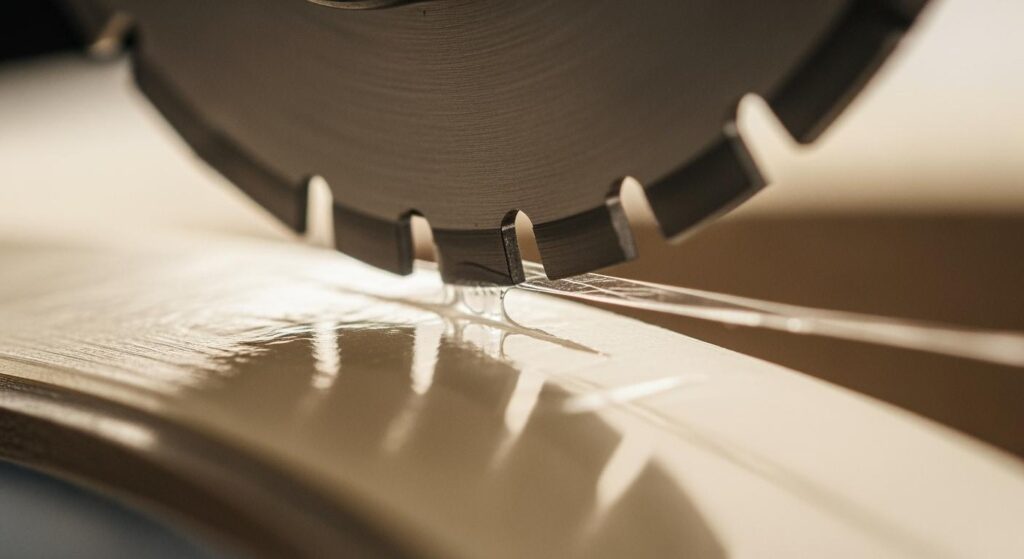
Lorsque l'adhésif commence à s'accumuler sur les couteaux circulaires de découpe longitudinale, le premier signe est rarement spectaculaire. Les bords de coupe deviennent légèrement collants. La géométrie des bobines dérive. La qualité du bord se dégrade avant même que le responsable d'équipe ne puisse en identifier la cause. Au moment où un dépôt de polymère visible — une arête rapportée (BUE) — s'est formé sur la face du couteau, la lame a déjà […]
Éviter la casse des lames grilles en fond d'encoche : Rayon de congé, intégrité EDM et double revenu pour les conceptions R≥0,2 mm
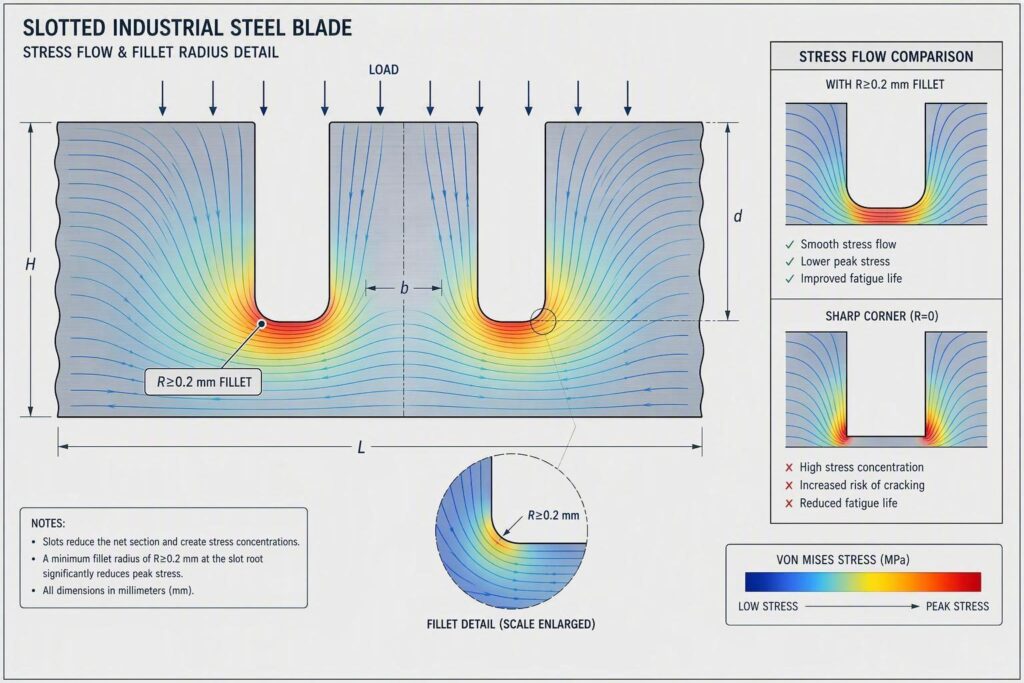
Réponse rapide : La rupture des lames de grille au fond des encoches est causée par la coexistence de trois facteurs : une forte concentration de contraintes élastiques (Kt de 7 à 12 pour les encoches à angles vifs), des défauts de surface jouant le rôle d'amorceurs de fissures (couches de refusion d'électroérosion EDM, brûlures de rectification) et une ténacité insuffisante du matériau environnant. La principale solution d'ingénierie consiste à spécifier un rayon de raccordement d'encoche […]
Choix des Couteaux de Granulation pour Polymères Médicaux : Inox 420 vs 440C, État de Surface et Régulation de la Boucle d'Eau
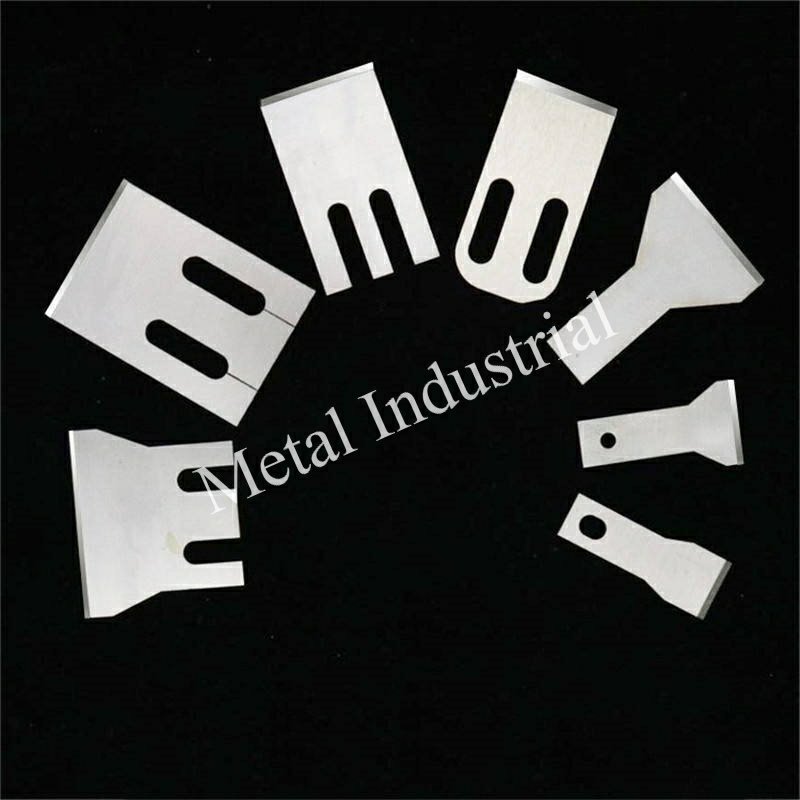
Réponse rapide : Dans la granulation de polymères de qualité médicale, les aciers inoxydables 420 et 440C ne sont pas interchangeables : le 420 offre une plus grande ténacité, une meilleure polissabilité et une meilleure tolérance à la corrosion dans les circuits d'eau à désinfection intensive ou à chimie variable ; le 440C offre une tenue de coupe supérieure pour les polymères abrasifs dans les circuits à chimie stable et contrôlée. Les deux nuances exigent un fini miroir Ra ≤ 0,4 µm et une passivation vérifiée selon ASTM […]
Analyse de la cause racine de l'ébréchure des lames de cisaille : Fractographie, arbre de décision et corrections SOP
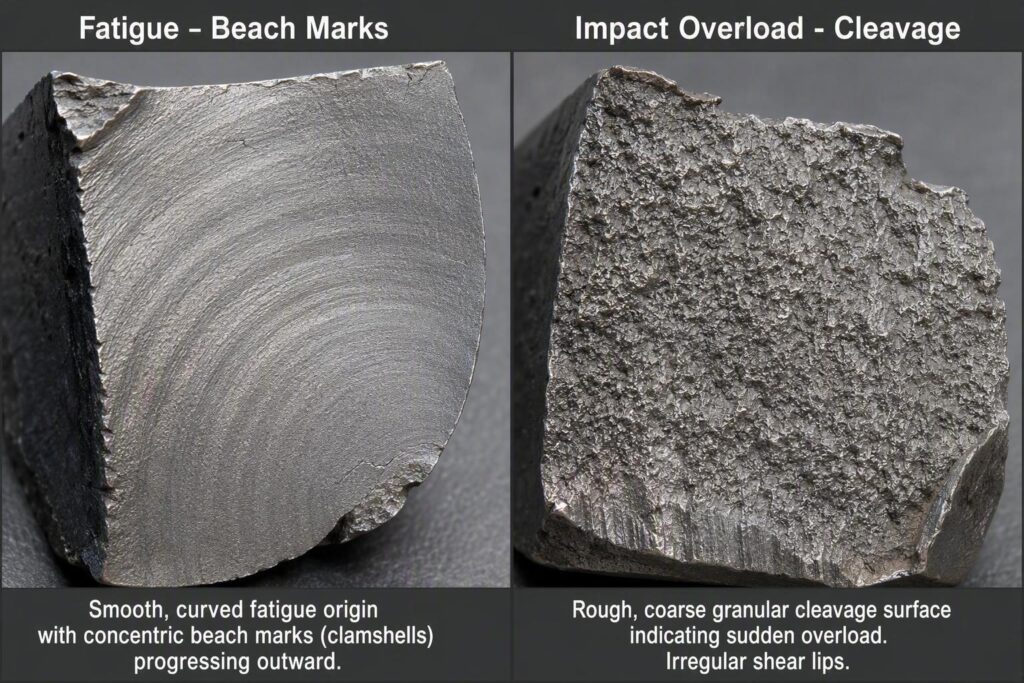
Réponse rapide : La cause racine de l'ébréchure du tranchant des lames de cisaille relève de deux modes : la fatigue (due à des contraintes cycliques — erreurs de jeu, défauts de parallélisme ou brûlures de rectification) et l'impact (dû à une surcharge soudaine — corps étrangers, dureté excessive ou pics géométriques). Analysez d'abord le faciès de rupture : des lignes d'arrêt concentriques en forme d'arc indiquent de la fatigue ; un clivage granulaire grossier sans motifs en arc indique […]
Regolazione della Sovrapposizione delle Lame Circolari: Meccanica di Taglio, Finestre Materiale e Controllo Albero

Dans le traitement continu des bobines métalliques, l'obtention d'un bord propre, d'équerre et sans bavure est la référence principale d'une ligne de découpe longitudinale bien étalonnée. Derrière chaque campagne de découpe à haut rendement se trouvent deux paramètres géométriques critiques régissant la qualité de coupe par cisaillement : le jeu latéral horizontal et le chevauchement vertical des couteaux circulaires. Alors que le jeu horizontal dicte la concentration des contraintes sur la largeur de la bande, le chevauchement vertical des couteaux […]
Couteaux pour Broyeurs de Pneus et VHU : Équilibrer Dureté et Ténacité pour Réduire le Coût par Tonne
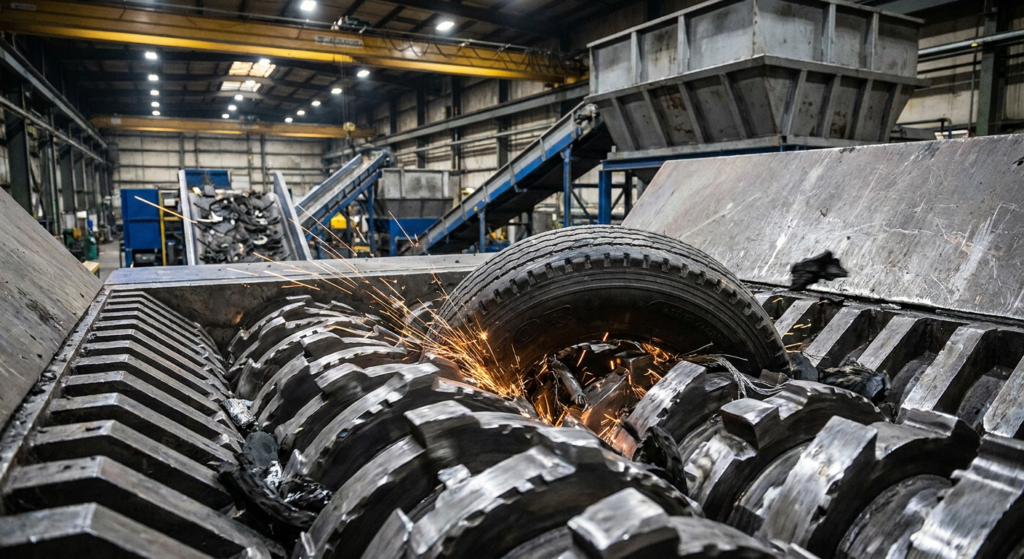
Réponse rapide : Équilibrez la dureté (résistance à l'usure) avec la ténacité à l'impact Charpy plutôt que de maximiser la valeur HRC seule — le DC53 à 58–60 HRC offre environ le double de la ténacité à l'impact du D2 pour les flux de pneus/VHU contaminés, tandis qu'un cas réel documenté montre que la rupture au niveau de la géométrie du trou de montage, et non la dureté du matériau, est souvent la véritable cause racine. Portée : Ce guide se concentre principalement sur le broyage primaire et le pré-broyage […]
Analyse de la cause racine de la poussière de découpe : Ra du flanc, microstructure et tolérances.
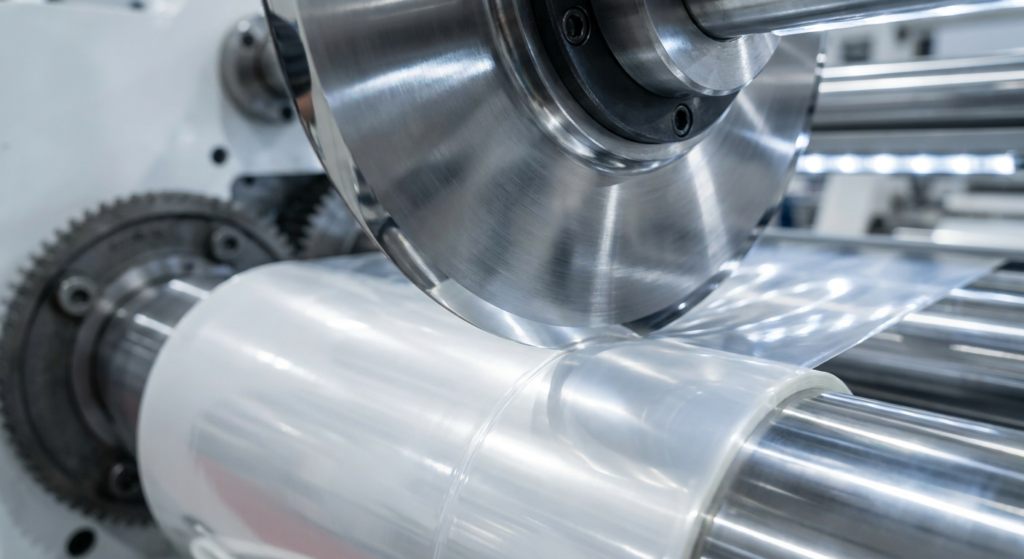
Ces quatre principes constituent le cadre d'ingénierie que l'équipe d'application de Maxtor Metal applique lors de la qualification des couteaux circulaires de découpe longitudinale pour les programmes de transformation sans poussière dans les lignes d'emballage souple, de non-tissé et de papier spécial. Dans la transformation à haute vitesse d'emballages souples, de textiles techniques, de non-tissés et de papiers spéciaux, la contamination particulaire est une cause majeure d'arrêts de ligne non planifiés. Ce que les opérateurs d'usine diagnostiquent fréquemment […]
Réaffûtage des Lames Industrielles en Bande : Seuils d'Affûtage, Critères de Mise au Rebut et Modèle de Coût du Cycle de Vie
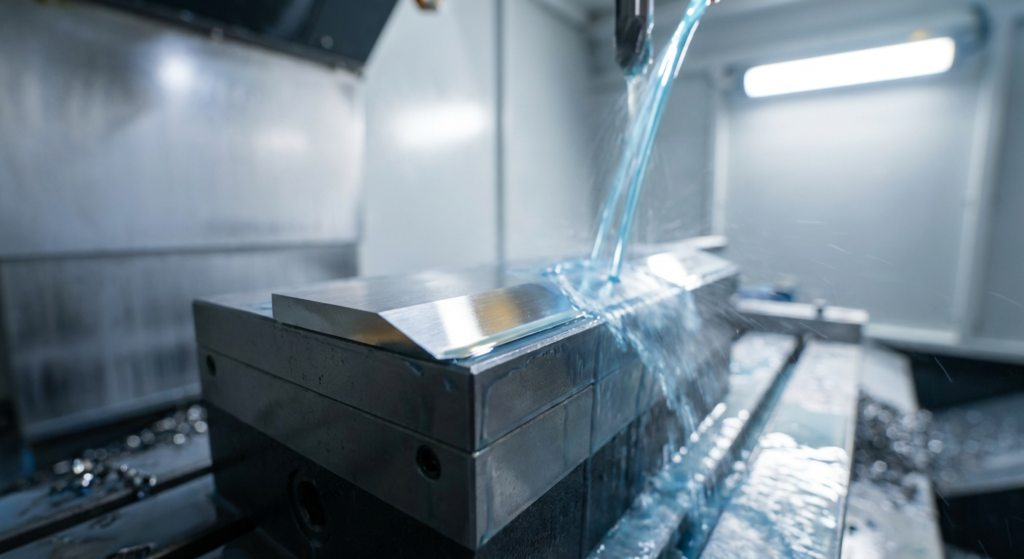
Quick Answer: Regrinding industrial strip blades is economical when: chipping depth is under 0.5 mm, remaining thickness is above 60–70% of nominal, and the estimated regrind cost is below 50% of a new replacement blade. The minimum safe stock removal is 0.010–0.015 in (0.254–0.381 mm) to clear the subsurface micro-fractured fatigue layer. Blades with radial cracks, […]
Lames de granulation en métallurgie des poudres M390 vs CPM S90V : Choix de nuance sous forte usure par fibre de verre
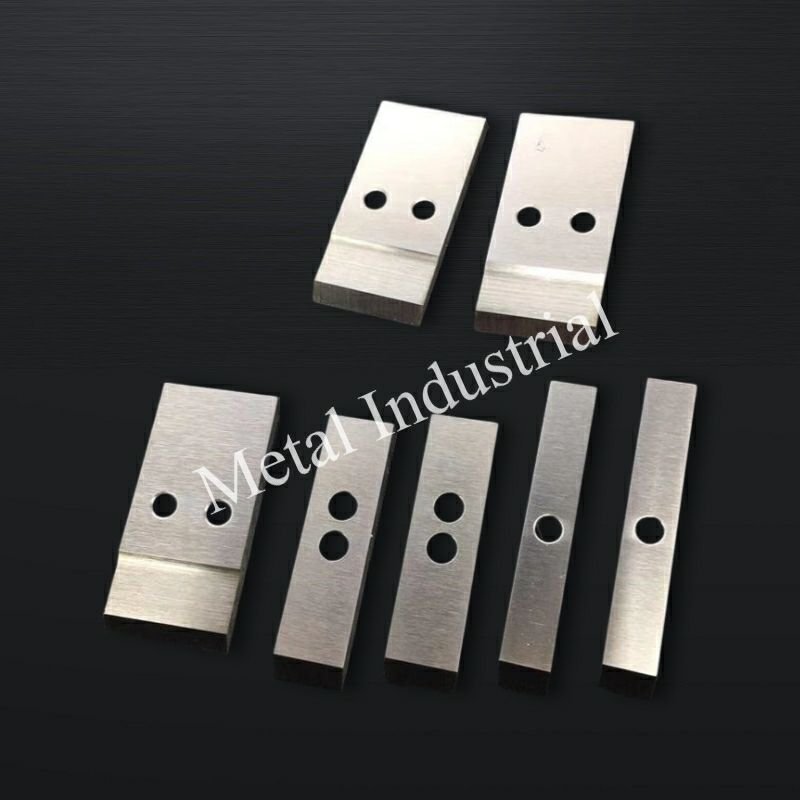
Quick answer: For pelletizing blades under high glass-fiber wear, powder metallurgy stainless steels outperform conventional tool steels because their fine, uniform carbide distribution resists micro-ploughing without the toughness trade-offs of high-alloy ingot steels. Between M390 and CPM S90V: choose CPM S90V when abrasion load is the dominant failure mode (>30% GF, neutral water); choose M390 when […]

 English
  Spanish
  Italian
  French
  Portuguese
  Russian
  German
  Arabic
  Hindi
Hindi  Vietnamese
  Indonesian
  Japanese
  Korean