
超硬チップ埋め込み式ロータリーカッターがGFRP生産の稼働率を向上
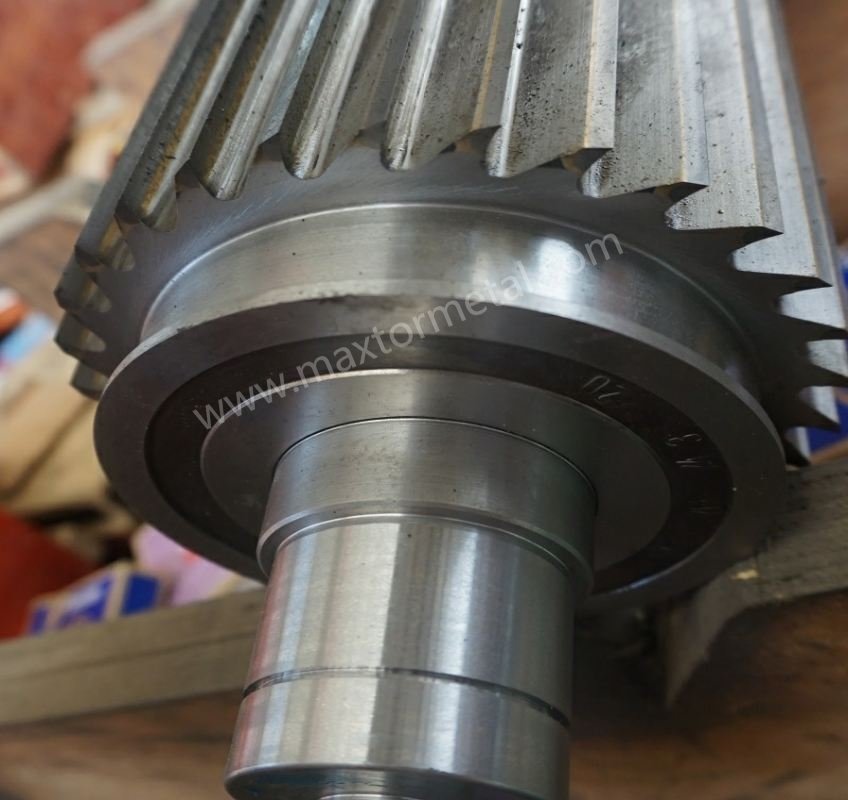
By Tommy Tang (Senior Sales Engineer, Nanjing METAL Industrial). 12 years in slitting & industrial cutting applications. Certifications: CSE, CME, Six Sigma Green Belt, PMP. Introduction Glass fiber–reinforced polymers (GFRP) are unforgiving on cutting edges. Hard, silica-based fibers abrade the knife, rounding the edge and seeding micro‑chips that show up as tails and later break into fines. As fines rise, dryers clog faster, operators chase quality drift, and unplanned stoppages creep in. The net effect: shortened runtime between regrinds and replacements. Tungsten carbide inlaid rotary cutters counter this with a wear‑stable WC–Co tip bonded to a tougher steel body. The carbide inlay resists abrasive rounding far better than HSS, while […]
より静かな高速切断を実現するヘリカルロータリーカッターガイド
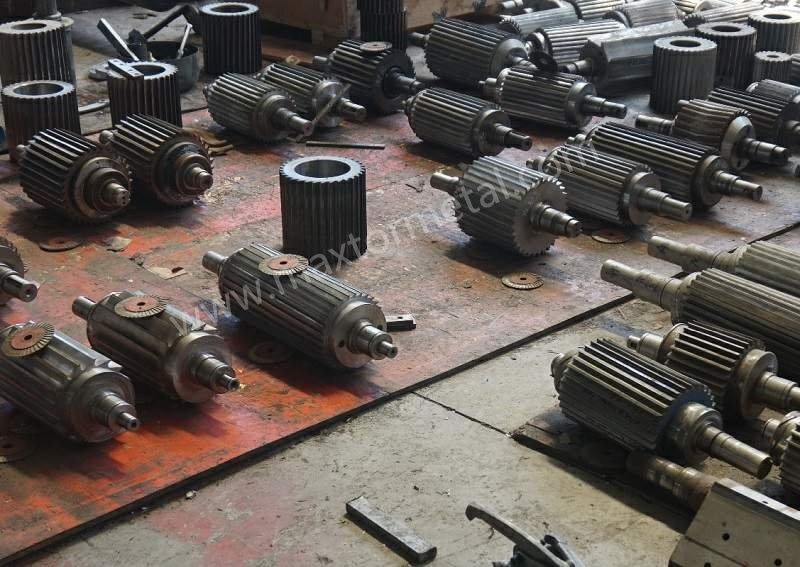
In strand pelletizing, polymer strands are guided into a rotary cutter that shears them against a fixed bed knife to create consistent pellets. A helical rotary cutter uses spiral knives rather than straight edges, so the cut occurs progressively along a helix instead of across the full width at once. At high RPM, this progressive shear spreads the cutting load over time, dampening force spikes that would otherwise excite vibration and tonal noise. Plants see practical wins from this mechanism: steadier pellet length distribution and edges, fewer fines, and longer service intervals when setup and maintenance are executed correctly. Why this matters for speed: when a cutter engages all at […]
OEMフィット回転式造粒機用刃物 —— Gala、MAAG、Scheer対応の回転式造粒機用刃物
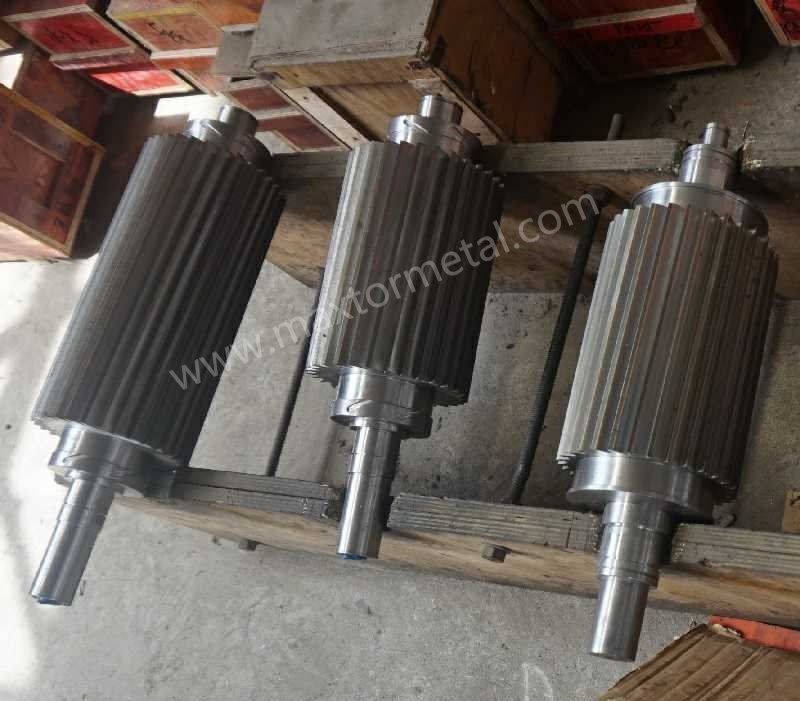
If you’re responsible for equipment, process, or purchasing on a strand pelletizer (MAAG Automatik/Scheer) or you maintain underwater systems (Gala/MAAG) as a secondary line, this guide is for you. OEM‑equivalent fit is what protects uptime and pellet quality: the moment OD/ID, thickness, bolt circle, or bore/pin fits drift, you get tails, rising fines, and more frequent changeovers. Use this guide to verify your model and part numbers, then match specifications and tolerances before you buy. You’ll walk away with clear selection criteria, practical tolerance targets and verification methods, the QA documents you should demand, and lifecycle KPIs to track so you can prove performance. For search clarity, we’ll consistently refer […]
GF‑PA66用ロータリープラスチックペレタイザーナイフ:設計から性能まで
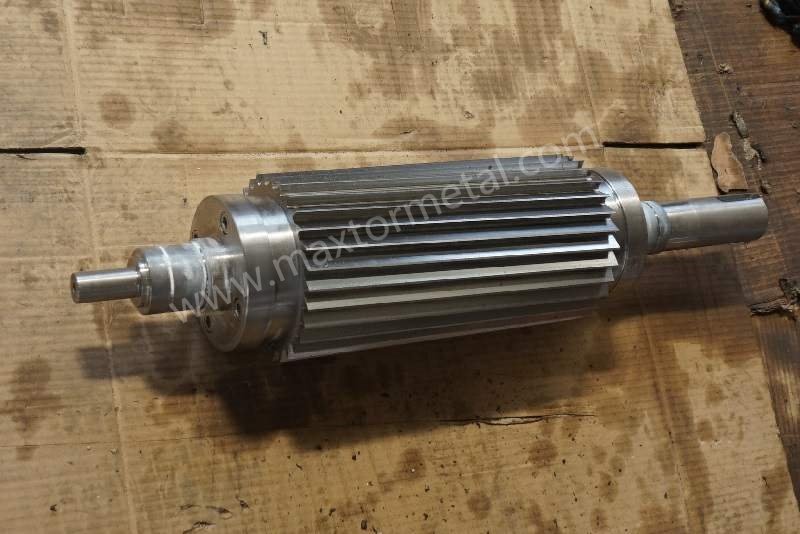
GF‑PA66 loads a cutting edge the way sand loads a pump: glass fibers abrade, heat accelerates softening at the land, and any loss of geometry shows up immediately as fines, tails, or unstable pellet length. That is why rotor plastic pelletizer blades working on glass‑filled nylon demand higher wear resistance, tougher micro‑edges, and tighter control of gap drift than unfilled grades. What you will get here: actionable numbers, selection logic, SOPs, and KPIs that translate design choices into on‑line hours and stable pellets. We prioritize strand pelletizing at 30–50% GF, dry cut, 300–800 kg/h, with a primary KPI of single‑edge on‑line time ≥ 24–48 h and a target blade–bed gap […]
超硬合金チップ埋め込みで長寿命化を実現するロータリーペレタイザーナイフ
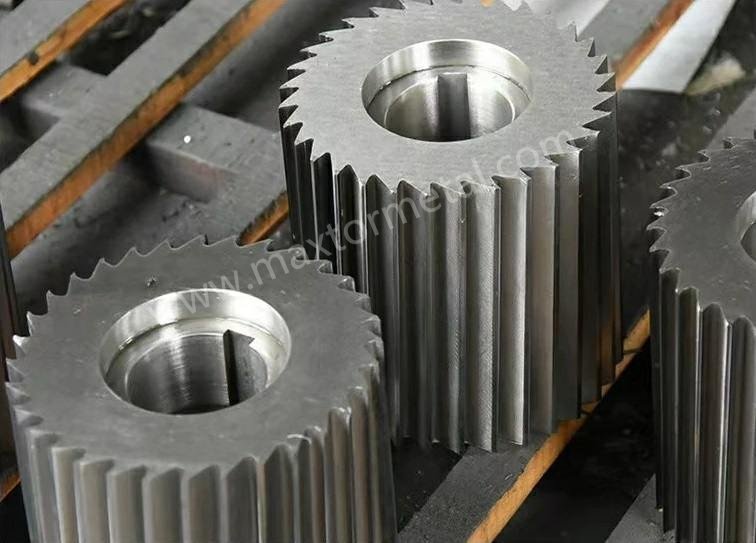
If you run underwater pelletizing on PP or PE, you feel blade life in your uptime, pellet geometry, and cost per ton. When blades hold a clean edge longer, you swap less, stabilize pellet length and roundness, and trim changeover hours. Failures usually start in a few familiar places: steady abrasion from fillers and pigments, adhesive wear (galling) against the die face, corrosion from the water loop, small misalignments that grow with heat and runout, and finally the chipped edges that turn into tails and fines. This guide compares tool steel options (D2, M2, 440C) against inlaid tungsten carbide (WC–Co) for rotor pelletizer blades, then shows the operating practices that […]
ヘリカルシアー(ねじれ刃)を備えた回転式造粒機用刃物がペレットの品質を向上させる
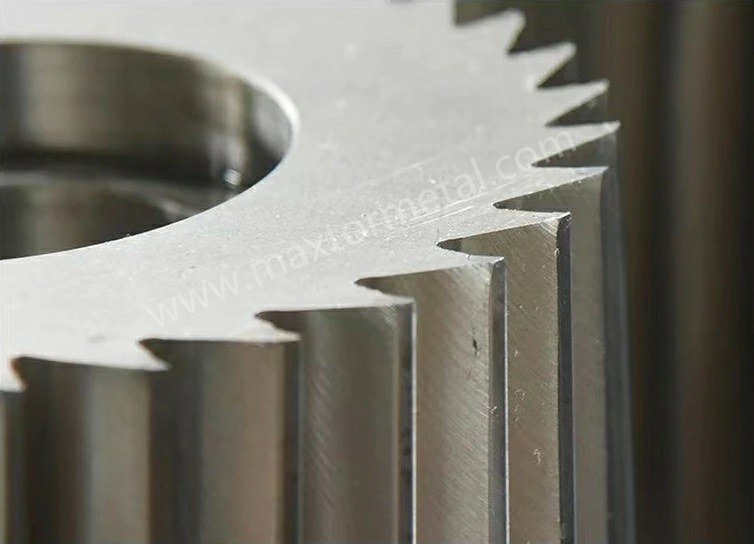
Helical or “rolling” scissor action in pelletizer knives changes how a cut is made. Instead of a perpendicular impact, the blade engages progressively along a helix, distributing load and slicing strands more cleanly. Plants that tune for this mechanism typically aim for tighter length-to-diameter (L/D) distributions, fewer fines and tails, longer knife life, and steadier OEE. This guide explains how helical rolling granulator blades behave in both underwater and strand pelletizing, why outcomes differ from straight or impact-style cutting, and how to implement the approach on lines running PCR and higher contaminant loads. Where to bring your own plant KPIs: if you track fines %, tails %, L/D coefficient of […]
世界のOEMが中国のペレタイザーナイフ工場サプライヤーを信頼する理由
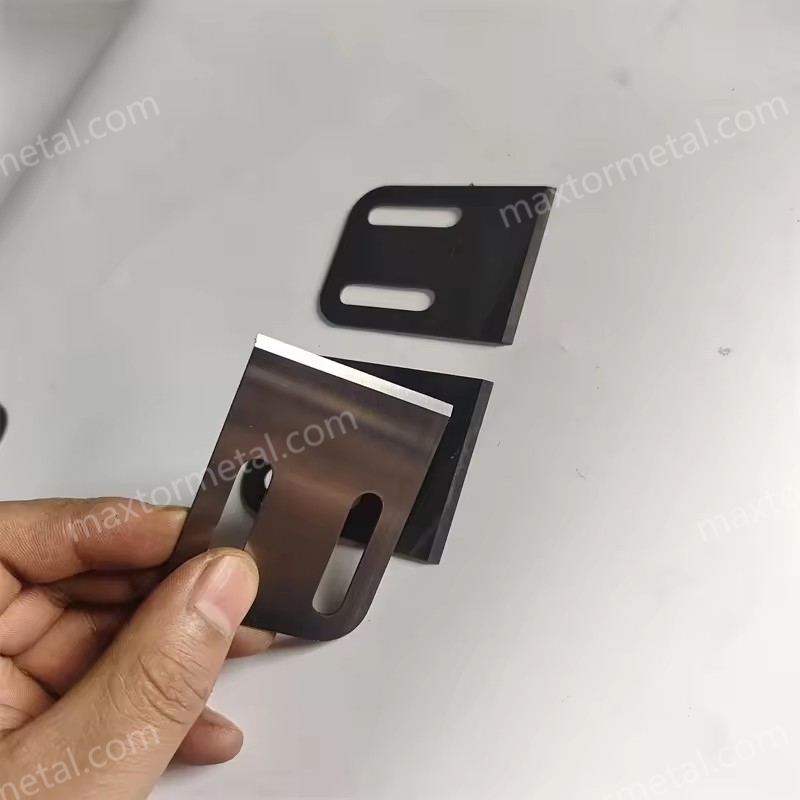
Global OEM engineering, procurement, and supply chain teams turn to China pelletizer blade factory suppliers when they need repeatable quality, auditable processes, and dependable delivery without runaway total cost of ownership (TCO). This guide is for R&D and process engineers validating knife performance at the die face, sourcing managers writing RFQs, and supplier quality leaders defining acceptance criteria. It explains how quality, consistency, and supply reliability cut downtime and TCO—and what to verify before you award business. You will see the exact metrics and methods used to qualify blade suppliers: Rockwell hardness (HRC), surface roughness (Ra), geometric tolerances (flatness, squareness, edge land), process capability (CpK), acceptance sampling (AQL), as well […]
刃先角度の最適化によるペレットの連粒(クラスター)防止
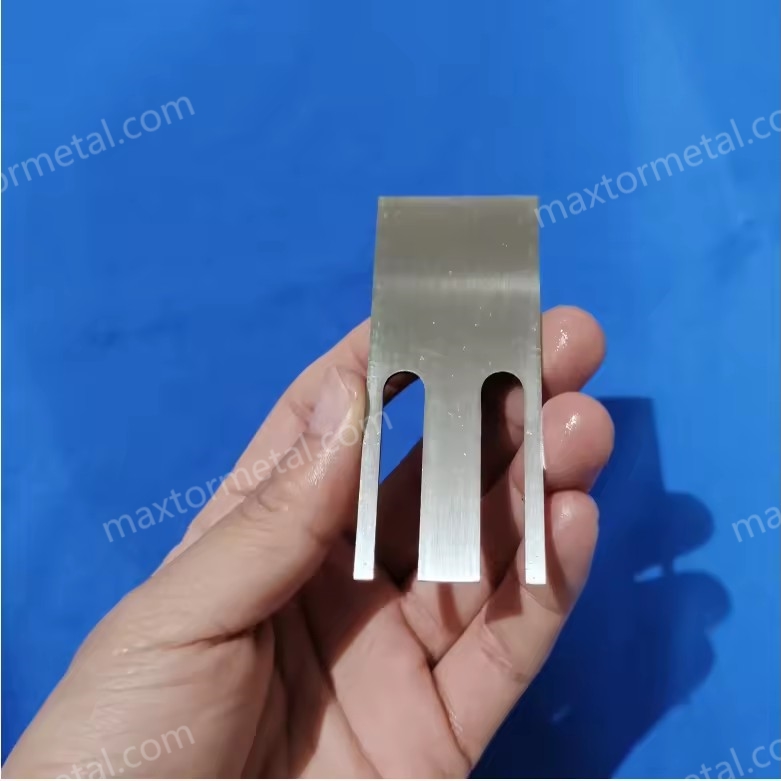
Introduction Clustered pellets—twins, triplets, and fused agglomerates—waste throughput, jam dryers and classifiers, and jeopardize customer quality claims. In underwater and die-face pelletizing, most clustering traces back to pellets leaving the die too hot or tacky, insufficient or unstable quench, or imperfect severance at the die face. Blade geometry sits at the heart of clean severance: dialed-in rake and clearance angles reduce cutting force and frictional heat, suppress tails that act like “hooks,” and help pellets separate cleanly in the water stream. In practice, your first levers are simple and powerful: set the right blade angles, hold a consistent knife-to-die clearance, and stabilize cooling water and melt. Once thermal and mechanical […]
空冷PE/PP用ホットフェスカットナイフの選び方
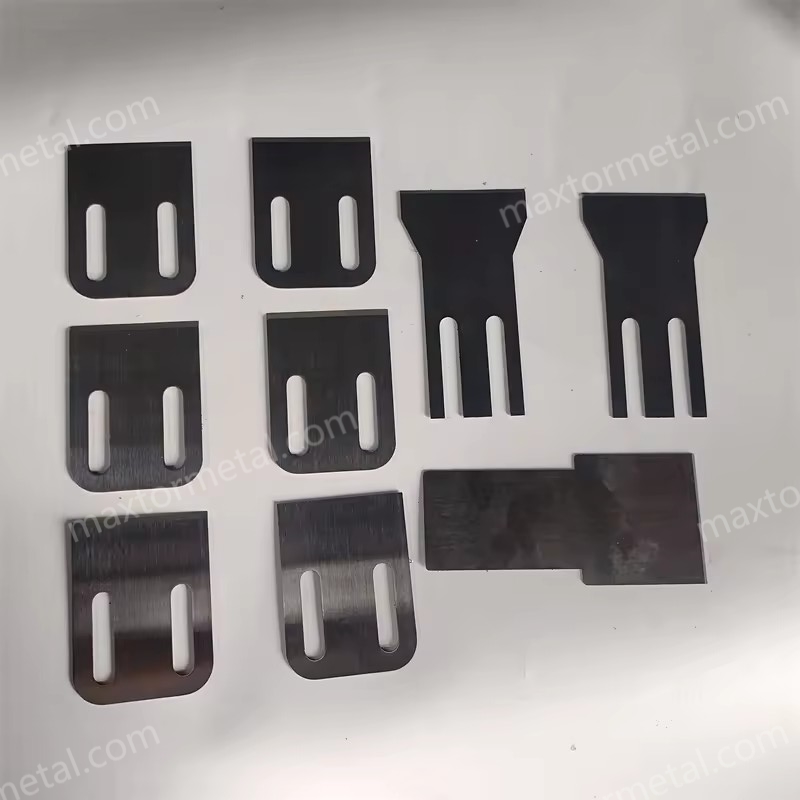
Selecting the right hot face pelletizing blades for air-cooled PE/PP isn’t just about material names on a quote. The right choice directly lowers tails and fines, stabilizes cut quality across shifts, and keeps uptime predictable so your total cost of ownership (TCO) tracks to plan. This guide shows you how to specify blade substrate, hardness, and coating; how to control geometry and tolerances for a clean cut; how to tune air-cooled operation; and how to manage lifecycle and sourcing for consistent, low-variance performance. Use it three ways: Key takeaways How this guide was built (scope & verification): This article synthesizes OEM design concepts (alignment/controlled contact), common coated-component QA methods (e.g., XRF […]
ガラス繊維強化樹脂の摩耗に打ち勝つペレタイザーナイフ
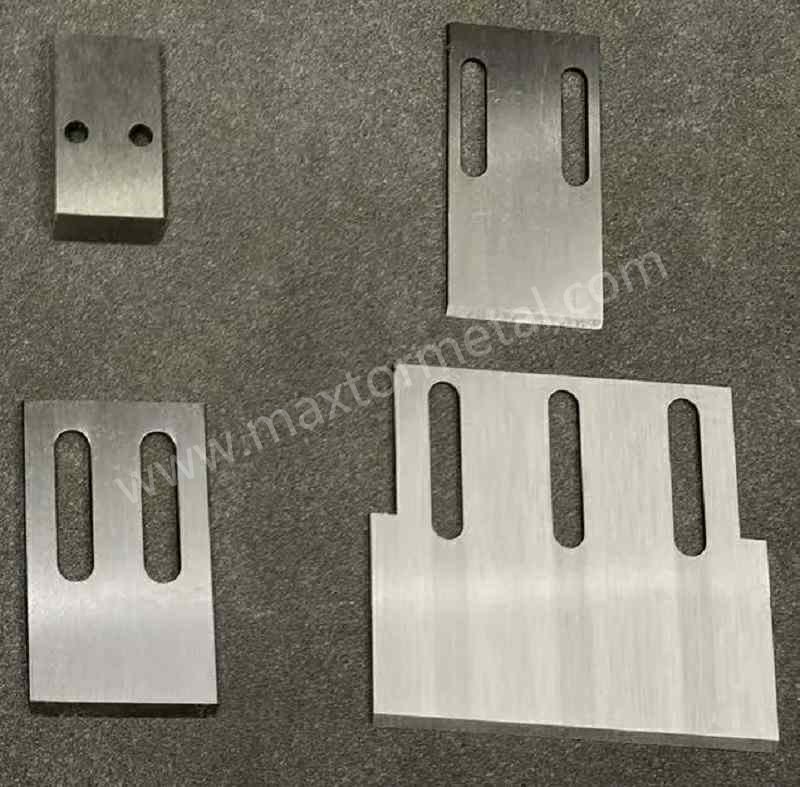
Introduction Glass fibers turn an ordinary polyolefin run into an abrasive slurry. Each chopped strand behaves like a microscopic file, accelerating edge rounding on blades and carving faint grooves into the die face. The result? Rising fines and tails, growing vibration, and more frequent blade swaps or regrinds. In die-face/water-ring (underwater) pelletizing of PP/PE with 10–40% glass fiber, this wear shows up faster and costs more in lost uptime and die reconditioning than in unfilled runs. Abrasion is only half the story. Water chemistry, temperature stability, and alignment also steer how quickly edges dull or chip. If those variables drift, you pay twice—once in pellet quality and again in total […]

 English
  Spanish
  Italian
  French
  Portuguese
  Russian
  German
  Arabic
  Hindi
Hindi  Vietnamese
  Indonesian
  Japanese
  Korean