
Cấu hình lò xo cho xẻ cuộn dạng kéo khe hở bằng không (Zero-Clearance): Kiểm soát độ chồng dao, góc nghiêng và lực ép trước
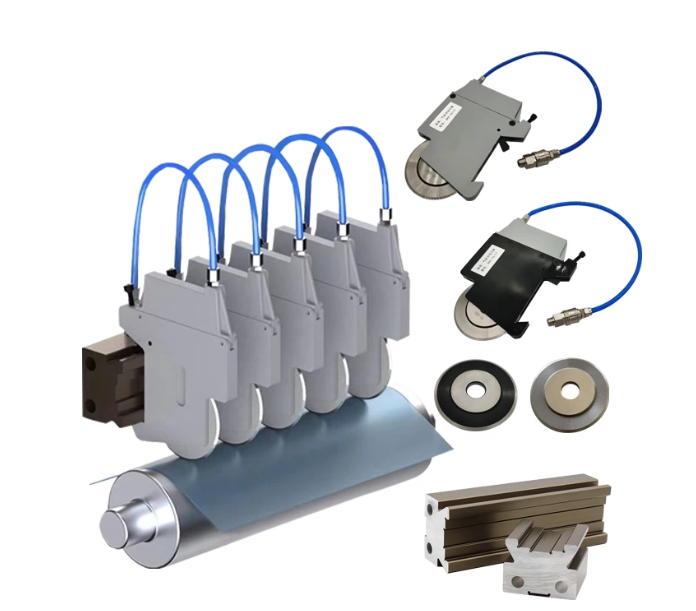
If you’re running thin films or nonwovens at speed, shear slitting stops being “just knife setup” and starts behaving like a stability problem: tiny runout, inconsistent contact, or drifting knifeholder air preload pressure becomes edge defects and downtime. This guide is written in the shop-floor practical approach Maxtor Metal uses when supporting customers on film […]
Xác thực lưỡi dao thay thế máy cắt hạt lựu Urschel 440C tại HRC 56–58: Dải nhiệt luyện, kiểm soát RA và giao thức QA
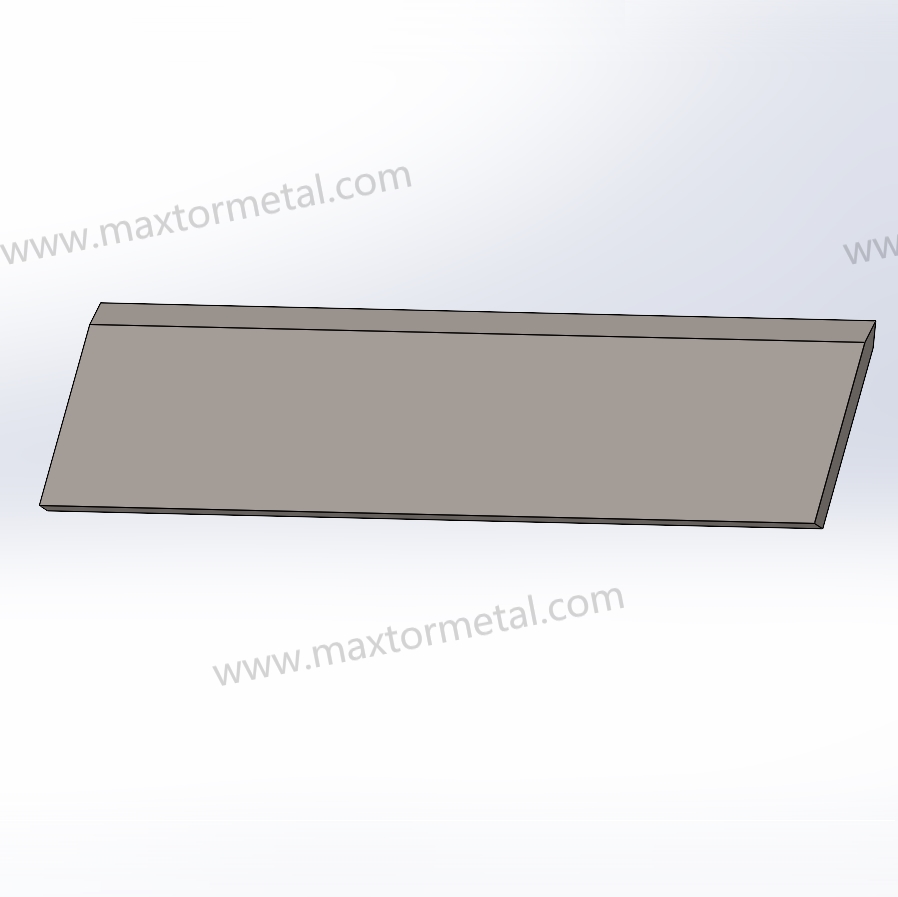
Urschel-style dicer heads operate under demanding cyclic loading: blade bands contact product at high frequency, with impact severity varying significantly between soft fresh produce and hard frozen product (IQF frozen vegetables and root crops can present surface hardness comparable to hardened wood). Cut-size capability and blade life are directly coupled—a band that chips on the […]
Đánh giá kỹ thuật các khối dao cắt cho sản xuất hóa dầu khối lượng lớn
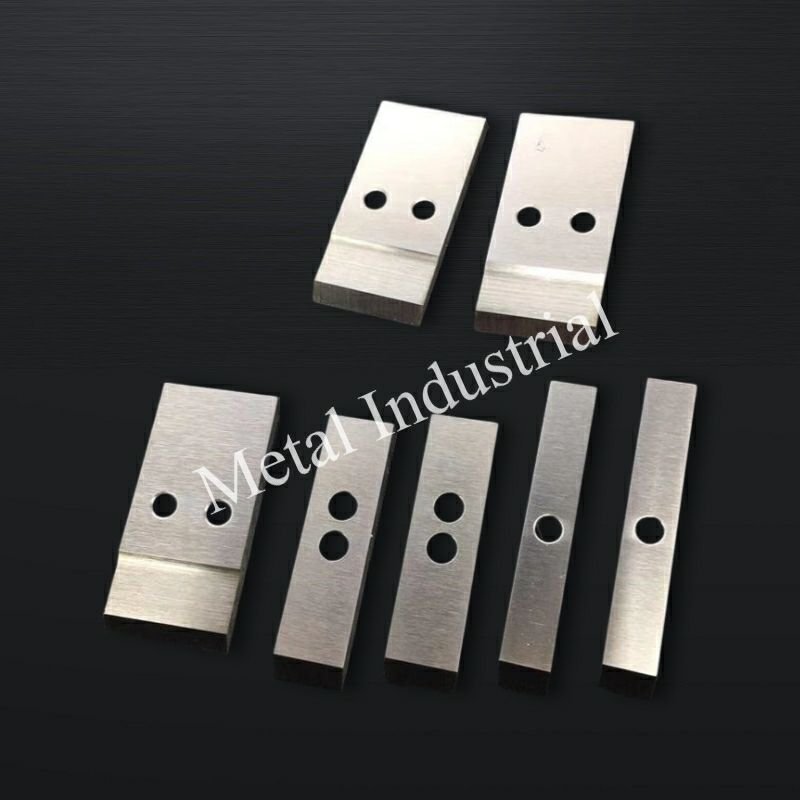
Quick answer: A water-ring pelletizer knife block is qualified for high-volume production by verifying four things: runout/TIR at functional datums (typically ≤0.03–0.04 mm), balance grade per ISO 21940 (G6.3 baseline, tightening to G2.5 at higher speeds), vibration acceptance per ISO 20816 (often ≤2.8 mm/s RMS), and full material traceability via EN 10204 3.1/3.2 certificates linked to […]
Bù trừ độ dày do mài lại: Tính toán miếng đệm & xác minh độ chồng lắp cho dao cắt
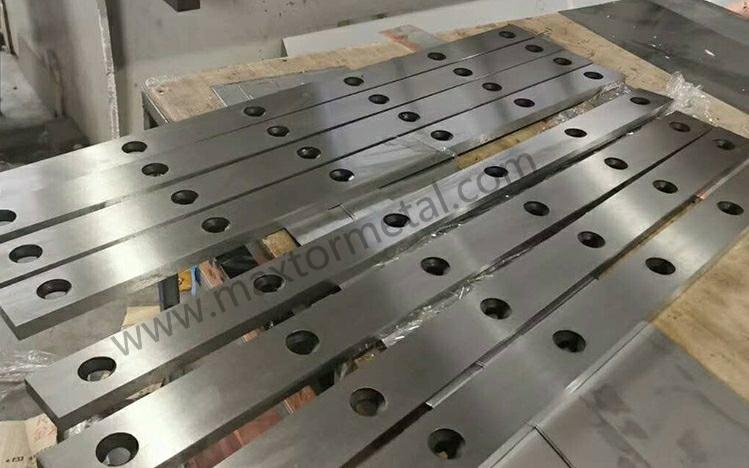
By Nancy Wu, Senior Manufacturing Engineer (Production Engineering), Maxtor Metal — SME–CMfgE, PMP, Six Sigma Black Belt, ASM International certifications Scope note: This guide is a technical reference to support measured setup work. Always follow your OEM service manual and your facility SOP for final settings and safety procedures. Regrinding restores edge condition, but it also […]
Bản vẽ dao xẻ công nghiệp OEM: Kiểm toán lắp trục, dung sai ISO & ngưỡng TIR

Dây chuyền xẻ rãnh có thể sở hữu thép dao chất lượng tuyệt vời nhưng vẫn gặp phải các vấn đề như gờ, độ lệch chiều rộng và sứt mẻ sớm nếu giao diện giữa lỗ khoan và trục chính được thiết kế kém hoặc kiểm tra không nhất quán. Danh sách kiểm tra này được thiết kế để sử dụng như một cuộc kiểm toán kỹ thuật: bạn lấy bản vẽ thiết kế dao xẻ rãnh của nhà sản xuất thiết bị gốc (OEM), so sánh nó với thực tế trục chính/trục quay và ghi lại các tiêu chí đạt/không đạt trước khi […]
Mua sắm dao máy băm nghiền thay thế: Kiểm soát thông số kỹ thuật, kế hoạch CMM, xác thực MTR và kiểm tra độ lắp ghép chức năng.
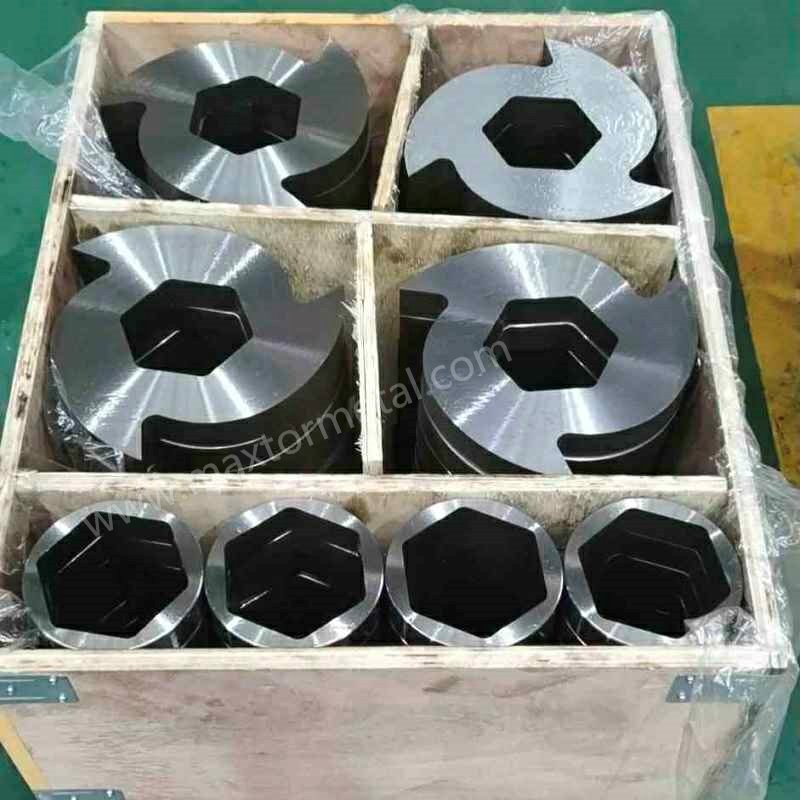
Disclosure: This guide is written by Maxtor Metal to document an audit-ready acceptance workflow. The methods and decision rules described here are supplier-agnostic and can be applied to OEM parts or any qualified aftermarket supplier. Where a Maxtor Metal page is referenced, it is used only as a geometry-family terminology reference; you may substitute any approved reference page or drawing package […]
Dung sai lỗ tâm và độ đảo: Tối ưu hóa lắp ghép ISO 286 để giảm rung lắc cho máy xẻ cắt tốc độ cao.
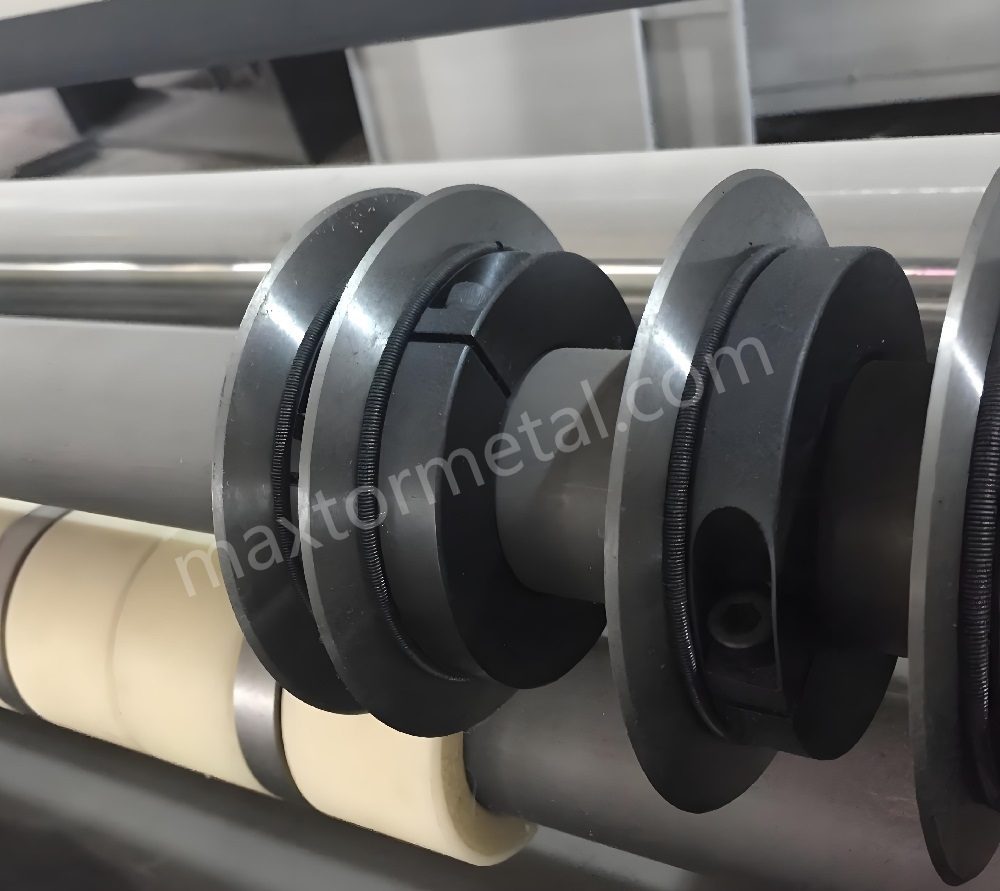
High-speed slitting is unforgiving: if a circular knife doesn’t rotate true, the cut edge quality degrades before the blade is even “dull.” In this article, Maxtor Metal ties central bore tolerance runout (how bore size + geometry show up as edge TIR at speed) to the numbers you can specify—and the checks you can repeat. Engineering Note: For knife-level specifications, […]
Lưỡi vát đơn, vát đôi và vát hỗn hợp cho dao xả băng tròn: Khung lựa chọn và thiết lập dựa trên độ cứng vật liệu
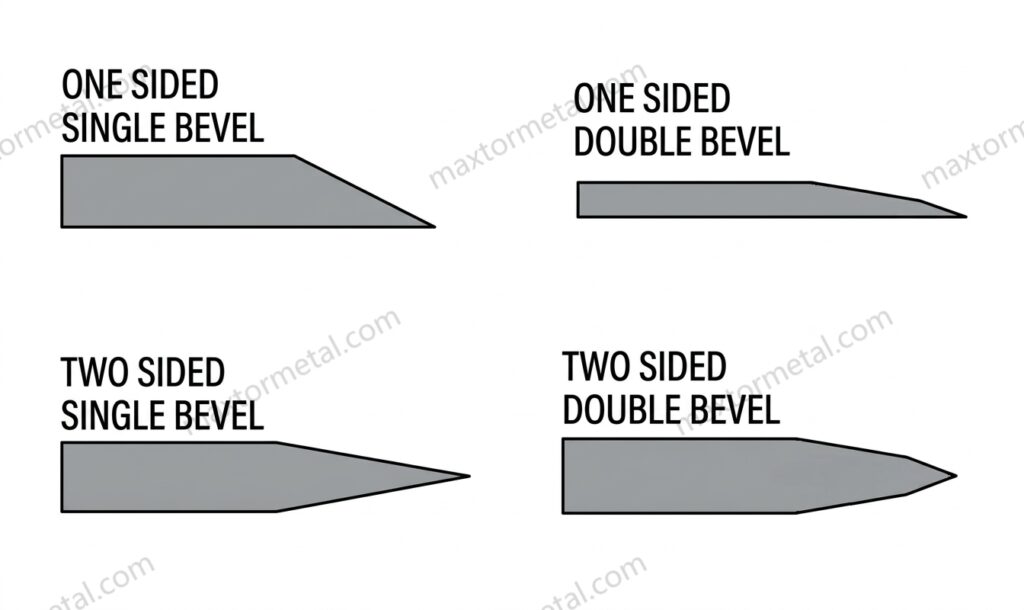
How to use this guide (scope & assumptions): The ranges and troubleshooting steps below are practical starting points for circular slitter knives in typical converting lines. Actual optimum settings depend on your machine design (holder stiffness, runout, spacer stack), web support, and substrate variability—always validate with a controlled trial and change one variable at a time. Engineering […]
Tối ưu hóa độ sâu chồng dao (Overlap depth) và khe hở bên của dao tròn: Cơ chế, DOE và sự đánh đổi Pareto đối với chất lượng cạnh cắt và tuổi thọ dao
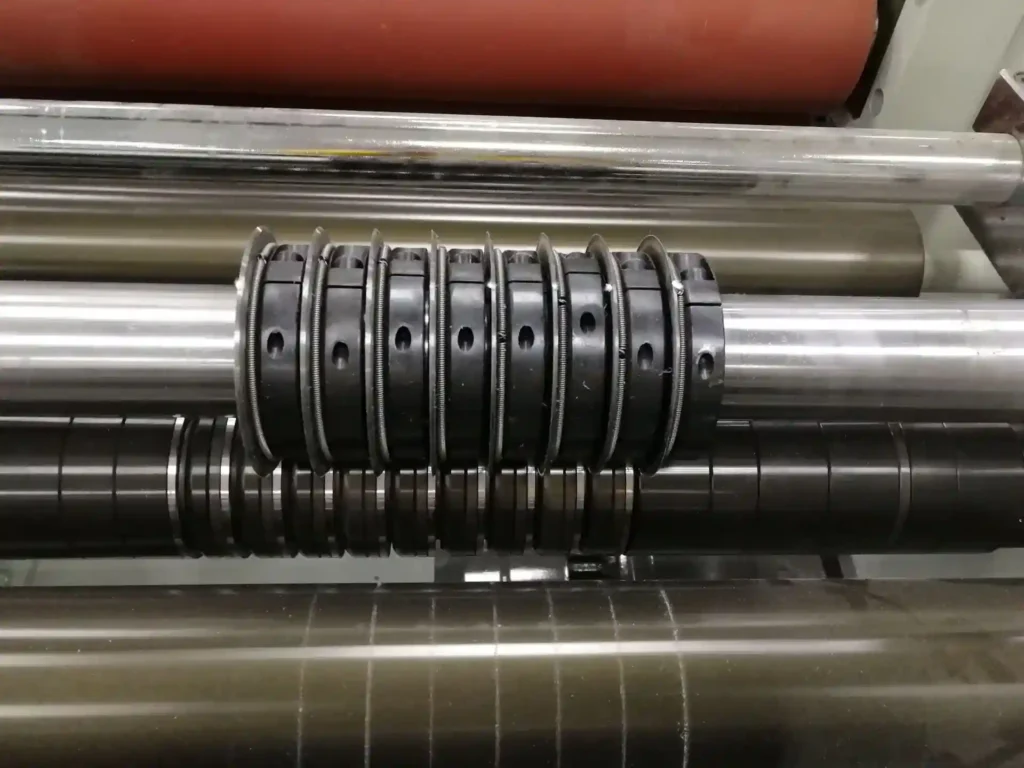
Published: 2026-05-28 | Last updated: 2026-05-28 If you’re chasing cleaner edges, less dusting, and longer knife life on a slitter/rewinder, Maxtor Metal sees the same pattern again and again: the fastest wins often come from two setup variables you can actually control—overlap depth and side clearance. When dusting is the primary quality complaint—especially on filled substrates like the coated […]
Độ đảo trục (Axial Runout), TIR động và chất lượng mép cắt: Cơ chế, phép đo và giải pháp khắc phục cho dây chuyền chuyển đổi tốc độ cao
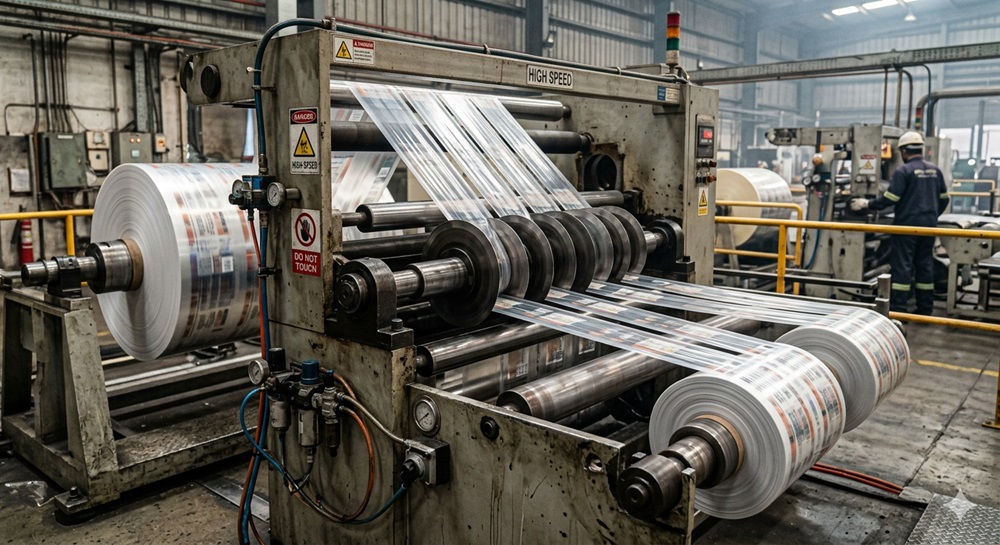
High-speed slitting is unforgiving: small geometry errors show up as burrs, feathering, and unstable lanes long before they show up on a maintenance checklist. At Maxtor Metal, we see runout problems most often when a line is pushed for higher OEE but the slit edge has to stay clean enough for downstream lamination, printing, or welding. […]

 English
  Spanish
  Italian
  French
  Portuguese
  Russian
  German
  Arabic
  Hindi
Hindi  Vietnamese
  Indonesian
  Japanese
  Korean