

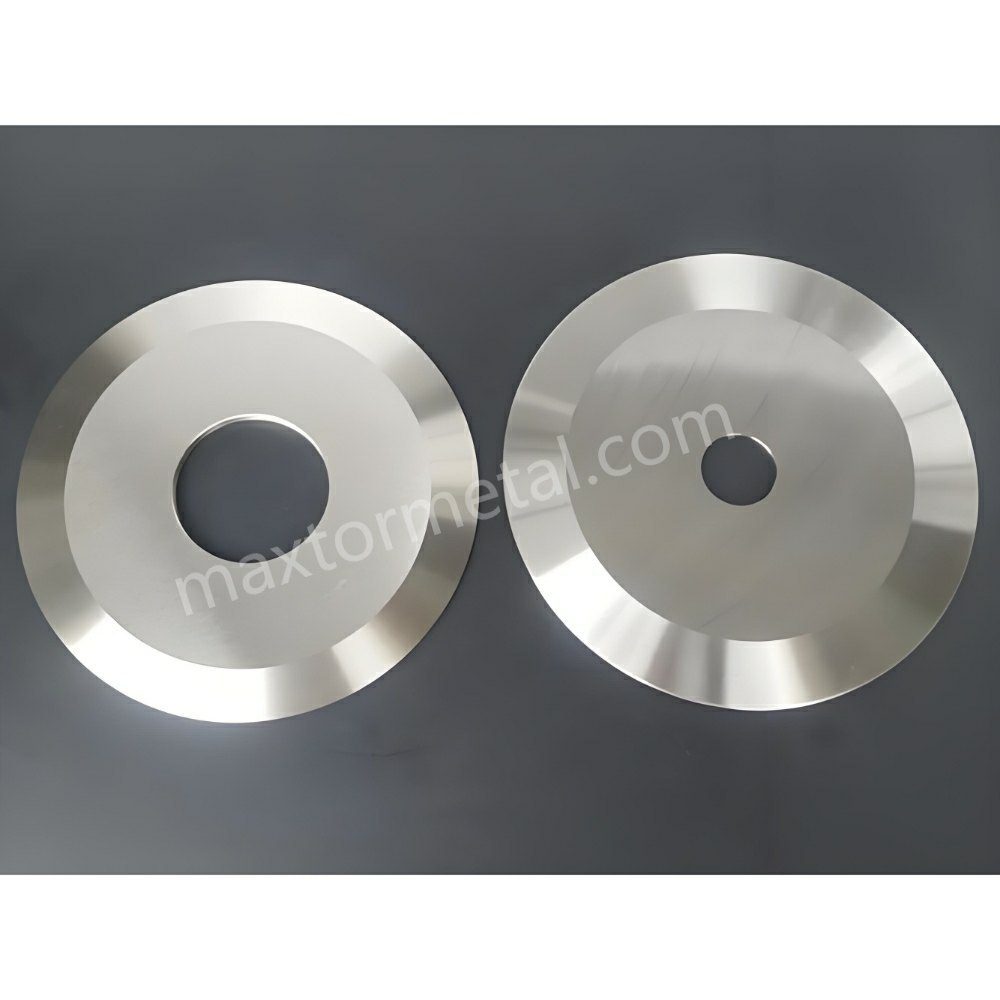
Hiện tượng vết cắt đường xà (còn gọi là sự lệch hoặc lệch dòng cắt) xuất hiện khi mép cắt không giữ được đường đi thẳng và ổn định: các dải màng bị "dạt", dao động hoặc dịch chuyển dần khiến các lớp cuộn màng sau khi quấn không còn thẳng hàng ở tâm. Hãy coi đây là bài toán về độ ổn định của toàn bộ hệ thống xả cuộn và quấn màng—не phải là lỗi do một thông số đơn lẻ.
Danh sách kiểm tra này phản ánh cách hầu hết các đội bảo trì và vận hành xử lý sự cố thực tế tại nhà máy. Quy trình này dựa trên trình tự chẩn đoán mà đội ngũ kỹ thuật hiện trường của Maxtor Metal áp dụng khi khắc phục lỗi: tại sao một đường cắt nhìn rất đạt yêu cầu khi cài đặt (setup) lại trở nên mất ổn định khi chạy ở tốc độ cao.
Điểm chínhNếu các đường cắt của rắn thay đổi theo tốc độ, cách xây dựng đội hình hoặc vị trí trên đường, hãy bắt đầu bằng cách cô lập chúng. Lực ngang đến từ đâu? (Lực cắt so với cơ học mạng nhện so với lực tĩnh/không khí) trước khi bạn bắt đầu "điều chỉnh các nút."“
Phương pháp chẩn đoán ưu tiên hệ thống này là khung quy chuẩn mà đội ngũ kỹ thuật ứng dụng của Maxtor Metal áp dụng khi hỗ trợ khách hàng trên các dây chuyền cắt màng và vải không dệt—nơi hiện tượng lệch dải màng không thể xử lý bằng các điều chỉnh đơn lẻ.
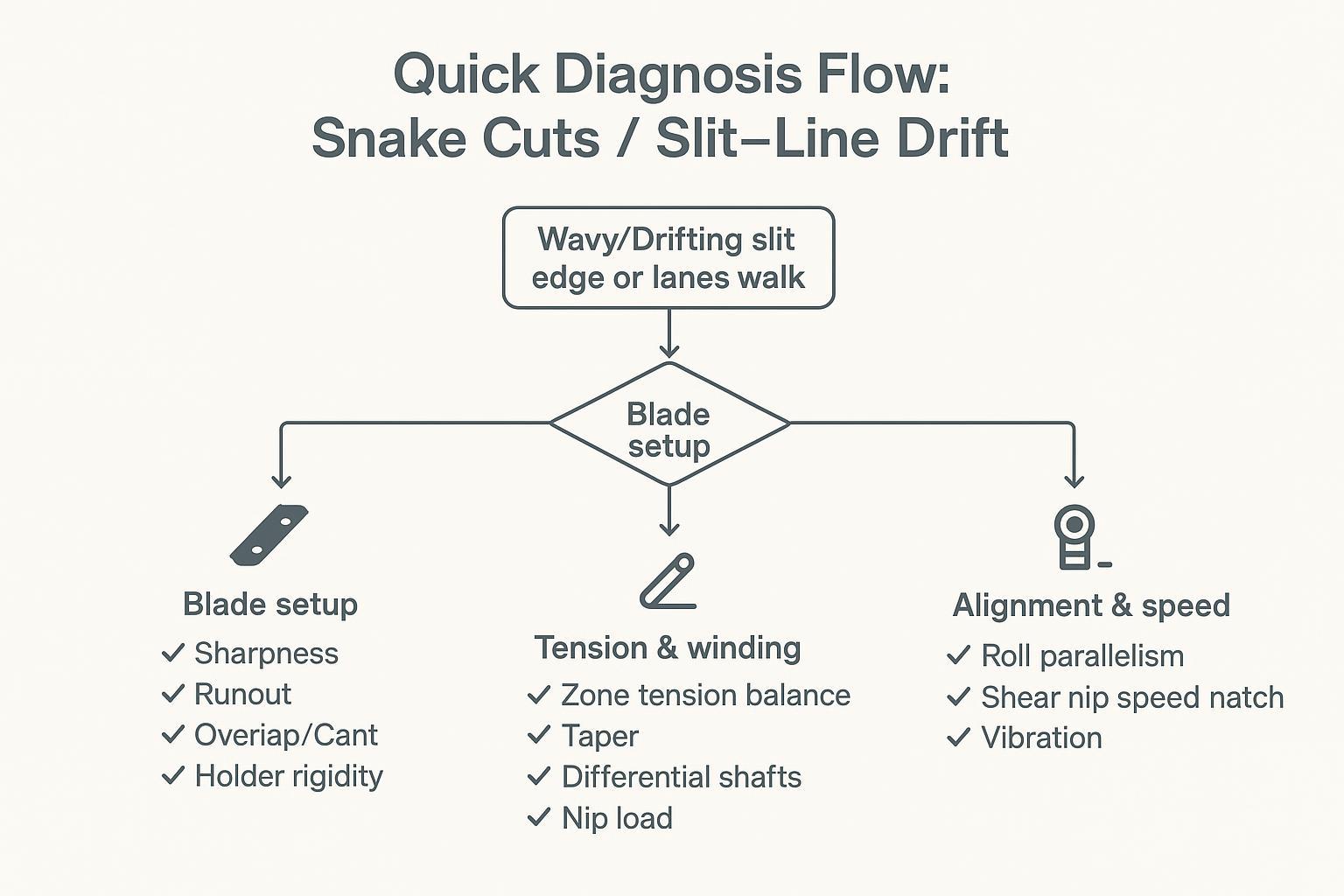
Quy trình chẩn đoán nhanh
Khi nào cần nghi ngờ có vấn đề với lưỡi dao?
- Vấn đề là cụ thể theo làn đường (Một hoặc hai làn đường bị lệch trong khi các làn đường lân cận giữ nguyên vị trí).
- Drift bắt đầu ngay tại điểm cắt, Ngay cả ở tốc độ thấp.
- Gần đây bạn đã thay dao, miếng đệm, giá đỡ hoặc di chuyển chồng dao.
- Hiện tượng trôi lệch có tính chất lặp đi lặp lại "một lần mỗi vòng quay" (thường liên quan đến độ lệch tâm hoặc vị trí lắp ráp không đúng).
Kiểm tra nhanh:
- Kiểm tra độ sạch của chồng dao (không có màng phim, keo dính, gờ sắc trên bề mặt).
- Kiểm tra độ lệch tâm bằng đồng hồ đo trên mặt trục/dao tại các rãnh bị lệch.
- Xác nhận độ chồng lấp/tiếp xúc và độ nghiêng/độ lệch nằm trong phạm vi dự kiến cho phương pháp cắt.
Khi nào nên nghi ngờ có sự căng/quấn dây?
- Hiện tượng trôi dạt ngày càng trở nên nghiêm trọng hơn khi Đường kính cuộn tăng lên.
- Lỗi này "di chuyển" từ làn đường này sang làn đường khác với vị trí cốt lõi hoặc thay đổi tháp pháo.
- Bạn thấy đấy thu gọn, các cạnh lỏng lẻo, hoặc sự khác biệt về độ cứng giữa các làn đường.
- Khả năng drift được cải thiện ngay lập tức khi bạn giảm tốc độ hoặc thay đổi điểm đặt lực căng.
Kiểm tra nhanh:
- So sánh độ căng của vùng cuộn/giữa/cuộn lại (thực tế so với điểm đặt).
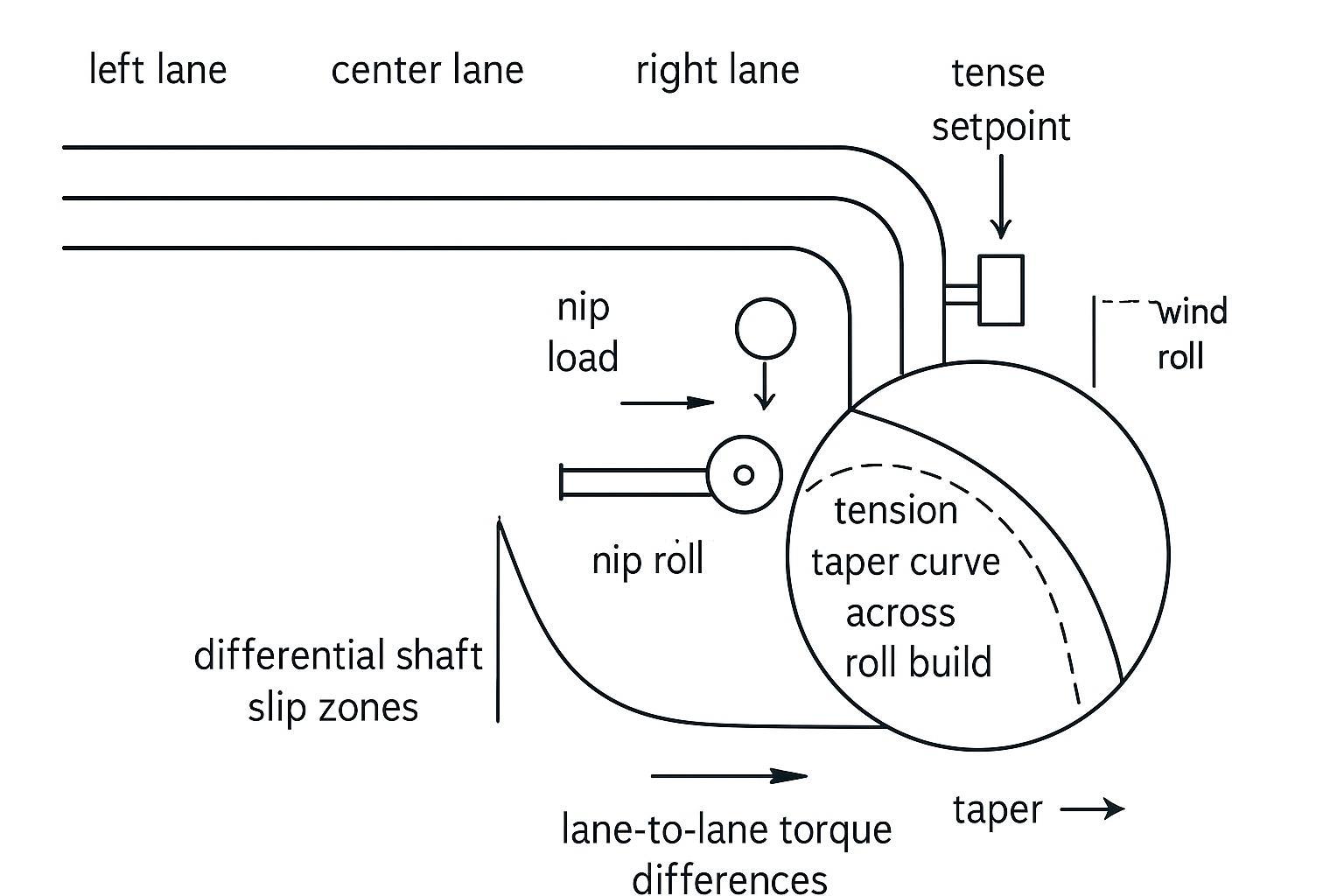
- Kiểm tra hành vi ứng suất côn trên toàn bộ cuộn dây.
- Xác nhận trục vi sai hoạt động bình thường từng làn đường (không có bộ phận nào bị kẹt).
Khi nào cần nghi ngờ về sự lệch trục/tốc độ
- Hiện tượng trôi lệch sẽ trở nên nghiêm trọng hơn sau khi bảo dưỡng, thay thế bạc đạn hoặc sau sự cố va chạm/quá tải.
- Mạng nhện di chuyển khá tốt ngược dòng, sau đó chuyển hướng sau một cú cuộn hoặc va chạm cụ thể.
- Bạn nghe/cảm nhận được sự rung động, nhìn thấy các vết hằn hoặc thấy sự dao động của thanh dẫn hướng cạnh.
Kiểm tra nhanh:
- Kiểm tra độ song song của trục lăn và độ cân bằng của chốt; tìm kiếm sự lệch rõ ràng hoặc mài mòn không đều.
- Điều chỉnh tốc độ tại điểm tiếp xúc cắt (tốc độ dao so với tốc độ màng).
- Tình trạng ổ trục và độ rung (nhiệt độ, tiếng ồn, phổ tần nếu có).
Ma trận nguyên nhân gốc rễ của vết cắt rắn
Hãy sử dụng bảng này như một tài liệu tham khảo nhanh để sàng lọc trước khi điều chỉnh bất kỳ cài đặt nào.
| Mô hình triệu chứng | Hệ thống con có khả năng nhất | Kiểm tra lần đầu |
|---|---|---|
| Hiện tượng lệch làn đường, bắt đầu từ điểm rẽ ngoặt, xuất hiện ở tốc độ thấp. | Lưỡi dao / giá đỡ | TIR tại trục + mặt dao trên các làn bị ảnh hưởng; so sánh với các làn ổn định |
| Hiện tượng trôi xe trở nên tồi tệ hơn khi độ nghiêng tăng lên; cải thiện khi tốc độ giảm xuống. | Cuộn dây căng/cuộn dây chênh lệch | So sánh độ căng thực tế và độ căng cài đặt trong từng vùng; mô-men xoắn trượt trục vi sai |
| Hiện tượng trôi dạt xuất hiện sau khi bảo trì hoặc sự cố cơ khí. | Căn chỉnh / ổ trục | Độ song song của trục lăn; nhiệt độ ổ trục và phổ rung động |
| Độ lệch hướng thay đổi tùy thuộc vào lô cuộn giấy gốc hoặc vị trí làn đường (lề so với trung tâm). | Hồ sơ vật liệu / độ dày | Biến thiên độ dày theo chiều ngang của màng; mối tương quan giữa độ cứng từng làn và vị trí của cuộn giấy gốc. |
| Hiện tượng trôi dạt trở nên tồi tệ hơn khi tốc độ cao, và được cải thiện khi lực ép lên bánh xe tăng lên. | Sự cuốn hút không khí / tĩnh | Kiểm tra giảm tốc độ; kiểm tra đầu ra bộ ion hóa và độ thông mạch nối đất. |
Thiết lập dao và độ dung sai
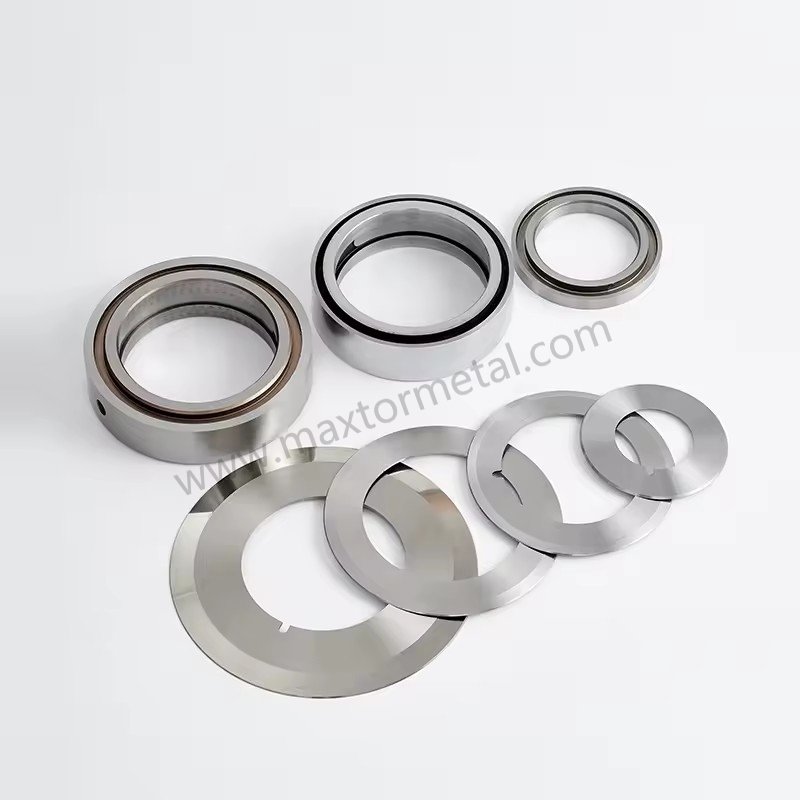
Độ sắc nét, độ lệch tâm, độ chồng chéo, độ nghiêng
Các vết cắt hình rắn thường bắt đầu bằng một độ lệch ngang nhỏ, lặp đi lặp lại. Trong nhiều đường cắt, cách nhanh nhất để chứng minh hoặc bác bỏ hiện tượng lệch hướng do dao cắt là đo độ lệch tại những vị trí quan trọng.
- Độ sắc nétLưỡi cùn làm tăng lực cắt và có thể "điều khiển" màng phim, đặc biệt là đối với màng mỏng ở tốc độ cao.
- Runout (TIR)Kiểm tra vai trục, mặt đệm và mặt dao – không chỉ một điểm thuận tiện duy nhất. Duy trì độ lệch tâm tổng thể trong phạm vi cho phép. ≤0,025–0,050 mm (0,001–0,002 in) trên toàn bộ cụm lắp ráp. Hồ sơ kiểm tra đầu vào của Maxtor Metal ghi lại TIR tại cả bề mặt dao và bề mặt tiếp xúc trục cho mỗi lô, do đó các phép đo tại hiện trường có thể được so sánh với dữ liệu nhà máy đã được ghi lại khi xuất hiện vấn đề lệch sau khi thay dao. Để có cách tiếp cận đầu tiên dựa trên phép đo đối với TIR theo trục và hướng tâm—bao gồm các giao thức xác minh độ lệch từ nguội sang nóng và các cơ chế khuyết tật mà mỗi chế độ lệch tạo ra—xem TrụcĐộ lệch tâm, TIR động và chất lượng cạnh rãnh.
- Sự chồng chéo / sự tham giaĐặt độ chồng lấp ở mức tối thiểu ổn định cho phương pháp và vật liệu của bạn (thường bắt đầu từ...). 0,5–1,2 mm / 0,020–0,045 inch (Đối với việc cắt màng bằng máy cắt tiêu chuẩn). Độ chồng chéo quá mức có thể tạm thời che giấu một vấn đề cơ học trong khi làm tăng nhiệt và tải trọng ngang. Đối với màng mỏng (PE/PP/PET <50 μm), nhóm kỹ thuật hiện trường của Maxtor Metal sử dụng phạm vi 0,50–0,75 mm làm điểm khởi đầu và điều chỉnh dựa trên chất lượng cạnh và xu hướng lực cắt. Để hiểu rõ hơn về cách độ chồng chéo, góc nghiêng và tải trước bằng lò xo tương tác trong quá trình thiết lập, hãy xem Cơ chế lò xo giúp cắt rãnh không khe hở: Điều khiển độ chồng chéo, góc nghiêng và tải trước.
- Cant / xe điệnGiữ góc nghiêng trong phạm vi thông số kỹ thuật của nhà sản xuất (thường là...) 0.25°–0.5°Nếu máy không được căn chỉnh đúng cách, bạn có thể có được một đường cắt trông chấp nhận được khi thiết lập ban đầu nhưng trở nên không ổn định khi lực tăng lên cùng với tốc độ.
Đối với các tài liệu tham khảo về cắt bằng kéo, Sổ tay Tham khảo Cắt xẻ DIENES là một tài liệu cơ bản hữu ích để hiểu cách xử lý sự chồng chéo như một biến số được kiểm soát chứ không phải là một thiết lập theo kiểu "càng nhiều càng tốt" (xem Sổ tay tham khảo kỹ thuật xẻ rãnh DIENES, ấn bản thứ 2 (PDF)).
Đối với các dây chuyền mà việc lựa chọn lớp phủ cũng đang được xem xét — đặc biệt là liệu lớp phủ DLC hay PTFE có ảnh hưởng đến hiện tượng trôi dạt và khoảng thời gian làm sạch hay không — hãy xem Hướng Dẫn Chọn Lớp Phủ DLC vs PTFE Cho Dao Phân Cuộn/Dao Cắt Biên: Giới Hạn Mài Mòn vs Giới Hạn Bám Dính.
Độ cứng của giá đỡ và tải trọng bên
Ngay cả với những con dao tốt, một giá đỡ linh hoạt hoặc một chồng dao cho phép thay đổi tải trọng từ hai bên cũng sẽ dẫn đến hiện tượng lệch hướng khi thao tác nhanh.
Những tấm séc thường mang lại lợi nhuận:
- Kiểm tra xem các giá đỡ đã được đặt phẳng và kẹp chặt đều khắp chồng giá đỡ chưa.
- Kiểm tra xem có hiện tượng mài mòn, trầy xước hoặc các dấu hiệu hao mòn nhỏ nào cho thấy sự chuyển động vi mô dưới tải trọng hay không.
- Kiểm tra xem các miếng đệm có bị "tích tụ dung sai" gây ra độ lệch ngang hay không (đặc biệt là trên các cấu trúc nhiều làn).
- Hãy chú ý đến sự gia tăng tải trọng ngang có liên quan đến sự tích tụ vật liệu trong cuộn hoặc sự tăng nhiệt độ.
Các vấn đề về xếp chồng miếng đệm thường bắt nguồn từ độ chính xác của việc lắp ráp lỗ khoan. Để biết logic lựa chọn lắp ráp theo tiêu chuẩn ISO 286 thiết lập độ chính xác định vị lỗ khoan so với trục chính — và cách kiểm tra độ chính xác lắp ráp TIR trước khi đưa cụm dao vào sản xuất — hãy xem Dung sai và độ lệch tâm lỗ trung tâm: Tối ưu hóa các mối ghép theo tiêu chuẩn ISO 286 cho dao cắt tốc độ cao.
Chất lượng nguồn cung cấp có ảnh hưởng đến sự ổn định của thiết lập hơn hầu hết các đội thường nghĩ. Các lô dao có độ cứng không đồng nhất hoặc sự khác biệt về kích thước sẽ tạo ra một biến số trông giống như vấn đề thiết lập nhưng lại không thể khắc phục bằng các điều chỉnh thiết lập.
Tài liệu Maxtor Metal ghi lại độ cứng, kiểm tra kích thước và hồ sơ truy xuất nguồn gốc lô/mẻ cho tất cả các lô hàng dao cắt tròn — vì vậy, khi vấn đề sai lệch xuất hiện sau khi thay dao, quá trình điều tra có thể bắt đầu từ dữ liệu đã được xác minh trên lô hàng đến thay vì phải suy luận ngược từ các triệu chứng.
Đối với các dự án OEM/ODM mà dao phải phù hợp với các giá đỡ, trục hoặc bản vẽ kỹ thuật hiện có, Maxtor Metal cung cấp hỗ trợ đầy đủ về thông số kỹ thuật tùy chỉnh để tránh biến việc thay thế dao đơn giản thành một chu trình thử và sai về hình học.
Để hiểu rõ hơn về các phép tính cộng dồn chi phối sự tích lũy sai số độ dày của từng lưỡi dao thành sai số chiều rộng khe hở trong thiết lập nhiều làn — và nguyên tắc khớp miếng đệm để giảm thiểu sự dịch chuyển trục khi chuyển đổi — xem Kiểm soát dung sai độ dày tích lũy trong quá trình cắt bằng nhiều dao.
Lựa chọn giữa kéo, dao cạo và máy ép
Chọn phương pháp cắt phù hợp với vật liệu và khuyết điểm cần khắc phục:
Trước khi lựa chọn phương pháp cắt, hình dạng vát cạnh cũng cần phải phù hợp với độ cứng của vật liệu nền — một đường vát đơn hoạt động tốt trên màng PE mỏng sẽ có hiệu quả khác trên các vật liệu nhiều lớp PET. Để có khung lựa chọn dựa trên độ cứng bao gồm các biên dạng vát đơn, kép và phức hợp, hãy xem Các loại lưỡi cắt vát đơn, đôi và phức hợp dành cho dao cắt rãnh tròn..
- Cắt xẻ: Tốt nhất khi bạn cần chất lượng cạnh đồng nhất và có thể duy trì hình dạng hình học (độ lệch tâm, độ chồng chéo, tải trọng bên). Có xu hướng ổn định khi nền tảng cơ học chính xác.
- Cắt bằng dao cạoPhương pháp này đơn giản và sạch sẽ trên các màng mỏng, nhưng nhạy cảm với tình trạng lưỡi dao, vị trí rãnh và độ ổn định của màng. Vị trí rãnh rất quan trọng: nếu rãnh quá nông so với độ dày của màng, lưỡi dao sẽ bị lệch sang một bên dưới tác động của lực căng màng và đường cắt sẽ thay đổi theo tốc độ của màng; nếu quá sâu, màng sẽ quấn quanh các cạnh của rãnh và quá trình theo dõi trở nên nhạy cảm với bất kỳ sự không đối xứng nào về lực căng ngang. Hiện tượng lệch hướng cũng có thể xuất hiện nhanh chóng khi màng di chuyển trên một lớp màng khí ở tốc độ cao, hoặc khi tĩnh điện làm tăng độ bám dính ngang với các bề mặt dẫn hướng.
- Cắt xé: Có thể dễ điều chỉnh trong một số thiết lập nhưng cũng có thể làm tăng hiện tượng lệch hướng khi điều kiện cao su/đế thay đổi hoặc khi nhiệt độ tăng cao.
| Loại chất nền/màng phim | Phương pháp được đề xuất | Lợi thế chính | Yếu tố rủi ro trôi dạt |
|---|---|---|---|
| Màng polyolefin mỏng (BOPP / PE) | Dao cạo trong rãnh / Kéo | Cạnh khe cắt sạch sẽ, ít bụi. | Độ lệch cánh quạt, không khí trôi nổi |
| Cứng / Độ đàn hồi cao (PET, PVC) | Cắt xẻ | Hình dạng được cắt chính xác, các cạnh sắc nét. | Dao bị lệch tâm, không thể điều chỉnh góc nghiêng. |
| Màng dày / Màng nhiều lớp | Cắt/Nghiền nát mạnh | Khả năng chịu lực cắt cao | Sự thay đổi tải trọng bên, mài mòn lưỡi dao |
Để có một khung lý thuyết dựa trên DOE (Thiết kế thí nghiệm) mô tả sự tương tác giữa độ sâu chồng lấp và khe hở bên hông trên các loại vật liệu nền này — bao gồm cả mô hình đánh đổi Pareto giữa chất lượng cạnh và tuổi thọ dao — hãy xem Tối ưu hóa độ sâu chồng chéo và khoảng hở bên của dao cắt tròn.
Nếu bạn chỉ thấy các vết cắt hình rắn trên một số SKU nhất định, hãy đánh giá lại xem phương pháp này có phù hợp với độ dày màng, mô đun đàn hồi, hệ số ma sát và phạm vi tốc độ hay không.
Kiểm soát lực căng và cuộn màng
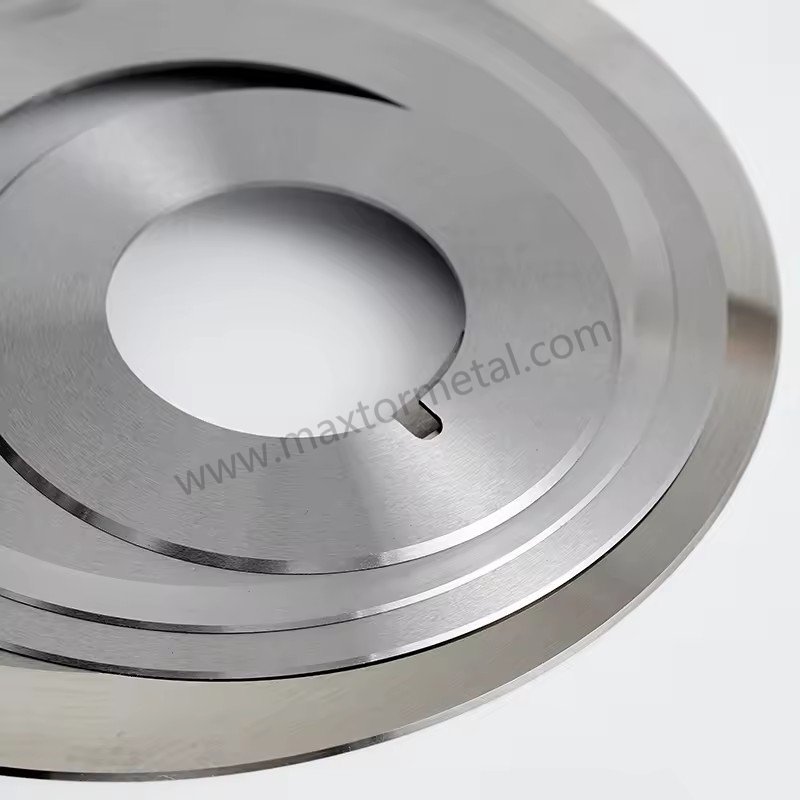
Điểm đặt và hồ sơ
Sức căng không chỉ là một con số—nó là một đặc điểm trải rộng khắp các vùng và theo thời gian. Đường rạch ổn định phụ thuộc vào trạng thái sức căng ổn định của màng lưới.
Những nguyên tắc thực tiễn vẫn còn giá trị:
- Giữ cho lực căng ổn định trên toàn bộ tháo gỡ → quá trình → tua lại, và kiểm tra các phép đo thực tế của cảm biến lực so với các điểm đặt của bộ điều khiển. Sự thay đổi lực căng vượt quá ±5%–8% Sai lệch so với mục tiêu thường đủ để gây ra hiện tượng trượt ngang màng và bắt đầu hiện tượng trôi đường rãnh. Nhóm hiện trường của Maxtor Metal sử dụng dải ±5%–8% này làm ngưỡng cảnh báo khi xem xét nhật ký lực căng trong quá trình điều tra sau sự cố trôi trên các đường ống của khách hàng.
- Hãy sử dụng lực căng côn một cách có chủ đích; khi đường kính tăng lên, lực căng thường cần phải giảm để tránh hiện tượng co giãn, cong vênh cạnh hoặc lõi bị nghiền nát.
Để có điểm khởi đầu dựa trên tiêu chuẩn về hướng dẫn độ căng màng, TAPPI xuất bản các tài liệu hướng dẫn về độ căng như sau: TAPPI TIP 0200-01:2021 (hướng dẫn về độ căng của web).
Trục vi sai và khớp nối
Sự chênh lệch đường kính giữa các làn thường là yếu tố quyết định giữa "các làn hoạt động trơn tru" và "các làn di chuyển không kiểm soát". Khi đường kính các làn tăng lên với tốc độ hơi khác nhau, hệ thống cần một phương pháp kiểm soát để cân bằng mô-men xoắn sao cho một làn không bị chùng và bắt đầu di chuyển không kiểm soát.
Kiểm tra:
- Xác nhận các bộ phận vi sai thực sự bị trượt trong phạm vi mô-men xoắn dự kiến.
- Kiểm tra xem lực ép có được phân bổ đều trên bề mặt con lăn hay không; lực ép không đều có thể tạo ra sự khác biệt về lực kéo giữa các làn đường.
- Xem xét lại độ căng của trục côn cùng với các thiết lập chênh lệch; nếu bạn siết chặt độ căng khi đường kính tăng lên, bạn có thể làm quá tải một làn đường và làm mất ổn định khả năng bám đường.
Sự chuyển đổi và lực kéo
Nhiều vết cắt hình rắn là "lỗi chuyển tiếp":
- tăng tốc độ sản xuất
- đoạn nối
- chuyển tháp pháo
- Độ cứng của con lăn thay đổi khi đường kính tăng lên.
Trong giai đoạn chuyển tiếp:
- Xác nhận độ bám của đường dẫn web ổn định (không bị trượt đột ngột ở một điểm cụ thể).
- Giảm tốc độ trong giây lát để chẩn đoán. Nếu hiện tượng trôi lệch giảm ngay lập tức, hãy nghi ngờ các vấn đề về lực cản không khí/lực kéo/động lực tĩnh trước khi thay dao.
- Hãy coi hiện tượng tìm kiếm rãnh dẫn hướng cạnh như một triệu chứng—thường do dao động lực căng, lệch trục hoặc lực kéo không ổn định gây ra.
Căn chỉnh và đồng bộ tốc độ
Con lăn, trục và cân bằng kẹp
Nếu màng phim bị ép lệch sang một bên do hình dạng hình học, thì không có thiết lập dao nào có thể "giữ cho nó thẳng" một cách nhất quán.
- Kiểm tra độ song song của trục lăn so với đường tâm máy.
- Kiểm tra bề mặt con lăn xem có bị côn, mòn, nhiễm bẩn hoặc hư hỏng không.
- Kiểm tra sự phân bố áp lực ép; lực ép không đều có thể làm lệch hướng màng phim.
Một tài liệu tham khảo thực tiễn về các nguyên tắc cơ bản của việc theo dõi đường tâm và nguyên nhân chuyển động ngang là bản tổng hợp của Walker trong cộng đồng xử lý web (xem Web Lines: Walker về Xử lý Web (Tuyển tập PDF năm 2003–2014)).
Chênh lệch tốc độ tại điểm tiếp xúc cắt
Đối với việc xẻ rãnh bằng máy cắt, sự không đồng bộ về tốc độ có thể tạo ra một thành phần lực ngang tại vị trí cắt.
Danh sách kiểm tra:
- Kiểm tra xem tốc độ bề mặt dao có khớp với tốc độ của vật liệu khi cần thiết theo phương pháp cắt của bạn hay không.
- Hãy kiểm tra xem khớp nối/độ rơ của bộ truyền động có gây ra sự thay đổi tốc độ định kỳ hay không.
- Nếu hiện tượng trôi lệch tỷ lệ thuận với tốc độ nhưng không tỷ lệ thuận với lực căng, hãy nghi ngờ có sự không phù hợp về tốc độ và độ rung.
Sức khỏe ổ trục và rung động
Các vấn đề về ổ bi và rung động thường bị ngụy trang thành "các vấn đề về cắt xẻ".
- So sánh nhiệt độ ổ trục bên trái và bên phải.
- Lắng nghe tiếng ồn có tính chu kỳ; kiểm tra các dấu hiệu theo quy luật.
- Nếu bạn có hệ thống giám sát rung động, hãy ghi lại phổ rung tại đầu cắt và đầu cuộn.
Ảnh hưởng của vật liệu và khí nén
Hồ sơ và sự biến đổi của thước đo
Sự biến đổi độ dày và độ cong của các sợi vải tạo ra lực căng không đều giữa các làn đường. Sợi vải thường sẽ có xu hướng căng hơn về phía có độ căng cao hơn.
Kiểm tra:
- Kiểm tra độ đồng nhất về hình dạng và độ cứng của cuộn giấy đầu vào.
- Hãy tìm những khác biệt giữa các làn đường có liên quan đến vị trí lăn bánh của xe bố (ở rìa hay ở giữa).
- Nếu hiện tượng lệch chỉ xảy ra ở một số lô nhất định, hãy ghi lại mã số lô và dữ liệu hồ sơ đo vào nhật ký của bạn.
Sự cuốn khí và nằm nghiêng
Ở tốc độ cao, không khí thực sự là một "yếu tố cơ học". Nếu màng phim chuyển động trên một lớp màng không khí, lực kéo sẽ thay đổi và đường cắt có thể bị lệch.
Kiểm tra:
- Hãy chú ý đến hiện tượng rung hình và hình ảnh bị nhòe khi tua lại.
- Sử dụng thao tác đặt/ép hiệu quả (trong giới hạn của máy) để giảm lượng không khí bị kẹt.
- Để chẩn đoán, hãy giảm tốc độ một cách vừa phải và xem liệu hiện tượng dao động có giảm đi hay không.
Liên kết giữa các khuyết tật tĩnh và khuyết tật cạnh
Điện tích tĩnh có thể kéo màng phim về phía các thanh dẫn/con lăn, hút bụi và làm cho các điểm tách màng không ổn định—đặc biệt là đối với các màng phim mỏng ở tốc độ cao.
Kiểm tra:
- Kiểm tra độ thông mạch của dây nối đất tại các vị trí quan trọng.
- Kiểm tra độ sạch và hiệu suất của các thanh ion hóa.
- Theo dõi xem lỗi có trở nên nghiêm trọng hơn trong điều kiện độ ẩm thấp hay không.
When static-attracted dust is itself a product quality problem—not just a trigger for tracking instability—the blade-level root causes of dust generation (Ra, carbide microstructure, overlap-induced secondary rubbing) require a separate analysis. See Root-Cause Analysis of Slitting Dust Generation: Blade Flank Ra, Carbide Microstructure & Setup Tolerances.
FAQs:
Hỏi: Nguyên nhân gây ra hiện tượng vết cắt đường xà khi cắt màng là gì?
Đáp: Vết cắt đường xà thường xuất phát từ sự mất ổn định theo chiều ngang: lực tác động lên dao (độ đảo/runout, độ chồng dao, sự dịch chuyển của giá giữ dao), cơ học cuộn màng (mất cân bằng lực căng, sự cố quấn vi sai), hình học (lệch trục căn chỉnh, lực ép nip không đều) hoặc động học (cuốn khí và tĩnh điện). Cách khắc phục nhanh nhất là xác định xem hiện tượng lệch bắt đầu từ lưỡi dao hay chỉ xuất hiện trong quá trình quấn cuộn.
Hỏi: Làm thế nào để biết hiện tượng lệch dòng cắt là do lỗi dao hay lỗi lực căng?
Đáp: Nếu sự cố chỉ xảy ra ở một dải màng cụ thể và xuất hiện ngay tại cụm dao cắt dù ở tốc độ thấp, hãy kiểm tra dao, độ đảo (runout) hoặc giá giữ dao. Nếu lỗi trở nên tồi tệ hơn khi đường kính cuộn màng tăng lên, cải thiện khi thay đổi lực căng hoặc di chuyển theo vị trí lõi (core), nguyên nhân thường do lực căng hoặc cơ chế quấn vi sai.
Hỏi: Độ đảo của dao (knife runout) có thực sự làm lệch dải màng khi cắt không?
Đáp: Có. Ngay cả độ đảo nhỏ cũng có thể tạo ra lực ngang lặp đi lặp lại làm lệch đường cắt. Hãy đo độ đảo tại trục (arbor), bề mặt vòng đệm (spacer faces) và mặt dao bằng đồng hồ đo lỗ/đồng hồ so (dial indicator), sau đó so sánh giữa dải màng "đạt" và dải màng "lỗi".
Hỏi: Cài đặt lực căng nào giúp ngăn chặn sự lệch dòng cắt trên máy cắt xả cuộn (slitter rewinder)?
Đáp: Hãy bắt đầu bằng cách ổn định lực căng ở từng vùng và xác minh lực căng thực tế bằng thiết bị đo. Sau đó, sử dụng biểu đồ lực căng giảm dần (taper profile) có kiểm soát để lực căng không bị tích tụ khi đường kính cuộn màng tăng lên. Hướng dẫn ban hành của TAPPI có thể giúp bạn chọn dải lực căng ban đầu, sau đó tùy chỉnh dựa trên độ cứng của cuộn màng và độ ổn định của dải màng.
Hỏi: Trục vi sai (differential shafts) có giúp ngăn chặn hiện tượng lệch dải màng và lệch cuộn kiểu ống dòm (telescoping) không?
Đáp: Trục vi sai rất hiệu quả khi đường kính các dải màng tăng không đều, nhờ cơ chế trượt có kiểm soát giúp cân bằng mô-men xoắn, ngăn dải màng bị trùng và chệch hướng. Nếu các vòng trượt bị kẹt hoặc mô-men xoắn cài đặt sai, sự chênh lệch độ cứng giữa các cuộn màng và hiện tượng lệch dải vẫn có thể xảy ra.
Hỏi: Tại sao hiện tượng lệch dòng cắt lại trở nên tồi tệ hơn ở tốc độ cao?
Đáp: Tốc độ cao hơn làm tăng lượng khí cuốn vào, phóng đại độ rung và làm cho những sai lệch nhỏ trở nên nghiêm trọng hơn. Nếu hiện tượng lệch giảm nhanh khi bạn giảm tốc độ, hãy kiểm tra các yếu tố khí động học, độ bám (traction) hoặc tĩnh điện trước khi thay đổi hình học lưỡi dao.
Hỏi: Làm thế nào để giảm thiểu lượng khí cuốn vào (air entrapment) khi quấn màng?
Đáp: Hãy nâng cao hiệu quả của lô ép/lô tì (lay-on/nip roller) trong giới hạn cho phép của máy, xác nhận lại hình học đường đi của dải màng vào cụm quấn, đồng thời tùy chỉnh lực căng/độ giảm dải lực căng (taper) để dải màng ôm sát vào cuộn thay vì trượt trên màng khí. Bài kiểm tra giảm tốc độ là cách nhanh nhất để xác nhận xem liệu không khí có phải là nguyên nhân gây ra sự mất ổn định hay không.
Hỏi: Tôi nên ghi chép dữ liệu ở đâu để ngăn chặn hiện tượng đường cắt lượn sóng (snake cuts) tái diễn?
Đáp: Hãy ghi chép theo Mã cuộn (Roll ID) và dải màng: bộ lắр dao (đường kính ngoài dao, độ dày, vòng đệm), chỉ số độ đảo (runout), cài đặt độ chồng (overlap) và góc nghiêng (cant angle), lực căng theo vùng và biểu đồ lực căng giảm dần (taper), loại và cài đặt trục quấn, tốc độ, trạng thái khử tĩnh điện/độ ẩm, và liệu sự lệch đường cắt có thay đổi theo tốc độ hoặc đường kính cuộn hay không.
Kết luận
Việc loại bỏ hoàn toàn hiện tượng vết cắt đường xà (snake cuts) đòi hỏi phải từ bỏ thói quen điều chỉnh thông số cảm tính, mò mẫm và chuyển sang quy trình chẩn đoán hệ thống dựa trên nguyên lý vật lý. Bằng cách kiểm tra hệ thống hình học của dao và độ cứng của giá giữ dao (đảm bảo độ đảo toàn phần TIR ≤ 0,050 mm cùng độ chồng dao và góc nghiêng chuẩn xác), ổn định biểu đồ lực căng cuộn màng qua các vùng quấn, đồng thời loại bỏ sự lệch trục của các lô máy và hiện tượng cuốn khí ở tốc độ cao, các dây chuyền gia công cuộn màng có thể đạt được độ ổn định đường cắt ngay lập tức.
Để chuyển hóa danh mục kiểm tra này thành lợi ích vận hành lâu dài, các nhà máy nên chính thức hóa các bước kiểm tra này thành Quy trình vận hành tiêu chuẩn (SOP). Việc áp dụng phiếu cài đặt tiêu chuẩn — đi kèm bắt buộc ký duyệt các chỉ số độ đảo (runout), độ chồng dao (overlap) và lực căng — cùng việc thiết lập lịch bảo trì định kỳ (PM) nghiêm ngặt cho giá giữ dao, trục gá và vòng bi sẽ giúp giảm thiểu tối đa sự biến động trong quá trình thay đổi quy trình (changeover).
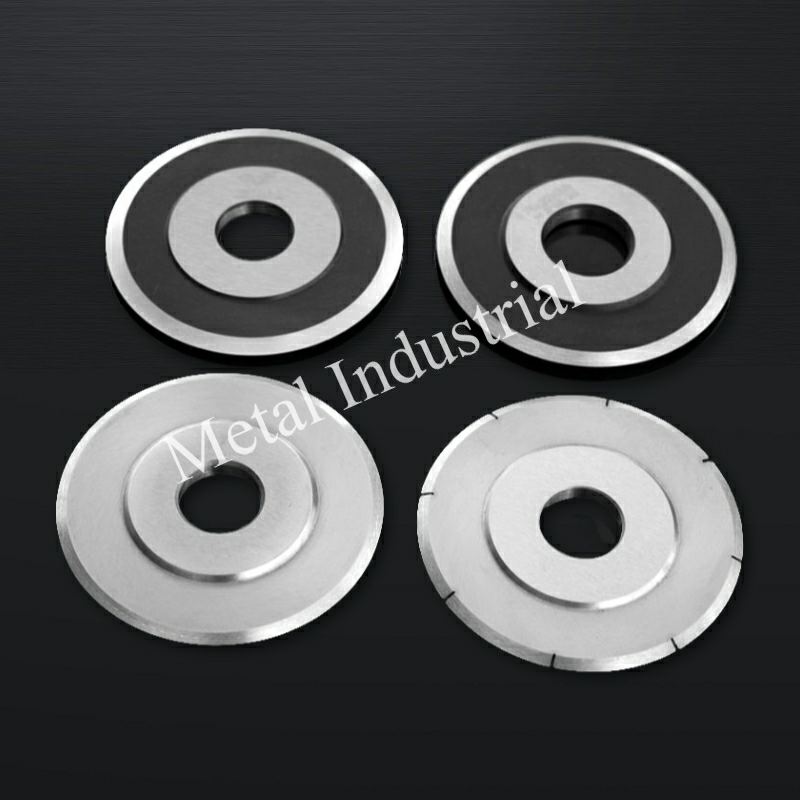
Đối với các nhà máy đang chuẩn hóa công cụ dao cắt trên nhiều dây chuyền cắt xả, Maxtor Metal cung cấp dao cắt đĩa (circular shear knives) đi kèm đầy đủ hồ sơ chứng nhận kích thước và độ cứng theo từng lô hàng, đồng thời hỗ trợ OEM/ODM khi dao cần chế tạo chính xác theo bản vẽ trục gá và giá giữ dao hiện có. Dao và lưỡi dao tròn của Maxtor Metal Để tham khảo về hình học và thông số kỹ thuật.
Tóm lại, việc đo lường sự thành công của các biện pháp kiểm soát ổn định này phụ thuộc vào các chỉ số hiệu suất chính (KPI). Các hoạt động chuyển đổi hiệu suất cao theo dõi năm KPI cốt lõi để xác thực hiệu suất cắt xẻ của họ:
- Tỷ lệ phế liệu và chất thải (%)Giảm trực tiếp lượng phim thừa sau khi cắt và các cuộn phim không đạt tiêu chuẩn bị loại bỏ.
- Hiệu quả tổng thể của thiết bị (OEE)Tốc độ vận hành cao hơn và độ ổn định khi cắt được duy trì.
- Thời gian ngừng hoạt động ngoài kế hoạchGiảm thiểu số lần dừng dây chuyền do đứt giấy hoặc điều chỉnh giữa chừng.
- Tuổi thọ lưỡi daoĐộ bền của dụng cụ được kéo dài nhờ giảm thiểu tải trọng bên và tối ưu hóa sự chồng lấp.
- Khiếu nại về chất lượng sản phẩm của khách hàngGiảm tỷ lệ xuất hiện các lỗi như đứt mép, co rút hoặc xẻ rãnh trong các lô hàng cuộn thành phẩm.
Tác giả / Người đánh giá kỹ thuật
Jerry Chu | Chuyên viên hỗ trợ kỹ thuật (Dịch vụ hậu mãi)
Maxtor Metal
Jerry có hơn 10 năm kinh nghiệm ứng dụng đa ngành trong các lĩnh vực sản xuất giấy, tái chế/nghiền nhựa, xẻ kim loại và chế biến gỗ. Chuyên về giải quyết các thách thức thực tế trong quá trình xẻ – như gờ cắt, bụi quá mức và sự không ổn định của cạnh – anh ấy làm việc trực tiếp với các nhóm kỹ sư hiện trường để tối ưu hóa hiệu suất dụng cụ và độ tin cậy vận hành.
- Chứng nhậnChứng chỉ chuyên gia bảo trì và độ tin cậy (CMRP), chứng chỉ chuyên gia quản lý dự án (PMP®)
- Chuyên ngành: Xử lý sự cố cắt xẻ tại chỗ, thiết kế hình dạng lưỡi dao tùy chỉnh và phát triển quy trình vận hành tiêu chuẩn (SOP) cho bảo trì phòng ngừa.

 English
  Spanish
  Italian
  French
  Portuguese
  Russian
  German
  Arabic
  Hindi
Hindi  Vietnamese
  Indonesian
  Japanese
  Korean